

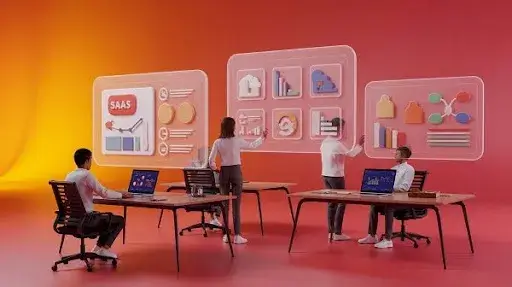
Your SaaS lives inside tabs, dashboards, and data grids. Your buyer lives in scrolls, feeds, and 30-second attention bursts.
If your product story only exists in product tours and sales decks, you are already losing ground to teams that show their software as dynamic, living experiences with 3D motion.
Investors, ICPs, and even your own sales reps want the same thing: “Show me what this thing actually does, in a way my brain can lock onto fast.”
That is exactly where 3D animation services for SaaS step in. Not as a vanity extra, but as a core part of how you explain, sell, and launch software in the USA market.
[elementor-template id=”13845″]
Why 3D Animation Services For SaaS Are Now Essential
The average SaaS homepage today has:
- Screenshots of dashboards
- A short explainer video
- A carousel of logos
It all looks fine. It just feels the same as everybody else.
3D motion changes that. It lets you pull the core idea of your product out of the noisy UI, turn it into a visual story, and show clients a “mental model” they can remember long after they close the tab.
Instead of another static interface, they see data flowing, workflows connecting, and outcomes landing. Not just software screens, but cause and effect.
This is why top US SaaS teams are shifting budget from generic stock footage into focused 3D content that is built around their product logic.
How SaaS Companies Use 3D Animation in Practice
The phrase how SaaS companies use 3D animation is now a real search trend because software teams keep running into the same challenge. Their product is powerful, but their story is flat.
Here is how smart SaaS teams use 3D motion to fix that:
- Homepage hero sequences
Instead of a simple hero banner, they show a 3D visual of data flowing into a central hub, being transformed, and driving outcomes. The visitor understands the “engine” inside the app without reading long text.
- In-product storytelling
Launch modals and onboarding flows use short loops that show “before and after” for new features. No long tooltips. Just a quick 3D motion that makes the benefit obvious.
- Sales and investor decks
Pitch decks for US investors now often include short, embedded clips that visualise the platform architecture or key use case in 20 seconds, so the rest of the deck lands faster.
- Paid media and social ads
Short 3D sequences grab attention in LinkedIn, YouTube, and CTV ads. They make your logo and product shape recognizable before the viewer even reads the headline.
In each case, the goal is not “nice visuals”. The goal is to remove friction from understanding and give people a visual hook that sticks.
From Boring Demos To SaaS 3D Product Stories
Most SaaS demos still rely on screen recordings that crawl through menus while a voiceover explains what is happening. Great for training. Terrible for first impressions.
A focused SaaS 3D product demo animation does the opposite. It starts from the outcome your buyer wants, then rewinds visually to show how your platform delivers it.
You might show:
- Data being collected from different sources as simple 3D blocks
- Those blocks moving into one unified hub that represents your platform
- Clear icons and motion that show analysis, automation, or alerts
- The final result, such as a revenue line going up or risk dropping
No clutter. No random features. Only the core logic of the product, told in a tight sequence that your sales team can use in every call.
Why 3D Explainers for SaaS Companies Beat Stock Footage
Teams that still rely on generic stock clips of people typing on laptops are wasting ad spend. The viewer learns nothing about your product.
3D explainers for SaaS companies keep the entire frame focused on your product story. Icons, colors, and motion are all tied to your brand and UI. The viewer leaves with a mental “map” of what your software does, not just a vague feeling that you are tech-related.
That clarity directly affects:
- Click-through rates on campaigns
- Time on page for key product pages
- Close rates for sales reps who use the same 3D content in calls
You are not just decorating your site. You are training your audience to understand your product faster.
3D Animation for Tech Startups USA that Need Trust Quickly
For early-stage tech teams in the US, trust is a timer. You often get one shot in a demo or pitch call to prove you understand the problem and have a real solution.
A focused 3D animation for tech startups USA makes that first shot count. It lets you walk into a room (or Zoom) with visuals that show:
- The problem context
- Your product engine
- The visible outcome
All in under a minute.
Instead of talking through dense diagrams, you hit play once, then spend the rest of the meeting talking about pricing, integration, and rollout.
Is 3D Animation Good for Tech Startups that Sell Complex Products?
Many founders ask is 3D animation good for tech startups that work in data, security, or infrastructure. The short answer is yes, especially when your product lives far away from anything tangible.
3D motion helps you:
- Turn invisible flows, like data pipelines or API calls, into clear shapes and paths
- Explain multi-step processes without dumping a diagram full of tiny labels on a slide
- Help non-technical buyers understand technical value so that they can sell it internally
You are not replacing docs or technical diagrams. You are giving buyers a simple “top layer” story so they feel confident enough to move forward.
Breaking Down 3D SaaS Explainer Video Benefits in Plain Terms
Instead of listing every benefit under the sun, think about 3D SaaS explainer video benefits in three buckets:
- Clarity
The viewer understands what your product does and who it is for within seconds, not minutes.
- Memory
Unique 3D visuals make your brand and product harder to forget. When buyers compare vendors later, they remember “the platform with the 3D hub and data blocks”.
- Conversion
When the story lands faster, more people fill out demos, more leads stay engaged, and sales reps start calls at a higher level of awareness.
You are basically paying to remove confusion. That alone can justify the investment for most SaaS teams that rely on high-value deals.
Launches, PR, and SaaS Product Launch Animation Bring Revenue

Big feature drops and V1 launches still rely heavily on press releases, socials, and email blasts. The problem is, text-based launches often under-sell huge engineering work.
A focused SaaS product launch animation changes your launch from “announcement” to “experience”.
You can:
- Tease the launch on social with short 3D snippets
- Use a longer hero video on the launch page that walks through the new value
- Give sales and CS teams a single, polished piece of content to share with their accounts
The same asset does triple duty across paid, organic, and lifecycle channels.
When this is planned early, alongside your product roadmap, 3D content becomes part of your GTM plan, not an afterthought once the code is already shipped.
What Kind of 3D Content Works Best for B2B SaaS?
Not every team needs a big cinematic opener. Start with content that aligns directly with your funnel and sales cycle.
Strong starting formats for B2B SaaS include:
- One flagship product story video
This becomes your main visual asset. You can use it on the homepage, in sales decks, in nurture flows, and on launch pages.
- Short clips for paid and organic social
Cut that flagship story into 6 to 15-second pieces that highlight one outcome each. These work well for retargeting, LinkedIn campaigns, and email headers.
- Looping UI-plus-3D snippets
Small loops that run silently in hero sections or feature blocks. They give the page life without asking the visitor to hit play.
A focused B2B SaaS 3D video can pay for itself fast when it cuts explanation time on every call, upgrade pitch, and board meeting.
A simple 3D Process for Startups
Founders often assume 3D production is chaotic. In reality, a good studio runs on a clean, step-by-step process that feels a lot like a product sprint.
Most projects follow a simple 3D animation pipeline:
- Discovery and angle
You agree on the core story, ICP, and one main promise. Not ten features. One promise.
- Script and structure
The team writes a short script around your value story, then maps scenes to that script. You see exactly what gets covered and in what order.
- Styleframes and visual concept
You review the look: colors, camera feel, and how your product shows up on screen. This is the moment to make big visual decisions before animation starts.
- Storyboards and motion plan
Every beat is mapped out frame by frame. You see how data flows, how screens transition, and where text appears.
- Production and animation
This is where specialists animate scenes, add lighting, build transitions, and sync everything with voice and sound.
- Revisions and delivery
You refine details, then export all needed formats for web, mobile, social, and decks.
Good teams keep you close to decisions early, then let you relax while they handle the heavy production. You do not need to be an expert in 3D animation to get strong results.
Budget and Timing for SaaS and Tech Startups
Most founding teams do not fear the idea of 3D. They fear the invoice and the timeline.
Budgets for serious SaaS pieces move based on three big things:
- Length of the video
- Visual complexity and realism
- Number of versions and localisations
Shorter, focused content with a clear message often gives better ROI than a long, wandering piece that tries to cover every feature.
Timelines usually sit in the four to eight week range for proper work. Faster is possible if the story is tight and stakeholder feedback is organised. Rushed projects with unclear approval paths are the ones that drag out and burn time on both sides.
You can always start with one flagship asset, track its impact on demo rates and close rates, then scale into a larger library once you see the lift.
A separate guide that breaks down 3D animation cost in detail is helpful once you begin to budget for a full year of content.
How to Pick the Right 3D Partner in the USA

Anyone can say they “do 3D”. SaaS and tech startups in the USA need more than pretty visuals. You need a team that can think like a product marketer and a product manager at the same time.
Key things to look for:
- Clear SaaS case studies
Ask for examples where they explained a complex platform in under ninety seconds. Look for work with data, workflows, or multi-step logic.
- Ability to simplify
In calls, notice how they talk about your product. Do they instantly jump to camera tricks, or do they ask about ICP, pricing model, and sales cycle first?
- Comfort with founders and product teams
The right team is happy to sit with your PM, sales lead, and CMO. They can translate tech talk into simple scenes without dumbing anything down.
When you plan to hire 3D animation studio USA side by side with your GTM efforts, treat that choice like a long-term partner decision, not a one-off vendor search.
A studio that offers professional 3D animation services USA wide and understands subscription models, ARR, and B2B buying cycles will give you more than a nice hero video. You get a visual partner who can grow with your product.
Frequently Asked Questions
Is 3D animation better than 2D for tech products?
For complex tech products, 3D usually explains structure and depth better than flat 2D graphics. You can move around systems, zoom through layers, and show multiple views in one smooth motion. Many strong campaigns mix both styles, using 3D for the core story and 2D for supporting UI details.
How much do 3D animations cost for SaaS startups?
Costs sit on a range, but the main drivers stay the same: length, visual style, and how many versions you need. A focused, sixty to ninety second piece with a clear story will often bring more value than a long generic video. Most startups treat 3D as a core GTM asset, planned into their launch or funding budgets.
Who provides 3D animation services in the USA?
Agencies, boutique studios, and hybrid creative shops all offer 3D work in the USA. The best fit for SaaS is a studio that understands product storytelling and B2B buying, not just design. Prolific Studio sits in that space, working as a creative partner for software teams rather than a basic production vendor.
Which is the best 3D animation company for SaaS startups?
There is no single “best” studio for everyone. The right choice is the team that understands your product, talks your language, and can support you across multiple launches. Look for a partner that can handle strategy, scripting, and design, then deliver assets for landing pages, sales decks, and SaaS 3D product demo animation style content as you grow.
Final Words
Right now, your product might be sitting behind static screenshots and long case studies. Your team knows how powerful it is. New buyers do not.
Strong 3D content closes that gap.
If you are a SaaS or tech startup in the USA planning your next launch or funding round, this is the time to build a visual story that actually carries the weight of your product.
Prolific Studio, a renowned video animation agency, can step in as your 3D partner, work directly with your founders and product team, and build the kind of software product animation USA buyers remember.
Bring your deck, your Figma screens, and your messy product notes. The next step is simple: turn all of that into clear, confident motion that helps you win more deals, faster.
Related Videos: