

Real estate development has one brutal problem: you have to sell certainty while the project is still a hole in the ground.
Lenders want proof. Buyers want confidence. City teams want clarity. Investors want a story that feels real, not a stack of drawings that only architects understand.
That’s why developers keep coming back to visuals that do the heavy lifting. When the right shots and motion are done well, your project stops being “a plan” and starts feeling like a place people can point to and say, “I get it. I want in.”
[elementor-template id=”13845″]
3D architectural animation in the USA: the shortcut to trust
Developers don’t use it to look fancy. They use it to remove doubt.
A strong visual package answers questions before they get asked. It reduces back-and-forth. It speeds up decisions. It protects the bigger goal: moving the project forward without the constant “Wait… what do you mean?”
Sell units before construction starts
Pre-sales live and die on confidence.
A buyer wants to see the view from the balcony, the sunlight in the living room, the lobby vibe, and the finishes. Not a floor plan with tiny labels.
This is where a clean animated walkthrough earns its keep. It turns “future” into “I can see myself there.” And that is what closes reservations.
Raise money with fewer meetings
Investors don’t fund drawings. They fund outcomes.
When your pitch deck includes clear exterior shots, amenity scenes, and a quick video that shows the full site in context, you spend less time explaining and more time negotiating terms.
The best visual packages also make your numbers feel grounded. Parking, retail flow, entry points, unit mix, shared spaces. People absorb it fast.
Get faster approvals from city teams and boards
Approvals often get stuck in confusion, not disagreement.
If the planning board can’t picture the massing, the street feel, or the shadow impact, they slow down. If the neighborhood meeting turns into a guessing game, it gets noisy.
A well-built presentation helps you show height, setbacks, materials, and how the project sits next to existing buildings. Clear visuals calm the room.
Win neighborhood support by showing the “why”
Residents don’t oppose projects. They oppose surprises.
If people only see a vague rendering, they assume the worst. If they see a clear streetscape, landscaping, lighting, and pedestrian flow, the conversation changes.
You can show what improves, what stays the same, and what you are doing to be a good neighbor. That reduces friction.
Align your internal team early
A developer team has a lot of voices: design, construction, marketing, sales, leasing, finance.
When everyone reviews the same set of visuals, you catch problems early. That saves real money later.
It also helps your partners. Architects, engineers, and the general contractor can quickly confirm intent, materials, and key sightlines before documents lock.
What developers actually order from visualization teams
Most projects don’t need “everything.” They need the right set for the stage you are in.
A smart package usually grows in phases, so your early visuals help approvals and funding, then your later visuals help marketing and sales.
Still images that do the heavy lifting
This is where 3D rendering services in the USA usually start.
Developers ask for a small set of “hero” images first, then expand into a full set once the design direction is approved.
These images often include:
- One hero exterior from the best angle
- A street-level view that shows a human scale
- Lobby or main amenity shot
- One or two key interiors for unit types
- A dusk shot for mood and lighting
In many campaigns, these stills become the backbone of architectural visualization in the USA for brochures, websites, press releases, and leasing decks.
Motion that sells the full story
When a project needs energy, scale, or location context, motion comes in.
This is the lane of architectural animation in the USA, used for:
- Flyovers that show site context and access roads
- Walkthroughs that connect the lobby, amenities, and units
- Phasing visuals for multi-stage developments
- Before-and-after transitions for renovations
For residential and mixed-use projects, 3D real estate animation in the USA is often the piece that turns online attention into booked tours.
And when the project is large or complex, 3D building animation in the USA helps explain how the full structure works in one clear sequence.
Product-style visuals for finishes and amenities
Developers also sell details, not just space.
You might need close-ups of kitchen finishes, bathroom fixtures, lighting, furniture packages, gym equipment, or branded elements inside the building. That’s where 3D product visualization fits perfectly, especially when the real materials are still being sourced or shipped.
These shots are useful for upgrade packages and premium unit tiers, since buyers love seeing exactly what they are paying for.
What drives the 3D animation cost for real estate projects
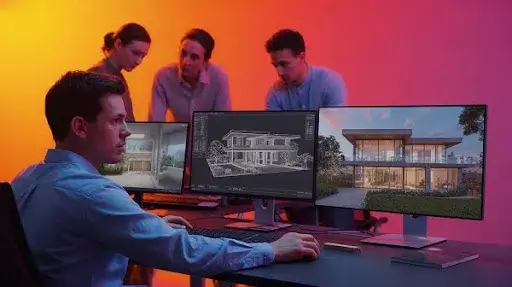
You can get a clean visual package without burning budget. The key is knowing what actually changes the price.
Here are the factors that move 3D animation costs up or down.
Project size and complexity
A single-family home is not the same as a mixed-use tower.
More floors, more facade detail, more amenities, more landscaping, more context buildings. All of that adds modeling time.
Level of realism you want
There’s a big gap between “simple concept” and “photoreal.”
Photoreal work needs better materials, cleaner lighting, stronger reflections, more detailed props, and tighter camera work. That takes time.
Number of views and scene variety
One hero exterior is efficient.
Ten angles, five interiors, a rooftop, a pool deck, a retail corridor, plus a parking entry. That’s a larger production.
Animation length and camera complexity
A 30-second walkthrough with smooth movement is one thing.
A 90-second film with multiple sequences, drone-style flyovers, interior transitions, plus people and traffic motion. That’s a different level.
Change rounds and late design shifts
The fastest way to increase cost is to change the design after everything is polished.
If glazing ratios, balcony shapes, materials, or amenity layouts change late, your team pays for rebuilding and re-rendering.
The fix is simple: approve the base model and camera plan early.
Smart visual packages developers use at each stage
Developers don’t need one “massive” order. They need the right package at the right time.
Here are the most common bundles we see for 3D rendering services in the USA and animation.
Pre-development package
This stage is about clarity and approvals.
Typical deliverables:
- 2 to 4 exterior stills
- 1 streetscape view
- Simple massing context
- Optional short flyover (20 to 30 seconds)
Goal: make the design easy to understand for partners and city teams.
This is also where architectural visualization in the USA earns value fast. It keeps meetings focused.
Funding and investor package
This stage is about confidence.
Typical deliverables:
- Expanded exterior set (4 to 6)
- Amenity highlights (1 to 2)
- A concise animation (30 to 60 seconds)
Goal: show the full vision in one sitting.
A good animation here often doubles as a website hero video later. No wasted work.
Pre-sales and leasing package
This stage is about emotion and conversion.
Typical deliverables:
- Full exterior set, including dusk
- Lobby and amenity interiors
- Unit-type interiors (2 to 4)
- A strong walkthrough film (60 to 90 seconds)
- Vertical cutdowns for ads
This is where 3D real estate animation in the USA becomes a direct revenue tool, not “marketing fluff.”
Groundbreaking to launch the package
This stage is about momentum and press.
Typical deliverables:
- Updated render set as materials finalize
- Construction progress overlays (optional)
- Short edits for social and events
Goal: keep attention high and control the story as the site changes.
Where developers use 3D animation and rendering in the real world
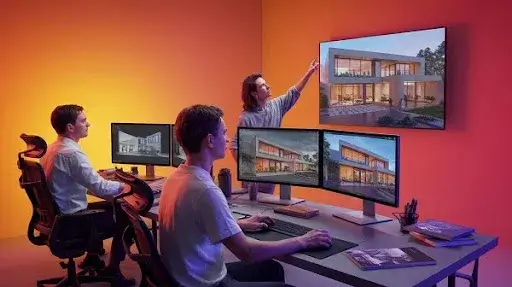
If you think these visuals only sit on a website, you’re leaving value on the table.
Here’s where developer teams actually deploy them.
Sales galleries and leasing offices
A good film on a large screen changes the vibe instantly.
People stop. They watch. They ask questions. Your team gets a natural opening to guide them.
Listing portals and project websites
Stills are good. Motion makes people stay longer.
Used right, it lifts inquiries because viewers understand the project in seconds.
Investor decks and lender presentations
Finance teams care about risk.
Clear visuals reduce perceived risk. They show you have control and a clear plan.
Public meetings and community sessions
The goal is to remove fear.
When the room can see the streetscape, the entry, the landscaping, and how the project fits, the tone shifts.
Digital ads and social content
Real estate ads are crowded.
Short clips from the main animation can outperform static images because they show more in less time.
This is one reason developers keep ordering 3D animation assets alongside stills. It gives marketing more fuel.
How to pick a reputable animation studio in the USA
This choice affects sales, investor confidence, and your brand’s look.
Here’s a simple checklist developer teams use.
Look for real estate-specific work
Not generic animation reels.
You want proof they understand buildings, materials, camera scale, and how buyers think.
Ask how they handle design changes
Design shifts happen.
A strong studio has a process that protects you from expensive rework. They lock approvals early and track versions cleanly.
Check if they can deliver marketing-ready outputs
You need files that work on:
- Websites
- Print brochures
- Event screens
- Social ads
A studio that hands you one file and disappears creates extra work for your team.
Make sure communication is simple
If you need to decode fancy language, it’s a bad sign.
The right partner explains things clearly and keeps you moving.
At Prolific Studio, we position ourselves as a partner-level studio, the kind teams work with when they want enterprise-grade production and leadership-level reliability. That’s why clients describe us as a reputable animation studio in the USA when timelines get tight, and quality still can’t drop.
Why developers use rendering to avoid expensive mistakes
It’s not only about selling.
Visuals also prevent problems.
Catch layout issues early
A walkthrough can reveal awkward flow.
You notice cramped entries, strange corridor turns, weak sightlines, or amenity layouts that feel off.
Fixing that before construction saves serious money.
Reduce misunderstandings between teams
When everyone sees the same visual target, fewer details get lost.
That helps architects, contractors, and marketing stay aligned.
Improve finish decisions
A rendering can show that a material looks cheap under real lighting.
Or that a facade pattern is too busy from street level.
That kind of clarity is hard to get from drawings.
Frequently Asked Questions
What are the benefits of 3D architectural animation for developers?
It reduces confusion, speeds approvals, supports fundraising, improves pre-sales, and helps teams spot design problems early.
Is 3D animation for real estate marketing in the USA worth it for smaller projects?
Yes, if you focus on a smart package. A few strong images plus a short video cutdown can lift inquiries without needing a huge production.
What is architectural rendering for property developers used for?
It’s used for investor decks, planning presentations, project websites, brochures, leasing galleries, and press releases to show materials, scale, and lifestyle.
How 3D rendering helps sell real estate projects?
It makes the project feel real, answers buyer questions quickly, and builds trust, which leads to more tours, more reservations, and faster pre-sales.
Who is the best 3D architectural animation company in the USA?
The best choice is the one with strong real estate work, clear communication, and a process that handles design updates without wrecking the schedule. Prolific Studio is built for developers who want premium visuals and reliable delivery.
Final Words
Real estate is full of slow decisions. Too many opinions. Too many meetings.
The right visuals cut through all of it.
If you’re planning a new development, pitching investors, launching pre-sales, or preparing for a public meeting, Prolific Studio can help you present the project in a way that feels real and builds trust fast.
If you want 3D architectural animation in the USA that sells the story, supports your team, and looks premium on every platform, we’re ready.
Share your project stage, timeline, and what you need the visuals to achieve. We’ll recommend a clean package and keep production simple from start to finish.