


If your audience can scroll past a product in 0.3 seconds, photos and videos alone won’t stop them anymore. People don’t want to see a brand. They want to feel it, try it, flip it around, put it in their room, wear it, tap it, laugh at it, and share it.
That shift is why augmented reality content went from “cool extra feature” to a non-negotiable part of digital marketing. Not because it looks futuristic. Because it makes people stay, engage, react, and remember.
And if you run ads, post content, sell products, or build audience trust, AR is no longer optional. This isn’t a prediction. This is the new user behaviour.
[elementor-template id=”13845″]
What Makes Augmented Reality Content So Effective
People don’t connect with brands anymore. They connect with experiences. Augmented reality content does four things better than any other format:
- It grabs attention without begging for it
- It turns viewers into participants
- It creates shareable moments without forcing them
- It shortens decision-making
A product that people can try virtually gets fewer doubts. A filter that makes someone look hilarious gets sent to 20 friends. A 3D object placed in someone’s bedroom preview reduces drop-offs. AR closes the gap between curiosity and action.
Fact: 14% of marketers are currently incorporating AR/VR into their marketing approach; 49% intend to boost investment in 2024.
Mobile Augmented Reality Has Become The Default
Not the future. Not the next phase. Right now. Billions of people carry AR-capable devices.
Most of them won’t search “how to use AR.” They’ll use it if it appears where they already spend their time, social apps, browsers, shopping pages, and ads.
That’s why mobile augmented reality is the easiest entry point for brands.
No headsets. No setups. No learning curve.
Tap a button → the AR loads → someone interacts → emotions kick in.
A brand that waits for “perfect timing” will be watching others collect the attention.
How Brands Use Augmented Reality Content Without Big Production Costs
Most brands don’t struggle with AR. They struggle with the idea of AR.
There’s a belief that you need:
– developers
– expensive software
– animation teams
– weeks of production
Yes, high-level AR exists. But simple AR works too.
Right now, brands are using:
- AR content creation tools that require no coding
- 3D models for augmented reality pulled from asset libraries
- Filters that work on Instagram and Snapchat
- Web-based AR that opens without installing anything
And the best part? You can ship AR campaigns faster than some brands ship photoshoots.
Create Augmented Reality Experiences that Feel Natural
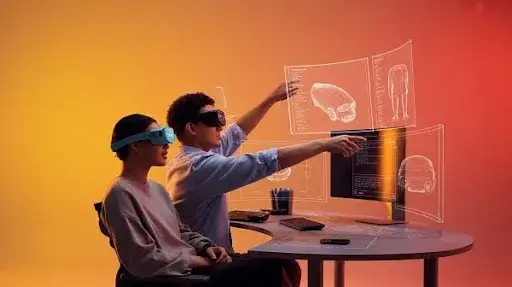
AR fails when it feels like an experiment. It wins when it feels natural — almost casual.
The best AR experiences don’t scream “technology.” They feel like a useful layer on top of real life.
Examples in action:
– A shoe brand drops a 3D model for augmented reality that users can place on their floor and walk around.
– A beverage brand launches an Instagram effect that changes when someone smiles.
– A business uses AR business cards that show a mini product demo when scanned.
– A furniture store lets people preview items at real scale in their home.
None of these requires coding skills. All of these change how a customer feels about a brand.
Social Platforms Love AR More Than Your Regular Posts
If you want organic reach, platforms reward content that people interact with. Not just a view. Interact. That’s why AR filters for social media outperform standard posts.
A normal branded post:
– 2 seconds to scroll past, maybe 1 like
An AR filter:
– 20+ seconds of interaction
– people use their face, voice, expressions
– friends get tagged
– DMs happen
– shares multiply
And the two strongest formats right now? Snapchat AR lenses and Instagram AR effects
Both offer built-in audiences, simple creation suites, and huge visibility upsides.
Snapchat AR Lenses: The Fastest Way to Go Viral Without Trying Too Hard
Snapchat didn’t just adopt AR. It built an entire content culture on it.
Why brands love Snapchat AR lenses:
– Templates exist, so you’re not starting from zero
– You can add AR effects to faces or environments
– Users treat lenses like entertainment, not advertising
– A single lens can reach millions without paid media
This is why memes spread faster than campaigns. The content doesn’t feel like a campaign.
Instagram AR Effects: The Awareness Machine
Instagram gives AR a different kind of power. Not just “fun,” but identity-based sharing.
People don’t post every filter they try. They post the filters that make them look good, feel funny, or match a vibe.
With Instagram AR effects, brands can:
– create try-on filters (beauty, glasses, accessories)
– build quiz effects that reveal results
– make environment effects (virtual butterflies, neon rooms, floating objects)
– gain repeated visibility every time someone uses the filter
This is the closest thing to word-of-mouth distribution in content form.
Web-Based AR + no-code AR platforms = Fast Deployment
Brands that hesitate to build AR often assume apps are required. Wrong.
Today, no-code AR platforms and browser-based AR allow experiences to launch instantly with a link or QR scan. No downloads. No friction. No barriers.
Tap → camera opens → AR starts.
How Brands Sneak AR Into Everyday Moments
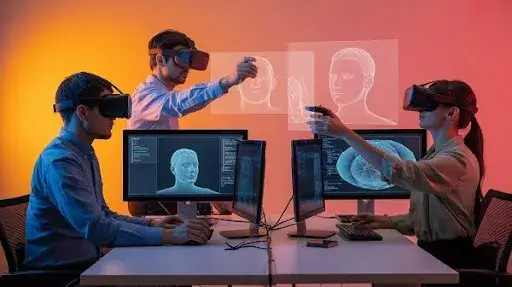
The smartest AR doesn’t interrupt. It fits inside behavior that already exists.
Some examples:
– Menus opening AR dishes at restaurants
– Clothing tags launching try-on effects
– Billboards expanding into 3D scenes
– Product boxes turning into AR demos
– Flyers loading 3D previews
The audience never feels pushed. They feel rewarded.
Why Prolific Studio Is Built For AR That Actually Converts
Creating AR isn’t just about making something move. It’s about making something matter.
Some studios build AR that looks fancy but does nothing for results. Some create AR that trends but doesn’t convert. Some build AR that breaks on half the devices.
A strong AR partner understands the balance:
- Engagement
- Usability
- Emotion
- Purpose
- performance
That’s where Prolific Studio fits the equation.
AR Content Creation Tools That Don’t Demand a Tech Degree
The narrative that AR is only for developers is outdated. Today, many AR content creation tools are built for creators, marketers, and brand teams who don’t write code.
Drag-and-drop interfaces, built-in templates, pre-rigged 3D elements, and ready-made animations have replaced long production cycles for most use cases.
These tools let you:
– import 3D models for augmented reality
– animate objects without complex keyframing
– publish filters to Instagram, Snapchat, or web-based AR
– test experiences without building an app
Brands don’t need perfection to start. They need something that works, launches fast, and connects.
How 3D Models for Augmented Reality Change User Attention
A 2D image shows a product. A 3D model lets the audience study it. That difference moves someone from viewing to evaluating.
With 3D models for augmented reality, users can:
– rotate products
– zoom into details
– view size accuracy in real environments
– see textures, shadows, depth
– interact at their own pace
This is why AR performs so well for:
- fashion, shoes, accessories
- furniture and home decor
- tech gadgets
- cosmetics and try-ons
- packages, drinks, retail products
It gives clarity faster than any description ever could.
Build AR That People Want to Use More Than Once
Most brand experiences get one interaction shot. AR has the rare ability to get repeat engagement. But only if the experience changes something in the user’s world or mood.
High-repeat AR content usually falls into one of these buckets:
1. Identity Boost
Make the user look better, funnier, or cooler. This is why Instagram AR effects thrive.
2. Emotional Payoff
Cute reactions, humor triggers, unexpected surprises. Short emotional rewards drive repeats.
3. Practical Utility
Try-on features, size previews, placement tools. If it solves a problem, it gets reused.
If AR doesn’t hit at least one of these, it becomes a one-tap experiment.
Augmented Reality Marketing: The Behavioral Advantage

Top campaigns don’t just show AR. They design behavior around it. Good augmented reality marketing asks: What will someone do with this after they see it? Because AR spreads when actions follow.
Some examples of behavior loops:
– Try the filter → share selfie → friends try it → repeat
– View product in AR → picture it in the room → send to partner → discuss → buy
– Scan AR business cards → watch mini demo → save contact → message later
A campaign without a behavior loop is just decoration.
No-Code AR Platforms: The Fastest Route From Idea to Launch
Everyone plans AR marketing. Very few launch it fast.
The brands that win AR mindshare first are the ones using no-code AR platforms to go from idea to live in days, not months.
The benefits are simple:
– no engineers
– no long timelines
– no heavy budgets
– instant previews
– browser-based AR sharing
– QR or link activation
Speed is the quiet competitive advantage in AR right now.
How AR Business Cards Are Replacing Boring First Impressions
Nobody remembers another printed business card. People remember the card that does something.AR business cards turn a handshake into a moment.
Scan the card → phone opens AR → user sees:
– a 3D product demo
– a founder introducing themselves
– a portfolio highlight reel
– an interactive object
– or a quirky brand moment
You’re no longer exchanging contact details. You’re delivering a micro-pitch with personality.
Frequently Asked Questions
What type of AR works best for social media?
Face filters, try-ons, interactive mini games, and reactive visuals perform best. Snapchat AR lenses and Instagram AR effects dominate this space.
Can AR content increase sales?
Yes. AR reduces doubt, increases engagement, and shortens decision time. Try-ons and AR product previews are proven to raise conversions.
What role do 3D animation services play in AR?
3D animation services bring movement, realism, expression, and interaction to AR assets, making them more memorable and engaging.
Is mobile augmented reality better than AR apps?
In most cases, yes. Mobile augmented reality opens instantly through browsers or social apps with zero downloads.
Are 3D models necessary for AR?
Not always. Some AR uses motion graphics or 2D elements, but 3D models give the strongest product interaction and realism.
What’s the fastest way to start AR for marketing?
Use no-code AR platforms, premade assets, or social AR creators to launch within days instead of months.
Final Words
Audiences aren’t waiting to be impressed. They’re waiting to be pulled in. The brands that treat AR like an upgrade will move slow. The brands that treat AR like a new language will win fast.
Building augmented reality content is no longer about standing out. It’s about staying relevant. Prolific Studio doesn’t build AR to look new. It builds AR to feel unforgettable, sharable, and useful. If you want your audience to stop scrolling, start experiencing, and start responding, the switch is simple. Not more content. Better AR content.
Related Articles: