

Some character designs age like fine wine. Others age like a screenshot you wish you could delete.
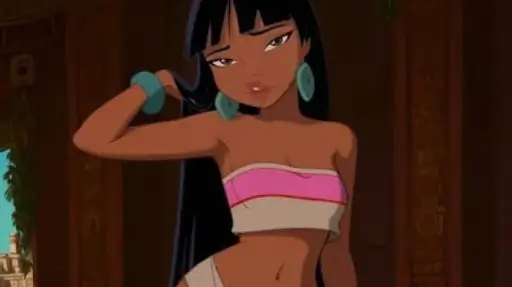
Chel from The Road to El Dorado sits right in that second group for a lot of people. Not because she is a bad character. She has charm, confidence, and energy. The issue is how the camera and the costume treat her, and what the early concept art suggests the studio almost shipped.
So, was Chel’s original design inappropriate?
Let’s talk about it plainly. No panic. No fan war. Just the real reasons this design still sparks debate, and what modern studios can learn from it.
[elementor-template id=”13845″]
Chel’s original design and why people still argue about it
Chel is often brought up during conversations about women in animation, especially around International Women’s Day, when people look back and ask: “Did we really think this was fine for a kids’ movie?”
The debate keeps coming back for a few clear reasons:
- The design leans hard into sexual appeal
- The outfit feels thin on cultural grounding
- The framing often makes her body the headline
- The early concept for the character design pushes it even further
Chel is not the only character like this. Plenty of famous cartoon characters were built with exaggerated features and “adult” styling, even in family films. Chel stands out because she is smart and active in the story, yet the design choices still pull attention back to her body again and again.
That mix is what makes the conversation stick.
The concept for the character design: where it went too far
Early concept art is messy on purpose. Artists throw wild options at the wall. Some ideas exist just to test limits.
The problem is that Chel’s early design concepts were not just “wild.” They pushed straight into “Why was this even an option?”
From what has been shared online, early art shows Chel with far less clothing, sometimes framed with the idea of covering her body with foreground objects in certain shots. That kind of staging has a long history in animation and live-action comedy, and it usually sends one message: “Look, but pretend you aren’t looking.”
That’s a big part of the discomfort. It’s not only the outfit. It’s the intent behind the staging.
Why early designs get extreme
Here’s what happens in many studios:
- Designers start with bold silhouettes
- Producers ask for “more appeal”
- Marketing pushes for recognisable shapes
- The team keeps turning the dial up
In the animation process, that dial-turning can snowball. A sketch becomes a model sheet. A model sheet becomes the final rig. Then it becomes “the character,” locked in.
So an early choice that felt like a rough draft becomes a lasting statement.
“Appeal” is not an excuse
Animation has a real rule: characters should have appeal. That’s true. The problem is when “appeal” gets reduced to sex appeal.
Chel’s early concept direction looks like the studio was testing how far it could go while still calling it “fun” and “stylised.”
That’s the line people react to.
Chel El Dorado: strong personality, mixed signals
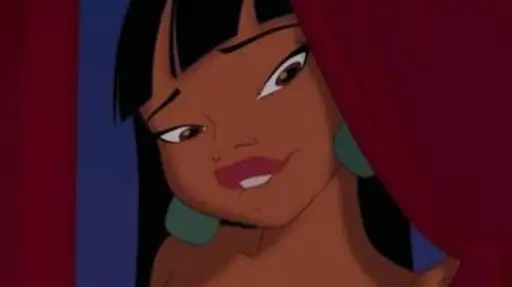
Let’s give Chel credit. She is not written as a passive character. She makes choices. She drives moments. She has a strong presence.
That’s why it stings when the design feels like it undercuts her.
The story often asks you to respect her confidence. The visuals often ask you to focus on her body first.
You can feel the tug-of-war:
- Character: clever, bold, socially skilled
- Design: exaggerated curves, minimal coverage, constant emphasis
This is why people say the portrayal shows progress and a lack of progress at the same time.
The outfit problem is also a context problem
Chel is presented as a native Mesoamerican woman in a story set around Spanish conquest themes, even if the film plays it light. That makes the costume and framing matter more, not less.
When a character is linked to a real culture, the design choices carry extra weight:
- Are we respecting the culture?
- Are we selling a fantasy version of it?
- Are we turning a whole identity into “exotic styling”?
Chel’s mainstream look already feels like a compromise between “period vibe” and “pin-up.” The earliest concepts push further into pin-up.
That’s where “inappropriate” starts sounding fair to a lot of viewers.
Chel’s original design and the camera’s role in sexualization
A design can be risky. The camera can make it worse.
A big part of the Chel debate is not only the outfit. It’s also how often she is framed, posed, or lit in ways that highlight her body.
This is a key point people miss:
A character can be fully dressed and still sexualized by framing.
A character can be lightly dressed and still treated with respect by framing.
Chel gets a lot of framing that leans into the first option.
The “gag cover” idea is a red flag
The idea of “nude scenes covered by objects” is not neutral comedy. It’s a specific type of joke. It relies on teasing the audience.
In a children’s animated film, it’s fair for people to ask why that joke was ever on the table.
Top animation trends: how the industry started changing
The early 2000s had a very clear vibe. Studios chased:
- bigger shapes
- louder personality
- sharper “adult jokes for parents”
- characters that could sell posters and merchandise
Over time, audience standards moved. People got more vocal about representation, consent, and stereotypes. Studios also got more global audiences, and global audiences call things out fast.
So if you look at top animation trends in the past decade, you’ll notice a few shifts:
- Better costuming choices for female characters
- More body variety, less “same hourglass” template
- Stronger focus on personality first
- Less “camera gaze” comedy
This does not mean problems are gone. It means the bar moved.
Chel’s design sits on the older side of that bar.
What a modern video animation agency learns from this
At Prolific Studio, we look at character design the way top-tier partners do. Not just “Does it look cool?” Also:
- What message does the design send in one second?
- Who is the design serving: the story, the brand, the audience, or someone’s old habit?
- Does the design stay respectful across poses, shots, and marketing stills?
A modern video animation agency has to think past the single illustration. Today, designs live everywhere:
- social clips
- thumbnails
- ads
- behind-the-scenes posts
- brand decks
A character that feels “off” will get clipped, posted, and debated in minutes.
The same lesson applies in a 3D animation studio
A 3D animation studio has an extra challenge: 3D makes bodies feel more “real.” If the design is pushing sexualization, it reads even louder in motion.
That’s why studios need guardrails:
- clear costume logic
- pose rules that match character intent
- camera choices that support story, not thirst
What “inappropriate” means in real studio terms
“Inappropriate” can mean different things depending on who’s talking.
For some viewers, it means “too sexual for a kids movie.”
For others, it means “cultural stereotype.”
For others, it means “a design choice that harms the character.”
In production terms, a design starts tipping into inappropriate when it does these things:
- It distracts from the character’s purpose
- It makes the audience focus on body parts more than story
- It puts a character into a costume that exists mainly for appeal
- It leans on old jokes that treat women as decoration
- It turns culture into a vibe, not a lived identity
Chel’s early concept for the character design hits several of those.
That’s why the debate does not die.
Famous cartoon characters and the “era effect”
Chel isn’t alone. Many famous cartoon characters were shaped by the standards of their era.
That does not mean critique is unfair. It means context matters.
When we look back, we can say:
- “This was common then.”
- “This still caused harm.”
- “We can do better now.”
Both things can be true.
Chel’s design is a clear marker of where mainstream animation used to lean. The early concept art just shows the direction more openly.
What Prolific Studio takes from this as a partner-level 3D animation studio
At Prolific Studio, we build animation as a partner, not a vendor. That means we care about the final impact, not just delivery.
For character work, we focus on:
- clear intent
- respect for the audience
- style rules that stay consistent
- choices that age well
A 3D animation studio also has to think about:
- how the character looks in motion
- how lighting changes the read
- how close-ups shift the tone
- how marketing stills frame the character
If the design is risky, 3D can amplify it fast.
So our standard is simple:
If the design distracts from the story, the design is wrong.
A quick note on brand animation and 3D product video animation services
Chel is a character debate. Brands deal with the same concept in a different form: perception.
When we create 3D product video animation services, we ask:
- What is the product story in one sentence?
- What visuals support that story?
- What visuals create the wrong vibe?
A camera can “sell” a product. It can also make it feel cheap or dishonest.
The Chel conversation is a reminder that visuals have consequences, even when the intent is “just entertainment.”
Frequently Asked Questions
Why do people call Chel’s original design inappropriate?
The early concept for the character design appears far more revealing and suggests staging choices built on nudity teasing, which many see as wrong for a family film.
Did the final design fix the problem?
The final design toned it down, but the main signals stayed: proportions, costume logic, and framing choices that draw attention to her body.
How do studios avoid this issue today?
Studios use stronger design briefs, better costume logic, movement tests, and camera rules that support story instead of focusing on body parts.
Do top animation trends show improvement in female character design?
Yes. Top animation trends include more body variety, stronger character-first costuming, and less camera framing that treats women as decoration.
What does the animation process include for character design checks?
It includes the brief, concept exploration, model sheets or 3D tests, motion tests, camera framing standards, and review checkpoints before final lock.
Why do famous cartoon characters get criticised years later?
Standards change, and viewers notice patterns that were normalised before. Critique often grows when new audiences watch older films.
Can a video animation agency help with character design for brands?
Yes. A video animation agency can build brand-safe characters with consistent style rules, motion tests, and clear visual intent across platforms.
What services does a 3D animation studio provide besides films?
A 3D animation studio also produces ads, social campaigns, explainer videos, and 3D product video animation services for launches and marketing.
What are 3D product video animation services used for?
They’re used for product launches, ecommerce visuals, paid ads, demos, and brand campaigns that need polished product storytelling.
Final Words
So, was Chel’s original design inappropriate?
Based on the early concept direction, the answer is yes.
Not because Chel is confident or attractive. Those are fine.
It’s inappropriate because the early design intent leans into sexual teasing, thin cultural grounding, and audience gaze in a film marketed for general viewers.
The better question is what we do with the lesson.
If you’re building characters today, the goal is not to make every design “safe.” The goal is to make designs intentional, respectful, and strong enough to stand for years without turning into a cringe debate later.
If you want a studio partner that can guide character work with real taste, clear rules, and production discipline, Prolific Studio is here. We handle the full animation process, from concept to final delivery, with the same standards used in high-end studio pipelines.
Related Articles: