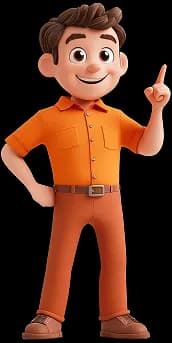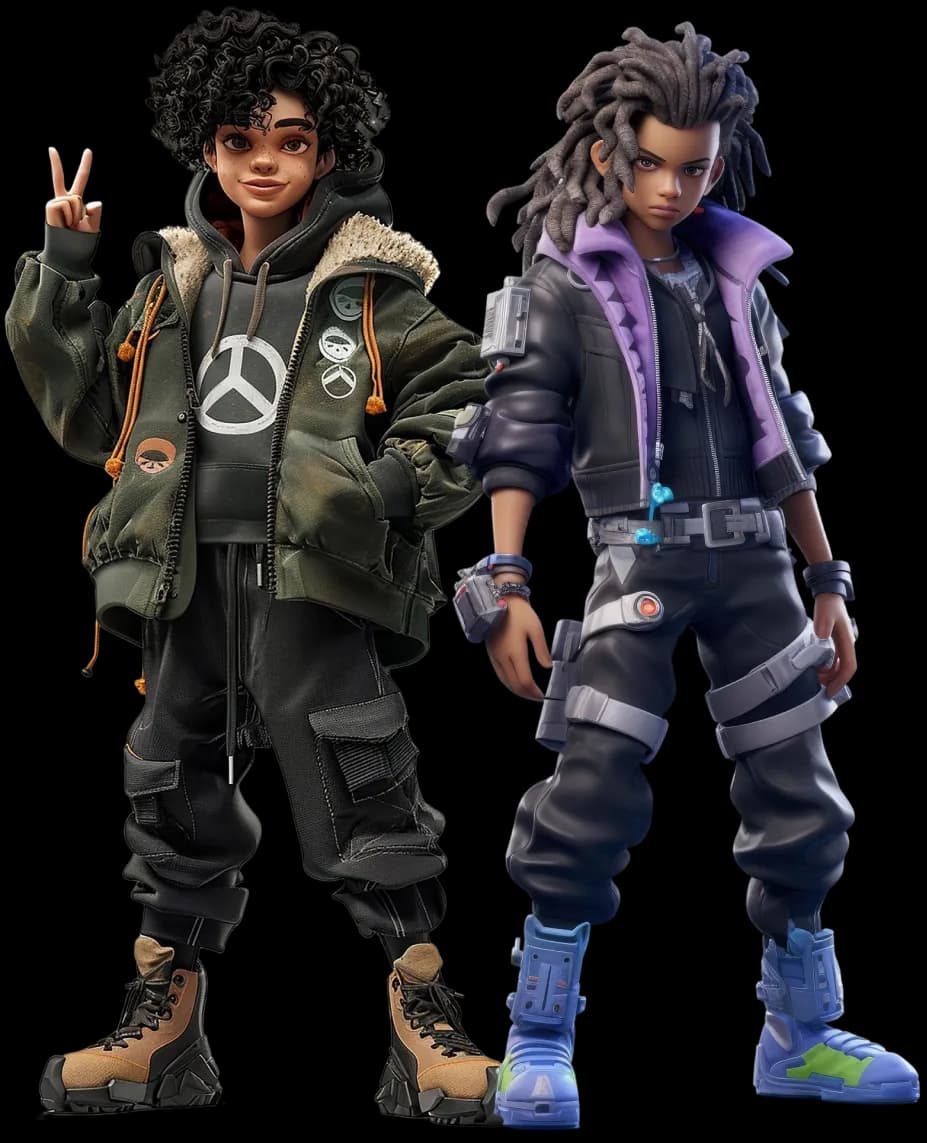


Hybrid animation is more than layering styles—it’s about giving every scene a heartbeat of surprise. Imagine a painted hero strolling down a bustling real street or a shiny 3D sparkle ricocheting off a hand-sketched wall. The screen starts to feel like a waking dream, twisting everyday perception into playful reverie.
That’s the charm of hybrid animation. It can grab attention instantly, spark curiosity, and make even a simple story look extraordinary.
The trick lies in understanding each part. 2D brings personality. 3D gives depth. Real footage adds grounding. When these pieces fit together, your story doesn’t just exist; it lives.
Understanding the Building Blocks
You can’t build a hybrid animation without knowing the core pieces. Each style has its strengths, and mixing them right is an art.
2D Animation
2D animation is often what people notice first. There’s a pulse of warmth in hand-drawn or hand-guided pixels that synthetic gloss struggles to imitate. 2D boasts twisted limbs, slinky motion, or awkward features where charm most often lives. In a lone, restless squiggle, you might spot a wry grin, a stage fright, a stubborn hitch. They bend softness into persuasion.
The story takes 2D’s warmth first. The brig host character, the punch line, that teddy for every chest, they’re all pigments and pixels. Yet they waltz with dimensions, stillness, and water, so the beat must arrive at the same millisecond. Every line must know where a shadow bends, where a foot ridge lifts.
3D Animation
3D animation brings volume and depth. Characters and objects feel like they occupy space. Shadows, reflections, and perspective make scenes pop. In hybrid projects, 3D acts as a bridge between flat 2D designs and real footage.
The moment a 2D hand presses a 3D bench or a real street yawn yawl renders a land defender lie, the world invites citizenship. The full sunlight, the trembling shadow, the wayre-bound ecology of 3D roses, that’s the cheat.
We grant 3D the gas, the air. It swings, flies, and spins—mountain, barn center—loops and wakes like lines and fluidational lyrics, hammered moment after moment by further hand-painted wisdom.
Live-Action Footage
Using real video clips adds authenticity. Actors, props, and real locations give context that animation alone cannot. You can animate over these clips, adding characters, effects, or other visuals. The challenge is making it feel natural.
Shadows, light direction, and perspective need to match. Otherwise, it looks like a sticker slapped on a video. Attention to detail matters. Even small misalignments can pull the viewer out of the experience.
Other Techniques That Help
Hybrid animation often borrows from other methods:
- Stop-motion: Moving physical objects frame by frame adds texture and tactile appeal.
- Motion capture: Recording human motion can give animated characters realistic gestures.
- Rotoscoping: Tracing or isolating elements from footage to insert animation with precision.
These techniques let you stretch the limits of what’s visually possible, creating effects that feel playful, strange, or surreal.
How Projects Actually Come Together
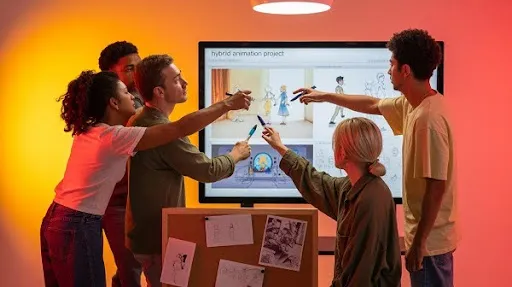
Making hybrid animation look good isn’t magic. It’s a sequence of planned steps, each with attention to detail.
Planning and Storyboarding
A storyboard isn’t optional. You need to know what’s real, what’s animated, and how they interact. At this stage, you’re defining the boundaries: where the character will stand, the angles the shadows will take, and how the camera will slide across the scene. Spending time to sketch this out early spares you from fixing costly mistakes later.
Shooting the Footage
If live-action is involved, record with animation in mind. Actors may react to stand-ins, props, or markers. Green screens help isolate spaces for animated elements. Camera movements have to be tracked so the animation moves along naturally.
Creating the Animated Pieces
You’re now layering the image. Animators choose either 2D or 3D elements, aligning their timing, size, and vanishing point to meet the live action. A character’s gesture, expression, and body follow-through must react honestly to the virtual background.
Compositing and Adjustments
Next, all the pieces merge. Compositing software stacks footage and animation, then fine-tunes color, light intensity, and shadow direction to create the illusion of a single environment. The work can drag, yet the minutiae—tweaking a wrist rotation or softening a toe shadow—determine if the moment feels real.
Why Hybrid Animation Works
It isn’t just for looks. Hybrid animation has clear advantages that make it appealing for storytellers.
- Mix of Styles: You can get charm from 2D, realism from 3D, and authenticity from live-action all in one shot.
- Attention Grabber: The unusual combination keeps viewers watching. The eye catches differences and lingers.
- Flexible Storytelling: You can shift style to signal time, mood, or perspective changes.
- Cross-Platform Use: Works in films, ads, music videos, games, and social media.
The visual variety alone can elevate a project from ordinary to memorable.
Common Uses Across Media
Hybrid animation isn’t limited to one type of content.
Movies
In a feature, stories stitch animated beings to live locations or sprinkle the real world with effects. Remember the 2D silhouette tracing a rainy subway platform or a 3D creature trading glances with a human. Such mixtures allow directors to form impossible moments that unfold naturally.
TV Shows and Streaming
Some shows mix 2D, 3D, live-action, and even puppetry in the same episode. This keeps visuals dynamic and surprising. It allows quick shifts in style that support humor, fantasy, or storytelling twists.
Advertising
Commercials leverage hybrid sights to frame a product or spin a memorable claim. A cereal box dancing in harmony with a child’s grin feels delightful, while a nebulous climate data vaporizes into ash, then drapes the actual scene with storm clouds. Animation, in these contexts, makes the everyday exhilarating or turns the abstract into a touchable form.
For example, a running shoe could leave animated streaks in its wake, adding energy to the ad.
Music Videos
Musicians often use hybrid techniques to reflect emotion, style, or tone. Live performance can be combined with animated dream sequences or graphical effects. The result is visually striking and enhances the story of the song.
Tools That Make Hybrid Animation Possible
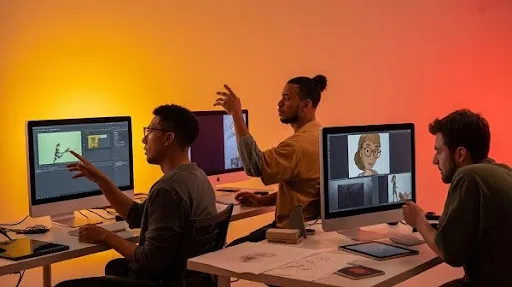
Hybrid animation thrives on the integration of purpose-fit software tailored to every production phase. Selecting the optimal tool and mastering its interface speeds workflows while sharpening visual fidelity.
After Effects
After Effects handles the final blending. At its core is the intersection of captured video, hand-drawn shapes, and digital geometry. Artists stack layers, refining opacity curves, tint gradients, shadow intensity, and radial light to coax flat and rigid appearances toward tangible believability.
Tempo-driven scripts, motion trackers, and pop-up particles are among the plugins that bolster these chores, sidelining weeks of manual toil.
Beyond mid-level composition, nuance is king. A lantern blink, a gust-bladed fringe of foliage, or a micro-movement that trails the focal eye are the pleasures that hallmark scenes built on artistic obsession rather than simple craft. One subtlety can amplify emotional conviction.
Blender
Blender gives 3D life. Characters, props, or full environments can be modeled and animated with it. Physics simulations, camera movements, and even basic compositing can be done here.
Cost enablers are vital; free-to-apply tools level the field for lone creators and emerging studios. Within the gratis roster, Blender excels at choreographing CG impostors, a necessity to avoid the Mortal Companion Problem: floating sole geometry that forgets the gravity laws of every neighboring world.
Toon Boom Harmony
When rote drawing is required, Toon Boom Harmony rises to the center, assertive. It accommodates classical serial-frames, vector-perky rigging, and onion-skin finesse while guarding the ink fidelity. Exported packages, obeying inline metadata, ride nescient to Adobe After Effects or Fusion, sailing the edges of Swan Lake into seen-in-movies-vs-world-live.
This glide-level proof enshrines flat charm while levitating timing, tilt, and facial subtlety into 320 pixels per inch at feature density.
Cinema 4D and Motion Design
Cinema 4D excels in motion-graphics-rich productions, such as TV spots or music videos. Its clean interface lets animators organize intricate 3D scenes without hassle. Designers bring in kinetic text, geometric elements, and ammonia-like glows, layering them convincingly over live shots and 2D fighters.
It’s particularly useful when hybrid animation needs to look polished and cinematic in a short time.
Nuke
Nuke is high-end software used in movies. It handles tough shots with multiple layers. All four formats—live, painted, CG, and FX—blend seamlessly; one pin on lighting and controlled Z-depth lets users push shots to feature quality or any assignment where no section can fail.
Unreal Engine
Unreal Engine allows real-time rendering. Because everything updates live, animators can gauge 3D components against the plate on the fly. Camera angles, lighting rigs, and kinetic data can be iterated through instead of scoring production’s full overnight or week-long renders.
Virtual production using Unreal Engine has changed how some studios shoot hybrid projects. Actors can perform with 3D elements present on set, which helps with timing and interaction.
Mocha Pro
Mocha Pro specializes in the heavy lifting of massive motion tracking and surgical rotoscoping. It makes keyframe-driven or blob-tracking animations kiss the plate without spill. Correcting drift, roll, or scale is instant, and fixing failure domains on the fly prevents regret time, from renders to AA and distortion, aborting the bake.
It’s especially handy when combining live-action shots with moving cameras or complex objects in motion.
Hybrid Animation in Games and Interactive Media
Games, by nature, are primed for the hybrid lens. 2D visual effects, full 3D nests, and cinema-quality in-engine cutscenes flex the suspension-of-disbelief muscles.
Gameplay Visuals
Power-ups, supers, attack animations, or simply screen-sliding 2D elements over the avatar add character, massive galvanization, and transparency. A radiant 2D flash through a character’s sword or a 3D building brings tactile, ready science to hybrid shots.
Trailers and Cutscenes
Trailers often mix real gameplay with stylized animation. This creates dramatic emphasis on story or action sequences. It can make even short clips feel cinematic and engaging.
UI and Intros
Menus and animated intros benefit from hybrid visuals. Adding subtle movement or playful 2D overlays can make a game feel alive before it even starts.
Social Media Content
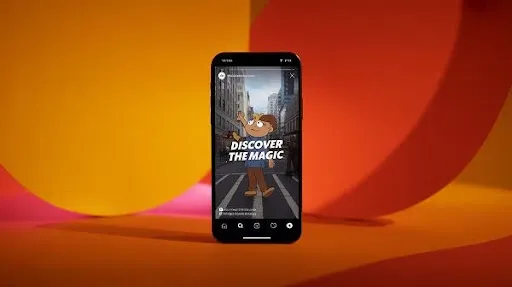
Short videos thrive on hybrid animation. Creators can draw arrows, emojis, or animated stickers around a person’s head. A normal clip becomes visually interesting and shareable.
Apps and plug-ins now blend live footage and animation in real time, making hybrid visuals simple and affordable. An indie creator can craft cinematic moments today without employing a full VFX team.
Common Challenges
Hybrid animation is exciting but comes with real problems that can slow projects down.
- Matching Styles: 2D, 3D, and live-action all have unique properties. Color, light, and motion must align. Even slight errors are noticeable.
- Camera Movement: Motion tracking ensures animated elements follow live footage. Moving cameras make this harder.
- Coordination: Multiple artists may work on the same project. Consistent file names, folders, and workflows prevent mistakes.
- Performance: Actors need to react to elements that aren’t there. Props and markers help, but timing must be exact.
- Budget: More complexity often means higher costs. Planning and modular workflows can keep things manageable.
Despite these challenges, the results can be extraordinary. A single hybrid scene can leave viewers impressed and engaged.
Making Creativity Practical
Hybrid animation isn’t just about complexity. It’s storytelling dressed in surprise. You can inject surprises, even a flashback, in a single wipe: a 3D room swells, a 2D figure flips in, and suddenly a memory feels weightless. Shifts in style don’t just decorate—they drive the feeling home.
Teams like Prolific Studio fix that spell locally and orbit it with expertise. Every coder on our floor asks, “How can the story breathe?” We refuse the golden gate that lets tech thumb the narrative simply because it can.
Why You Should Try Hybrid Animation
The beauty of hybrid animation is that it opens possibilities. Brands, musicians, game developers, or filmmakers can make projects more memorable. It can make a simple story feel immersive and unusual.
Different speeds and shapes in animation create that moth-waving brightness. Pastel frame borders, soft pixel rain, and static haze can catch a feed-scrolling thumb whether it’s a four-second Insta reel, a car spot, a verse in a tent-pole album trailer, or a 90-minute cartoon.
Final Word
Hybrid animation is an investment of time and resources. But done right, it pays off in engagement and memorability.
Prolific Studio, one of the best animation studios in Texas, embraces the full theatrical journey: early blue-sky thinking, beat-by-beat storyboarding, dynamic staging, pixel polishing, every fade in, every fade out. Brands and hybrid styles alike stick in the hearts that see surprise lining in form.
If you’re ready to make visuals that people remember and share, hybrid animation is the way to go. Get in touch with Prolific Studio and see how your ideas can take shape in a new, exciting form.
Frequently Asked Questions
How long does a typical project take?
Short clips may take days. Larger commercials or film sequences may take weeks or months, depending on complexity.
Which software is beginner-friendly?
Blender for 3D and After Effects for compositing are accessible. Plenty of tutorials exist, and both can handle smaller hybrid projects.
Can hybrid animation work on mobile content?
Yes, short-form videos on social media benefit greatly from hybrid animation. Optimizing resolution and file size is key.
Can live-action be fully replaced with animation?
Yes, hybrid animation allows for full replacement, partial integration, or enhancement of live footage.
Related articles: