

A normal movie asks you to watch. A 5D experience dares your body to keep up.
Your seat jolts as a spaceship drops. Air hits your face as a dragon flies past. Mist pops during a river scene. A scent cue lands at the exact second a bakery door swings open. In some setups, you even hold a controller, and your choices change what happens next.
That combo is the simplest answer to what 5D animation is: it is 3D animation plus real-world effects plus audience interaction, all timed to the same beat.
Prolific Studio gets hired for storytelling that performs, not just plays. So we are breaking this down in plain language, like you are buying it, building it, or pitching it.
[elementor-template id=”13845″]
What Is 5D Animation?
It is content designed for a room that fights back. Not in a bad way. In a “your senses are part of the scene” way.
5D animation usually includes:
- 3D animation on a screen or headset
- Motion seats that tilt, shake, and roll with the action
- Environmental effects like wind, mist, heat, water, and scents
- Interactivity that lets the audience aim, choose, or trigger outcomes
The goal is simple: your eyes see it, your body feels it, and your brain buys it.
Regular 3D Movies Stop at the Screen
Regular 3D movies can look huge and sharp. You still sit still. The room stays quiet. The air does nothing. The story runs the same every time.
That is why people call 5D “more than a movie.” The scene leaves the screen and turns the theater into part of the set.
Where 2D Animation and 3D Animation Still Matter
This is not a “5D beats everything” story.
- 2D animation stays perfect for brand explainers, social ads, and character-led series.
- 3D animation stays ideal for product shots, cinematic sequences, and realistic lighting.
- Hybrid animation (mixing 2D and 3D) is a go-to for bold style with depth.
Studios like ours still create plenty of 2D animation and 3D animation because most marketing needs speed, clarity, and repeat use.
5D enters when you want a physical venue moment. Theme parks, touring exhibitions, arcade experiences, museum installs, brand activations, and training labs.
5D Animation vs. 5D Cinema
People also confuse content with the venue. So let’s separate it.
5D Animation vs. 5D Cinema
5D animation vs. 5D Cinema comes down to this:
- 5D animation is the content. It is designed, animated, programmed, and timed.
- 5D cinema is the delivery system. It is the room, seats, effects machines, projectors, and controls.
You can think of it like a game and a console. Both matter. They are not the same job.
How an Animation Studio Builds 5D Content
A capable animation studio treats 5D like interactive filmmaking.
The pipeline often includes:
- story and scene design
- 3D animation and layout
- game-style logic (inputs, triggers, scoring)
- timing maps for seats and effects
- sound built for physical space
A 3D animation studio with real-time experience has a big advantage here. Many 5D projects are built in real-time engines, the same kind used for games and game trailer services.
How 5D Cinemas Deliver It
On the venue side, you need:
- motion seats (single seats or pods)
- effect systems (wind, mist, scents, heat)
- a control server that triggers everything on cue
- a projection or headset system
If the venue gear is poorly tuned, the best animation still suffers.
What Is 5D Motion?
5D motion is the part your inner ear cares about.
Your eyes can accept a lot. Your balance system is picky. If the seat movement does not match what you see, people feel sick or annoyed.
So motion is not random shaking. It is choreographed movement.
Degrees of Movement, Explained Simply
Motion seats often get described by “degrees of freedom.”
- Basic motion moves in three directions: forward-back, left-right, up-down.
- Advanced motion adds tilting and rotation.
More movement gives a more believable feel. A car chase feels real because the seat can pitch, roll, and yaw, not just slide.
Timing Is the Real Secret
The magic is timing.
If the screen shows a sudden drop, the seat needs to drop at the same moment. If the motion lands late, your brain notices.
This is why 5D needs careful programming, not only animation.
Virtual Reality and What It Adds to 5D Animation
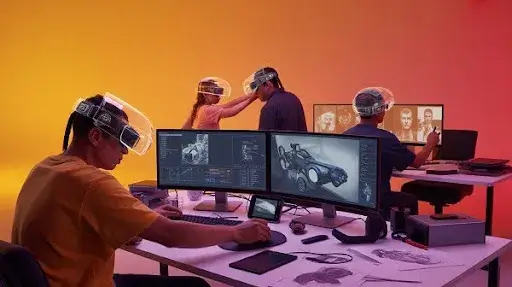
Virtual Reality closes the door on the real room. Put on a headset and the screen is no longer “over there.” It is your full view.
That matters because 5D experiences rely on belief. Virtual Reality makes belief easier.
When you combine Virtual Reality with:
- motion seats
- haptics (vibration, impact feedback)
- wind and mist cues
- interactive controllers
…you get a very strong version of what 5D animation is. The visuals stay close, the motion sells the action, and the audience can look anywhere.
Why Venues Like Virtual Reality for 5D
- Guests can look up, down, behind, and to the side.
- You can build smaller spaces with big scenes.
- You can update content faster than rebuilding sets.
This is also why real-time engines matter. A 5D build using a headset often behaves like a game, not like a film. That overlap is also why teams that offer game trailer services often have the right skills for interactive timing, camera control, and moment-to-moment feedback.
Augmented Reality in 5D Style Experiences
Augmented Reality puts digital elements on top of the real room. People still see their surroundings, with extra content layered in.
This can connect to 5D in a cool way because you can blend:
- real objects people can touch
- digital characters that react
- physical effects that match digital cues
Example: a dinosaur appears in a space. Fans blow as it runs past. Floor vibration hits on footsteps. A roar triggers a chest-level thump from a haptic device.
Augmented Reality 5D experiences can work well for:
- museum exhibits
- retail pop-ups
- education installs
- branded events
Mixed Reality and the “Real Physics” Factor
Mixed Reality goes beyond Augmented Reality. It maps the real space so digital content behaves like it is actually inside it.
So a digital object can:
- rest on a real table
- slide behind a real chair
- bounce off a real wall
This matters for training and simulation.
Mixed Reality and Medical Animation Services
A lot of people think medical animation services are only videos. In reality, medical groups also use interactive training.
Mixed Reality can place digital anatomy onto real mannequins or training models. Students can practice procedures with guidance that sits exactly where it should in real space.
That is one reason Mixed Reality keeps showing up in medical training: it turns “watch” into “do,” while still being guided.
For an animation studio like Prolific Studio, this is where strong 3D animation, accurate timing, and clear instructional design meet. It is also where teams with hybrid animation skills can help. You can mix realistic 3D anatomy with simpler overlays that keep learners focused.
Challenges Faced by 5D Animation
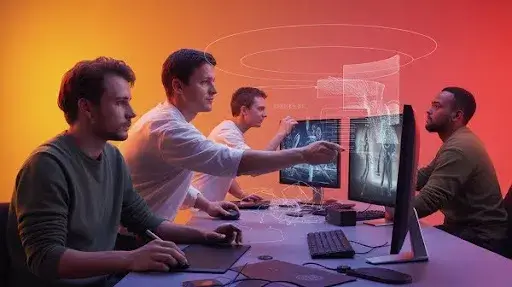
Now the part people feel in budgets and timelines.
The challenges faced by 5D animation are not small. They hit cost, production complexity, and reliability.
1) Costs Stack Up Fast
5D is not only “make a video.” It is “make a video and choreograph hardware.”
Costs usually show up in these areas:
- motion seats and motion control systems
- effect systems (wind, water, mist, scents, heat)
- projection or headset equipment
- installation and safety compliance
- ongoing maintenance and staff training
- content licensing or content production
Even a smaller setup can run into serious investment once you add venue-grade equipment and safety requirements.
2) Production Needs More Skills Than Regular 3D Movies
A team can produce regular 3D movies with a focused pipeline: story, modeling, animation, lighting, sound, edit.
5D needs extra roles:
- real-time engine developers
- interaction design
- motion programming specialists
- show control and hardware integration
- testing teams for timing and comfort
That matters because 5D is unforgiving. If the timing is off, the audience notices. If the interaction is clunky, the experience feels cheap.
3) Hardware Limitations and Comfort Problems
This is where the real pain lives.
- Motion sickness can happen if motion and visuals disagree.
- Seats wear out under heavy daily use.
- Projectors need upkeep.
- Haptics degrade over time.
- Water and scent systems need cleaning, refills, and calibration.
A 5D venue is part theater, part ride, part machine room. That is why content has to be designed with the hardware in mind, not only the story.
5D Animation Software Used to Build Experiences
Let’s get into 5D animation software in plain terms.
Most modern 5D content is built with real-time engines because:
- they handle interaction well
- they can run on different systems
- they allow quick iteration
Unity as a 5D Animation Software Choice
Unity is widely used for interactive content and venue-based experiences.
Why teams like it:
- fast for prototyping
- easier onboarding for new hires
- flexible deployment options
For many venues, Unity hits the sweet spot between performance and speed.
Unreal Engine as a 5D Animation Software Choice
Unreal Engine is known for high-end visuals and lighting.
Why teams pick it:
- strong visual quality out of the box
- great for realism and cinematic impact
- strong tools for real-time rendering
Theme parks and premium installs often pick Unreal when they want guests to say “that looked real.”
Why a 3D Animation Studio Still Matters
Engines do not replace animation skills.
A strong 3D animation studio still brings:
- believable character motion
- clear staging and camera control
- pacing that supports story beats
- lighting and composition that sells realism
You can build an interactive scene in an engine and still end up with flat results if the animation craft is weak. Tools do not create taste.
Tools for 5D Animation Beyond the Engine
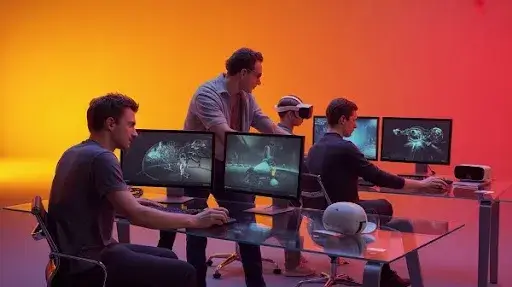
You also need tools for 5D animation to create models, rig characters, and sync hardware.
Tools for Making 3D Assets
Common tools include:
- Autodesk Maya
- Blender
- Cinema 4D
These tools create the characters, props, and environments that go into the engine.
Tools for Show Control and Sync
5D needs a “conductor.” This is software that triggers everything at the right moment.
You map:
- seat motion cues
- wind, mist, water triggers
- scent timing
- lighting hits
- audio cues
It behaves like a precise timeline tied to hardware events.
Supporting tools often include:
- motion curve editors for seat movement
- effect mapping systems for trigger timing
- software development kits for headset and controller input
- spatial audio tools for sound placement
This is one reason 5D production takes longer than typical animation. You are not only animating scenes. You are mapping the physical ride.
What Is a 5D Animation App?
A lot of people search “5D animation app” expecting a creation tool. Most apps are built for experiencing content, not producing it.
A 5D animation app usually becomes “5D” when you connect it to hardware like:
- motion chairs
- haptic vests
- wind kits
- rumble platforms
Without hardware, it is closer to Virtual Reality or 3D.
Examples of Common Platforms
- headset stores with large libraries of Virtual Reality experiences
- personal computer Virtual Reality platforms
- brand-specific venue apps used in arcades and cinemas
Some experiences become “5D-style” through add-ons. A rhythm game with a motion chair and haptic feedback can feel far more physical once the chair tilts and the vest hits on impact cues.
Frequently Asked Questions
What is the difference between 5D animation and regular 3D movies?
Regular 3D movies stay on the screen. 5D adds real-world effects and can include audience interaction, so the room reacts along with the story.
Is 5D animation the same as 5D cinema?
No. 5D animation vs. 5D Cinema is content vs delivery. The animation is what gets made. The cinema is the venue hardware that plays it.
What are common 5D animation examples?
Theme park ride films, interactive shooter attractions, arcade motion rides, museum installs, and training simulations are common examples.
What does 5D motion mean?
5D motion is synchronized seat movement that matches what you see on screen. Timing matters because your balance system notices delays fast.
What 5D animation software is used most?
Unity and Unreal Engine are the main real-time engines used for many 5D builds, with modeling tools like Maya or Blender for asset creation.
Can a 5D animation app create 5D content?
Most “5D” apps focus on playback or Virtual Reality experiences. True 5D usually needs hardware and a production pipeline, not only an app.
Why is 5D animation expensive?
Because it combines animation production with hardware systems, programming, effects design, maintenance planning, and extensive testing for timing and comfort.
Does Prolific Studio provide 5D projects?
Yes. Prolific Studio supports interactive and cinematic pipelines, including 3D animation, hybrid animation, and content built for venue systems, product launches, and experiential formats.
Final Words
Now you have a clear answer and the steps to do it right.
It is not only visuals. It is timing, interaction, and real hardware that have to behave on cue. When it works, audiences stop feeling like viewers and start reacting like they are inside the scene.
If you are planning a 5D attraction, a branded installation, or a training setup tied to medical animation services, Prolific Studio can help you map the concept, build the 3D animation, and design the interactive flow so the experience lands the way it should.
Reach out to Prolific Studio and share what you are building. We will review your goals, recommend the right format, and outline a production plan that fits your timeline and venue setup.
Related Articles: