


Jessica Rabbit is not the kind of animated character you forget after the credits roll.
She enters Who Framed Roger Rabbit wearing that red dress, with that languid voice and impossible silhouette, and the entire film changes temperature. She’s not even the major character. Roger carries the chaos. Eddie carries the detective story. Jessica carries the myth.
That is why people still search for her, debate her, redraw her, reference her, and study her. She is not just a cartoon wife in a famous movie. She is one of animation’s sharpest lessons in presence.
Jessica Rabbit Was Designed Like a Movie Star, Not a Mascot
Most cartoon characters are built for instant friendliness. Big eyes. Clear emotion. Easy movement. Jessica goes the other way.
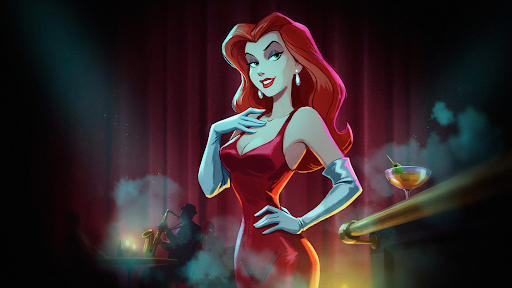
She is designed like an old Hollywood screen siren dropped into a cartoon crime story. The red hair, purple gloves, glittering dress, covered eye, and long pose all point to the same idea: glamour with secrets.
That is why the Jessica Rabbit character design still holds up. It is exaggerated, but not cluttered. You could remove half the background and still know exactly who she is.
That is the trick. She does not need extra props or loud details. Her silhouette does the talking before she says a word.
A good animation studio studies that kind of restraint. Not every character needs more. Some need less, but sharper.
The First Scene Does More Than People Notice
Her nightclub scene works because it understands anticipation.
The film does not rush her entrance. It lets the room wait. It lets the audience hear the performance, see the reaction, and feel the attention shift before the character fully lands.
That is smart staging.
A weaker version would throw her at the screen immediately. This one lets her arrive like an event. The lighting, the music, the framing, the slow movement, all of it builds a kind of animated stage presence.
That is also why the character became bigger than her screen time. She does not need ten scenes to matter. She gets a few strong ones, and the film knows how to use them.
For modern creators, that is worth remembering. Screen time means nothing if the entrance is forgettable.
The Voice Gives Her the Weight
People often talk about the design first. Fair.
But the voice is doing heavy lifting.
Kathleen Turner’s speaking performance gives Jessica that low, controlled confidence. Amy Irving’s singing voice adds the nightclub polish. Together, they make her feel like a performer who knows exactly how much power silence can have.
That matters in animation because voice affects motion.
If a character speaks fast, animators usually chase that rhythm. If a character pauses, the animation has to hold. Jessica is all pause, glance, breath, and slow turn. She does not bounce like Roger Rabbit. She does not need to.
This is one reason she feels different from other famous cartoon characters. Her appeal is not built around speed. It is built around control.
And control is harder than chaos.
Her Look Is Exaggerated, but the Idea Is Clear
Jessica’s design could have become a mess.
The proportions are extreme. The styling is bold. The whole character is built around an animated femme fatale idea. On paper, that can go wrong fast.
The reason it works is focus.
Everything exists in the same world. Dress, hair, eyes, gloves, and stance. Nothing feels like it was added to make the character look “cooler.”
That is where a lot of modern cartoon character design fails. Too many accessories. Too many colors. Too many details fighting for attention.
Jessica proves the opposite. Pick the strongest idea, then commit to it.
That is also why Jessica Rabbit in Who Framed Roger Rabbit feels so tied to the film’s mood. She fits the smoky clubs, crime plot, old studio glamour, and live-action animation style around her.
Hand-Drawn Animation Gave Her a Human Touch
There is something about hand-drawn animation that still feels different when it is done well.
You can feel the pose choices. You can feel the timing. You can sense an artist deciding how long a look should hold before the character moves again.
Jessica benefits from that.
Her movement is not busy. It is not packed with little gestures just to prove she is alive. The animators let her hold the frame. They let the audience watch her.
That takes confidence.
Modern 2D animation software can help artists move faster, test scenes, and clean up production. No argument there. But the software does not decide taste. It does not know when a character should stop moving.
That still comes from craft.
Jessica’s animation works because the artists understood that a slow movement can feel louder than a big one.
She Is More Than the “Glamorous Cartoon”
The lazy read is that Jessica is only famous because of the way she looks.
That is part of it, sure. Ignoring the design would be silly. But it is not the whole reason she lasted.
She has mystery. She has loyalty. She has that dry awareness of how everyone sees her. The film lets people misread her, then slowly shows that she is not as simple as the room assumes.
That gives her bite.
She is not the helpless cartoon wife. She is not the villain either. She sits in that more interesting space where the audience keeps adjusting its opinion.
That is why the question “why is Jessica Rabbit famous” has a better answer than “because of the red dress.”
She is famous because the character has layers, even with limited screen time.
The Noir World Makes Her Work
Take Jessica out of the film’s noir setting, and she loses something.
She needs the club lights, the shadows, the detective mood, the suspicion, the smoky old-Hollywood flavor. Without that world, the design could feel stranded.
That is the part many people miss.
A strong character is not only a strong drawing. It needs a world that makes the drawing feel true. Jessica belongs inside a strange mix of crime story, slapstick cartoon, and classic animation history. That mix should not work as well as it does, but somehow it does.
The same lesson applies to brand characters, game characters, and campaign mascots.
Do not design the character in isolation. Design the world around them too.
What Animators Can Learn From Jessica Rabbit
The biggest lesson is not glamour. It is intention.
Jessica Rabbit succeeds because each creative decision points in the same direction. Design, voice, movement, lighting, plot role, and atmosphere all complement each other.
That is rare.
A lot of animated characters feel like they were built from a checklist. Funny line. Bright colors. Big expression. Quirky movement. Done. Jessica feels more specific than that.
She reminds animators that a character may be unique without demanding attention. She also demonstrates that restraint may be more effective than continuous movements.
For studios working on character-led ads, games, explainers, or entertainment work, that is a serious lesson. Do not just make the character move. Make the audience feel why the character matters.
She Shows Why “Memorable” Is Not the Same as “Busy”
A busy character is easy to design badly.
Add another color. Add a belt. Add a prop. Add a weird hairstyle. Add a tiny detail that nobody will notice once the character starts moving. Suddenly, the design has effort, but not identity.
Jessica avoids that trap.
The red dress does a lot of the work. So does the hair. So does the posture. The design is dramatic, but it is not noisy. You know what the character feels like in one glance.
That matters for brands using 2D video animation services to build mascots or campaign characters. A character does not become stronger because every inch is filled with detail. It becomes stronger when the audience can remember it after seeing it once.
The best designs leave a shape in your head.
Jessica does exactly that.
The Stillness Is the Trick
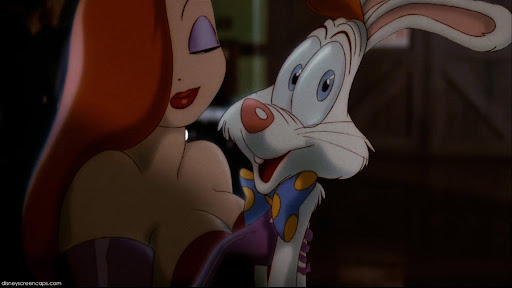
Watch how different her timing feels from the rest of the film.
Roger Rabbit moves like he has ten thoughts exploding at once. The weasels are chaos. The cartoon world is loud, rubbery, and restless. Jessica steps into that energy and slows it down.
That choice makes her feel powerful.
She does not need to compete with the slapstick. She gives the movie another temperature. Her turns are slower. Her pauses are longer. Even the way she looks at someone feels measured.
For studios working on 3D game trailer services, that is a useful reminder. Action is not always the strongest shot. Sometimes a character becomes more interesting when the camera lets them hold the frame.
A fight scene can show skill. A quiet pause can show control.
Jessica’s animators understood that.
Modern Tools Still Need Old-School Taste
Animation tools have changed a lot since Jessica’s era. Production is faster now. Artists can test more, revise more, and build more complex scenes.
That is great.
But better tools do not automatically create better characters.
A polished render can still feel empty. A model can have perfect textures and still be forgettable. A scene can look expensive and still have no personality.
That is where Jessica remains useful, even for teams producing 3D video animation services today. She reminds creators that the idea has to come before the finish.
What is the character’s rhythm? What should the audience feel in the first three seconds? What makes the silhouette recognizable? Does the voice match the body language?
If those answers are weak, better lighting will not save the character.
Frequently Asked Questions
Who Voiced Jessica Rabbit?
Kathleen Turner portrayed Jessica Rabbit's speaking voice. Amy Irving showcased her singing voice. That division allowed the persona to feel both controlled in conversation and polished on stage.
Why Is Jessica Rabbit So Famous?
She is famous because her character is easily identifiable. The crimson clothing, long silhouette, leisurely movement, voice, and famous line all complement each other. She is also more self-aware than one might anticipate based on initial impressions.
What Makes Jessica Rabbit’s Design So Recognizable?
Her design features a clean silhouette and a distinct vibe. The red hair, red dress, purple gloves, covered eye, and sluggish stance all contribute to the classic Hollywood femme fatale look. It's bold, yet not crowded.
What Can Animators Learn From Jessica Rabbit?
Animators can learn that restraint can be stronger than constant motion. Jessica holds attention through timing, pose, voice, and mood. She proves that a character can feel alive without moving every second.
Final Words
Jessica Rabbit is still relevant because she demonstrates that a character does not require unlimited screen time to become memorable.
Yes, the red dress attracts attention. However, the complete artistic package, including the silhouette, voice, timing, noir backdrop, slow pace, and self-aware writing, is what gives the film its lasting appeal.
That’s why Jessica Rabbit is still mentioned in animation conversations decades later. She is a clear illustration of what occurs when character design and performance align.
For animators, studios, and brands, the message is straightforward. Build the idea first. Then let the design, voice, motion, and scene selections support that concept.
That is how a character stays in the room long after the scene ends.
Related Articles: