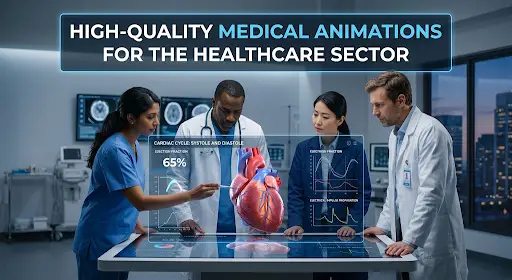
Medical 3D animation services help healthcare brands explain the things people cannot easily see. A drug moving through the body. A device opening inside a vessel. A damaged joint. A surgical step. A disease process that sounds scary until someone can actually picture what is happening.
That is why healthcare animation is not just about making science look impressive. It is about making a difficult subject feel less confusing, without watering it down.
Why Medical 3D Animation Services Build Trust
Trust in healthcare does not come from long words. It comes from clarity.
A patient may not understand a dense brochure about nerve compression. Show them a short visual of the nerve, the pressure point, and the treatment path, and the conversation changes. A physician may not need a simplified explanation, but they still need the mechanism to be accurate.
An investor may not know the science deeply, but they need enough understanding to believe the product has a real place in the market.
That is where medical animation helps. It gives everyone a shared picture.
The tricky part is getting the balance right. Too much detail and the viewer gets lost. Too little detail, and the video starts feeling like marketing pretending to be science.
Healthcare Audiences Are Already Cautious
Healthcare viewers rarely come in relaxed.
Patients may be nervous. Doctors may be skeptical. Procurement teams may be comparing similar devices. Pharma teams may be thinking about claims, approvals, and review risk. Investors may be trying to understand whether the science is real or just packaged well.
So a healthcare explainer animation has to earn trust quickly. It cannot just look polished. It needs to show the right thing, in the right order, with enough restraint to feel credible.
A good video does not shout, “Trust us.”
It helps the viewer understand enough to trust the message on their own.
Anatomy Animation Makes Hidden Problems Easier to Explain
A lot of healthcare marketing has the same problem. The important part is happening inside the body.
Inflammation, medication absorption, tissue healing, plaque formation, tumor development, nerve injury, and immunological response are all difficult to film. Even if medical film exists, it may be too gruesome or difficult for a non-specialist to understand.
That is where anatomy animation for medical marketing becomes useful. It can peel back layers. It can zoom from the full body into an organ, then into tissue, then into a cell. It can simplify the view without turning the science into a cartoon.
A good animation studio will not only ask what looks impressive. It will ask what the viewer needs to understand before they can believe the message.
Medical Animation Is Not Only for Patient Education
Patient education is a big use case, but it is not the only one.
Healthcare brands employ animation for conference presentations, physician education, device demonstrations, pharmaceutical launches, corporate training, investor decks, payer communication, and sales assistance. Each requires a different amount of detail.
A patient video may need slower pacing and plain language. A physician video may need more precision. A device video may need step-by-step movement. A pharma video may need review-ready claims discipline. An investor video may need to explain the science without turning into a lecture.
That is why the types of medical animation matter. A mechanism-of-action video is not the same as a surgical animation. A device explainer is not the same as disease awareness content. A patient support video is not the same as a pharma launch asset.
Sequence Is Where 3D Starts to Earn Its Place
Some medical ideas are not just visual. They are sequential.
First, the condition develops. Then the body responds. Then the treatment enters. Then the therapy acts. Then the outcome becomes possible.
A still diagram can show one moment. A 3D medical animation video can show the chain of events.
That has implications for drug mechanisms, surgical equipment, implants, diagnostic goods, biologics, and medical devices. If the spectator needs to grasp movement, timing, positioning, or cause and effect, 3D is generally more effective than static graphics.
You are not just showing anatomy. You are showing what happens.
2D Still Works in Healthcare, Sometimes Better
Not every healthcare message needs 3D.
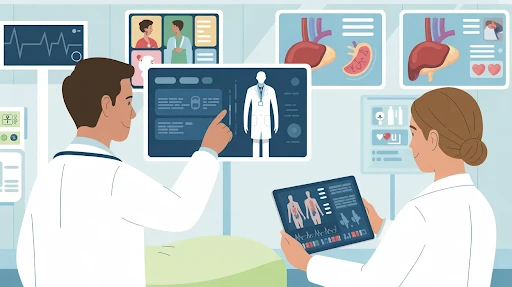
For service explainers, hospital onboarding, insurance guidance, wellness campaigns, app tutorials, or behavior-change videos, 2D animation services can be cleaner. They are often easier to revise, easier to simplify, and less visually heavy.
That matters when the message is not about anatomy or product mechanics. If the goal is to explain an appointment process, a care pathway, a patient portal, or a prevention campaign, 2D may do the job faster.
The smart choice is not “3D looks better.”
The smart choice is, “What does the viewer need to understand?”
Pharma Animation Needs Accuracy Before Beauty
A pharma video can look beautiful and still fail if the science is loose.
That is why pharmaceutical 3D video production needs structure from the beginning. The script, storyboard, visual claims, labels, voice-over, and final sequence all need to line up with what the brand is allowed to say.
Medical, legal, regulatory, and brand teams should not be treated as unexpected visitors during the final assessment. They must be involved early enough to identify flaws before the animation is polished.
It may feel slower, but it usually saves time. Fixing a claim in a script is easy. Fixing it after full animation is not.
3D Medical Visualization Helps Internal Teams Too
Not all confusion is external.
Inside healthcare companies, different teams often explain the same product in different ways. Sales focuses on features. Medical affairs focuses on accuracy. Marketing wants the story to feel simple. Leadership wants a clean investor version. Product teams care about details.
That can get messy fast.
3D medical visualization gives everyone a shared reference. Once the treatment pathway, anatomy, mechanism, or device movement is built visually, the team can point to the same sequence instead of relying on scattered slides and repeated explanations.
That helps the final video, yes. It also helps the whole campaign stay aligned.
Good Medical Animation Should Feel Calm, Not Overproduced
This is where healthcare brands need to be careful.
A medical video does not require dramatic music, spectacular camera movements, or frequent visual effects to feel professional. In fact, this might make the message seem less trustworthy.
The better approach is usually calmer. Clean anatomy. Clear movement. Careful labels. Smooth pacing. Enough detail to feel accurate, but not so much that the viewer stops following.
Medical animation should not feel like a trailer. It should feel like someone finally explained the thing properly.
Patient Education Works Better When the Fear Drops
Patients do not always need more information. Sometimes they need the right information shown in a way their brain can handle.
A diagnosis can make people panic. A treatment plan can sound bigger than it is. A procedure can feel frightening because the patient only imagines the worst version of it. Medical animation can slow that down.
A short patient video might show what is happening in the body, what the treatment is meant to do, and what the next step looks like. Not with scary detail. Not with cartoonish simplification either. Just enough visual clarity to make the unknown feel less hostile.
That is where healthcare explainer animation can support trust. It gives patients something clear to hold onto before they speak with a doctor, read instructions, or make a decision.
Device Marketing Needs Movement, Not Just Product Shots
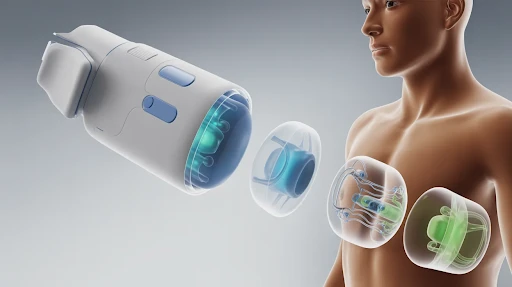
Medical devices are hard to sell with still images alone.
A photo can show what the device looks like. It cannot always show how it opens, locks, fits, expands, delivers, measures, scans, or moves through the body. And when the product is small, internal, or procedural, a real-life video may not explain enough.
That is where 3D helps.
A device animation can show the tool entering the right space, interacting with anatomy, and completing the intended action. The viewer sees the logic, not just the object. That matters for surgeons, hospital buyers, sales teams, and investors.
A strong 3D animation company should understand that medical device visuals need more than a clean render. The movement has to be correct. The anatomy has to make sense. The sequence has to match how the device is actually used.
Pharma Launches Need One Clear Scientific Story
Pharma teams often have too many versions of the same story.
One version for medical affairs. One for sales. One for conferences. One for investors. One for patient education. Then the message starts drifting.
A solid visual system can fix some of that.
With pharmaceutical 3D video production, the launch team can build one approved core explanation and then adapt it into shorter cuts for different audiences. The main mechanism video may be more detailed.
The conference version may focus on science. The patient-facing cut may use simpler language. The sales version may focus on the problem and the approved value story.
The science stays consistent. The delivery changes.
That is the point.
Anatomy Visuals Should Not Try to Show Everything
This is a common mistake.
A team asks for full anatomical detail because they want the animation to feel accurate. The result becomes crowded. Too many structures. Too many labels. Too much movement. The viewer stops following.
Good anatomy animation for medical marketing is selective. It shows what the audience needs for that message and leaves out the rest.
If the film is about knee discomfort, the viewer may not require all ligament and tissue layers. If it is about a vascular device, the viewer may require vessel construction, device location, and blood flow, but not a whole anatomy course. If it is about a drug mechanism, the focus may need to move from organ to cell to receptor.
Accuracy matters. So does focus.
Brand Motion Has a Place, but Keep It Small
Healthcare brands still need branding. A device launch, pharma campaign, hospital explainer, or investor video should feel finished and consistent.
That is where logo animation services can help.
But in medical content, branding should not overpower the message. A long logo intro can feel awkward when the viewer is waiting to understand a treatment or condition. Keep it short. A clean opening mark or closing brand motion is usually enough.
The medical story should stay in front. The logo should frame it, not interrupt it.
Frequently Asked Questions
Final Words
Medical 3D animation services help healthcare businesses develop trust by making difficult concepts easy to view, debate, and remember. They may help with patient education, device marketing, pharmaceutical launches, conferences, investor presentations, and sales training without requiring everyone to understand complex medical terminology.
The most effective medical animation is calm, accurate, and focused. It doesn’t reveal everything. It displays the correct information in the appropriate sequence for the intended audience.
Related Articles: