The Pixar vs. DreamWorks debate usually starts the same way: with the first animated movie that made you forget you were watching “animation.” For some people, it’s the awe of Toy Story turning plastic into something you could almost tap with your knuckle. For others, it’s Shrek proving computer-generated characters could land jokes with real timing, not just pretty lighting.
Both studios changed the rules. They just changed different rules, which is why this argument never really dies.
The One-Line Difference That Explains the Rivalry
Pixar’s approach to emotional truth is to make the world physically credible. DreamWorks frequently changes the appearance, tone, and pace of its films in order to capture the attention of its audiences.
That’s not a value judgment. It’s two playbooks.
And if you’re building stories for screens today, that split still matters. Not just for feature films, but for how audiences respond to character, style, and pacing across everything from commercials to games.
Pixar’s “Tactile Reality” Advantage
Pixar’s early superpower was making computer graphics feel like matter. Not “good for its time.” Matter.
A lot of that comes down to a studio culture that treated technology like a storytelling department. Tools weren’t built to show off. They were built because the story demanded something the existing toolkit couldn’t do convincingly.
Pixar’s RenderMan is a good example of that mindset. It’s been central to Pixar’s pipeline for decades, and Pixar offers a Non-Commercial version that’s the same software, with the restriction being non-commercial use.
That matters for the bigger argument: Pixar’s look was never just “Pixar style.” It was the outcome of a philosophy that said, “If the audience can believe the light, they’ll believe the feeling.”
Why Pixar’s Tech Obsession Works (When It Works)
There’s a misconception that realism is the end goal. It’s not. Realism is the tool.
When Pixar is on a hot streak, the physical believability acts like a trampoline for emotion. The audience stops thinking about the medium. They focus on the character’s problem.
It’s also why Pixar has minted so many famous cartoon characters without relying on the same comedy brand every time. The emotional premise is usually simple and human. The world just supports it with enough physical credibility that the emotion lands clean.
From a Prolific Studio perspective, this is the same reason we tell clients not to confuse polish with impact. A gorgeous frame is nice. A frame that makes you care is the real job.
The Pixar Brain Trust: A Story Culture People Misunderstand
Pixar’s “secret sauce” gets romanticized. The reality is less mystical and more uncomfortable.
The Brain Trust is not a committee that votes stories into shape. Ed Catmull’s own explanation is blunt: the group has no authority. Its power comes from candid feedback and trust, not control.
That’s a big deal, because it means Pixar’s process is designed to surface problems early without turning feedback into bureaucracy. It’s a system built to protect the film, not the ego.
If you’ve ever sat in a review session at a video animation studio in the USA, you’ve seen the difference between feedback that improves the work and feedback that turns into a personality contest. Pixar’s model, at least in theory, is trying to keep the room focused on the project.
DreamWorks’ Early Disruption: Not “Better,” Just Different
DreamWorks didn’t beat Pixar by trying to out-Pixar Pixar. It zigged.
Even in the early days, DreamWorks made a point of pushing tone in a different direction. More satire. More pop culture. More willingness to let animation feel a little rebellious.
That matters in the Pixar vs. DreamWorks story because it widened what mainstream CG could be. Pixar made audiences cry. DreamWorks made audiences laugh in a way that didn’t feel like a Disney echo.
And once Shrek landed, it wasn’t just a hit. It was a permission slip. Studios didn’t have to chase one “correct” CG look or one “correct” family-friendly tone.
The Hidden Battle: House Style vs Film-by-Film Identity
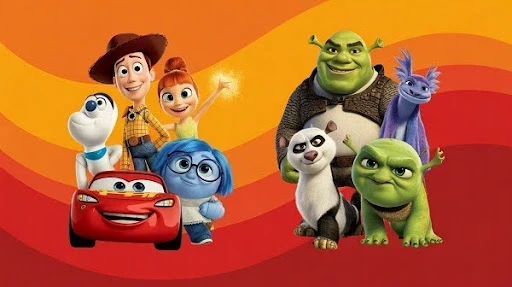
Here’s where the rivalry gets interesting.
Pixar’s coherence is part of its brand. Even when the world shifts, there is frequently a sense of the same studio hand at the wheel. This regularity fosters confidence among audiences.
DreamWorks, on the other hand, has developed a reputation for switching lanes. Comedy one year, legendary adventure the next, and then a stylized visual experiment that appears to have sprung straight out of a sketchbook.
Neither approach is automatically better. They create different strengths:
- Pixar’s consistency can make audiences feel safe investing emotionally.
- DreamWorks’ variety can keep the medium feeling restless and surprising.
The industry needs both. If everyone chased one house style, animation would start feeling like a single long movie with different character names.
What This Means for Modern Animation Studios
For Prolific Studio, the Pixar vs. DreamWorks conversation isn’t fandom trivia. It’s a useful lens for decision-making.
When clients come to us, the first question isn’t “Do we want Pixar or DreamWorks?” The real question is:
- Do we want the audience to believe the world as if it’s real, so the emotion hits harder?
- Or do we want a bold style choice and sharper tonal identity that makes the piece stand out instantly?
That choice affects everything. Character design. Lighting. Timing. Even the kind of humor you can pull off.
It’s also the reason the studio you hire matters. A 3D animation studio that’s great at tactile realism may not be the best fit for a graphic, stylized look with aggressive shape language, and vice versa.
DreamWorks’ Style Freedom Is Not Random, It’s a Strategy
DreamWorks’ biggest flex in the last decade is that it refuses to let one “correct” look take over the whole studio. Instead, it’s been leaning into films that feel like different art teams were given different rulebooks.
You can see it in how The Bad Guys pushed a graphic, comic-strip vibe by layering 2D-style marks and shapes on top of 3D characters, rather than polishing everything into the same smooth CG finish.
You can see it again in Puss in Boots: The Last Wish, where the studio explicitly chased a “fairy tale painting” feel.
You can see it in The Wild Robot, where the goal was a painterly, hand-crafted look that didn’t pretend to be photoreal.
This is where hand-drawn animation influence shows up, even in a 3D film. Not because the movie is suddenly drawn on paper, but because the image is allowed to look designed, brushed, and imperfect on purpose.
The DreamWorks Tech Story People Miss: MoonRay and Faster Iteration
DreamWorks doesn’t talk about its rendering pipeline like it’s a marketing mascot, but the decisions matter.
MoonRay is DreamWorks’ production renderer, and DreamWorks announced plans to release it as open source in 2022, then followed through by open-sourcing the project.
The official MoonRay website defines it as an open-source production renderer utilized on a variety of DreamWorks features, with a focus on current performance concepts like distributed rendering and an XPU mode that uses GPU and CPU simultaneously while matching CPU output.
Why it matters in the Pixar vs. DreamWorks debate: DreamWorks has been structured to allow for speed and innovation. When iteration is faster, you may experiment with stronger lighting, compositing, and stylization without committing the entire timetable to a single hazardous test.
If you’ve ever watched animation studios in Los Angeles move from “cool idea” to “final shot,” you know the truth: style is not only taste. It’s a pipeline. You need tools that let artists push and pull the look without breaking the build every time.
DreamWorks’ Real Acting Advantage: Comedy Timing as a Craft Discipline
Pixar is excellent at emotional clarity. DreamWorks is excellent at energy.
DreamWorks’ strongest films are built around performance that plays like live-action comedy, just with characters you couldn’t film in real life. That means timing, pauses, eye lines, and reaction shots that land the joke before the dialogue even finishes.
This is also why DreamWorks’ “style freedom” works. When a movie commits to a bold look, it can’t hide behind the look. The acting still has to land. That’s the same standard you’d expect from a good 2D animation studio: if the stance and timing are correct, the viewer believes the character, even without realism.
So Who Wins, Really? Depends What You Want From the Movie
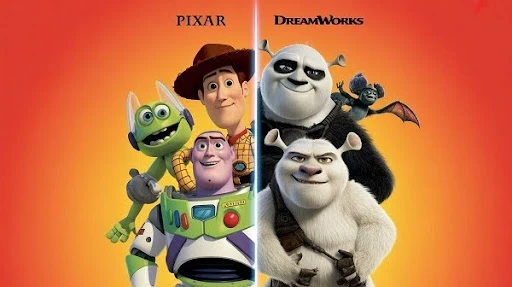
Here’s the honest answer: most people aren’t picking a studio. They’re chasing a feeling.
Pick Pixar when you want:
- A clean emotional arc that builds to a gut-punch payoff
- A world that feels physically believable so the emotion lands quietly
Pick DreamWorks when you want:
- A bolder visual swing where the image itself is part of the entertainment
- Comedy timing and tone shifts that keep the movie punchy
- A film that looks like it could not have been made by “the default animation style”
If you’re arguing at the group chat level: Pixar usually wins “I cried.” DreamWorks usually wins “I quoted it.”
What Prolific Studio Takes From This, Especially for Games
If you work in content, trailers, or branded animation, Pixar vs. DreamWorks is basically a cheat sheet for creative decisions.
- If the goal is trust and emotional pull, Pixar’s approach is the model: clarity, restraint, believable lighting, and a simple human premise.
- If the goal is instant identity, DreamWorks is the model: bold design rules, punchy staging, and the confidence to let the image look like art.
This is exactly where game trailer services often split into two styles. One trailer sells mood and emotion like a short film. Another trailer sells energy, jokes, and visual flair like a music video with a plot. Neither is “better.” The brief decides.
And if the project is interactive, performance still matters. Our game animation services work lives and die on readable intent: the character’s goal, the timing of the action, and a camera that never fights the viewer.
Frequently Asked Questions
Final Words
Pixar has earned a reputation for creating lifelike settings that make emotions seem true. DreamWorks established a reputation for diversity, timeliness, and a willingness to rewrite the visual conventions from picture to film. RenderMan and the Brain Trust explain part of Pixar’s edge. MoonRay and a style-first mindset explain part of DreamWorks’ edge.
The best part is this: modern animation is healthier because both approaches exist. One keeps the heart sharp. The other keeps the medium weird in the best way.
Related Articles: