

The Drifter looks like a cozy throwback for about five seconds, then it grabs you by the collar and drags you into a pulp nightmare. Powerhoof’s pitch is blunt: a “fast-paced” point-and-click thriller with sharp voice work, crunchy pixel animation, and controls built for both mouse and gamepad.
This is not a nostalgia museum piece. It’s the kind of adventure game that wants you tense, moving, and slightly paranoid, like you’re reading a thriller at 2 a.m. and keep telling yourself “one more chapter.”
Quick Facts You Can Scan in 10 Seconds
- Developer: Powerhoof (based in Melbourne, Australia).
- Release date: July 17, 2025 (PC on Steam, also listed for GoG).
- Switch: In development, targeting later in 2025.
- Demo: “The Drifter – Chapter 1” demo is available on itch.
- Core vibe: Pulp thriller pacing with point-and-click investigation and high-impact pixel animation.
The Opening Scene That Tells You This Isn’t a Cozy Adventure
Most point-and-click games give you time to get comfortable. The Drifter starts with the opposite energy.
Your protagonist, Mick Carter, is hopping a boxcar back to his hometown, witnesses a murder, gets chased by high-tech soldiers, and ends up drowning in a reservoir. Then the game yanks him back into his body seconds before death and tells you to run that nightmare forward.
That intro matters because it establishes the rules immediately. This story is not about strolling between quirky non-player characters while you try every inventory item on every object. It’s about momentum, danger, and making decisions under pressure.
Why The Drifter Feels Faster Than Classic Point-and-Click Games
Powerhoof describes this as a classic 2D adventure “with the brake-lines cut,” where puzzles are meant to be unobtrusive and investigative, not roadblocks that stall the story.
That design choice shows up in a few ways players notice right away:
- Fewer dead-end laps. You’re pushed forward instead of being left to wander in circles.
- Practical puzzle logic. Mick is written as a grounded, do-what-works kind of guy, so solutions lean “street smart” instead of magical thinking.
- Controller-friendly intent. The game supports play on mouse or controller, including unique twin-stick controls, which is a big tell that they’re aiming for flow, not fiddling.
This is also where the term interactive animation stops sounding like a buzz phrase and becomes the whole point. The game’s best moments are not just “pretty frames.” They’re animated tension you’re steering, beat by beat, while the story refuses to slow down.
Australian Noir, Not Generic Noir
Noir is easy to imitate. Neon lights, trench coat energy, a sad saxophone. The Drifter is more interesting because it’s grounded in a distinctly Australian backdrop, and it wears that identity instead of sanding it down for a generic audience.
That local grounding helps in two ways.
First, the world feels specific. Second, the tone gets sharper. Powerhoof’s own materials describe the story as pulling from King, Crichton, and Carpenter, with a dash of 70s Aussie grindhouse. That’s a strong tonal recipe, and it’s not something you accidentally stumble into.
Small note from the production side: specificity always makes a story cheaper to believe. You do not have to explain why a character sounds like he belongs in his world. He just does.
Pixel Art That’s “Crunchy” on Purpose
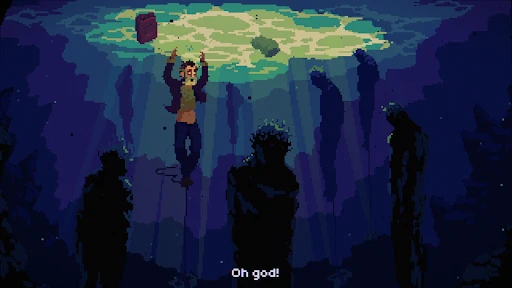
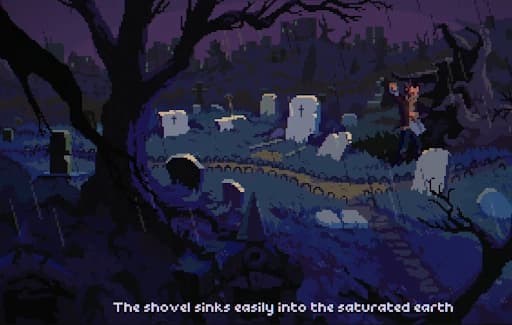
The Drifter’s pixel work is not trying to be cute. It’s gritty, high-contrast, and deliberately textured. Powerhoof calls out “raw crunchy pixel art and high-impact animation” as a headline feature, and the footage backs it up.
If you care about game art styles, this is the kind of project that’s worth studying because it commits to a look and sticks with it. No half-measures. The palette and contrast choices are doing storytelling work, not just decoration.
And yes, you can feel the influence of older constraints without the game pretending it’s 1993. It uses retro language, but the direction is modern: punchy staging, clean silhouettes, and animation that lands hits with weight.
A Quick Word for Teams Watching This as Craft
If you build trailers, cinematics, or narrative-heavy game content, The Drifter is a reminder that pacing can be a visual effect.
At Prolific Studio, we see this often when clients ask for animation services in Los Angeles: the “hook” rarely comes from adding more stuff. It comes from cutting hesitation. Tight shots. Clear intent. Scenes that start late and end early.
That’s exactly what The Drifter is aiming for in adventure-game form.
Demo First, Then Full Game
If you want to understand the tone in the quickest possible way, start with the Chapter 1 demo. It’s available as a standalone download on itch, and it gives you a clean slice of the game’s voice, pacing, and puzzle approach.
If the demo clicks, the full release is positioned for PC on July 17, 2025, with Nintendo Switch targeted later in 2025.
Puzzles Are “The Glue,” Not the Speed Bumps
Powerhoof’s own demo page spells out the design goal: this is a classic point-and-click adventure “with the brake-lines cut,” where puzzle-solving is meant to be the glue that holds the story together, not the thing that blocks it.
That shows up in the way scenes move:
- Shorter puzzle chains: You’re not solving a ten-step logic ladder just to open one door. You’re doing enough to stay involved, then the story keeps rolling.
- “Practical guy” problem solving: Mick is written as someone who tries the obvious, human thing first. The puzzles match that tone.
- Tension-first pacing: The game keeps giving you reasons to act now, not later. It’s a thriller rhythm in an adventure wrapper.
If you’ve ever bounced off the genre because you got stuck, The Drifter’s approach is basically: “You’re here for momentum. We get it.”
Twin-Stick Controls Change the Entire Feel of the Genre
This is one of the smartest choices The Drifter makes, and it’s easy to miss until you play it on a controller.
The Steam page calls out “unique twin-stick controls” that make it comfortable on the couch or at your desk. That’s not a minor accessibility note. It changes how the game reads in your hands. You stop feeling like you’re “operating” a point-and-click. You start feeling like you’re driving a scene.
It also forces better staging. When players can move with intent and speed, the game needs clear visual priorities, clean hotspots, and animation cues that say “look here” without screaming. That’s the same discipline you see in strong 2D animation services, where clarity beats detail every time.
PowerQuest: The Tool Behind the Workflow
The Drifter runs on Unity, but Powerhoof didn’t just grab Unity and hope for the best. They built and shared PowerQuest, a toolkit designed specifically for 2D sprite-based point-and-click games, with a workflow inspired by tools like Adventure Game Studio, but with Unity’s flexibility.
PowerQuest’s own feature list reads like someone trying to remove friction from narrative production:
- Templates for classic interfaces (including LucasArts-style verb setups) and modern click-first layouts
- Centralized tools for rooms, characters, inventory, and dialogue trees
- Save and restore support
- Camera tools like parallax and smooth scrolling
- Specialized handling for pixel art and high-res games
If you’ve ever used 2D animation software that makes timelines and scene organization feel painless, you’ll get the vibe. The tool isn’t the art. It’s what keeps the art from getting buried under busywork.
The Look Is “Crunchy” on Purpose, and That’s a Choice
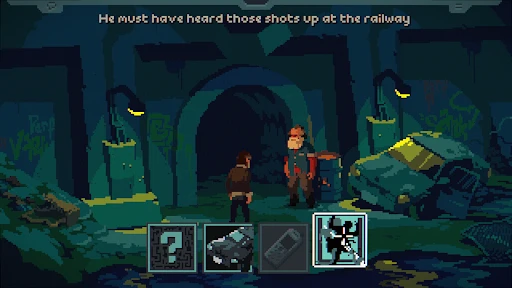
The Steam listing doesn’t hide what it’s selling: “raw crunchy pixel art” and “high-impact animation.” The important part is that “crunchy” isn’t code for sloppy. It’s code for texture, contrast, and a slightly unstable, lived-in feel that matches noir paranoia.
There’s also a sneaky advantage in the PowerQuest approach: it’s built to handle pixel art and high-res work in Unity. That means if the team wants certain moments to punch harder, the pipeline can support it without forcing the whole game into a different art direction.
This is where people bring up the false debate about 2D “needing” 3D polish. It doesn’t. It needs intent. Still, having optional headroom is useful, and it’s something a good 3D animation company understands instinctively: you don’t use every tool all the time, you use the right tool for the shot.
Sound and Voice Do a Lot of Heavy Lifting
A thriller can survive plain visuals if the sound design is sharp. The Drifter goes further and leans into a brooding, cinematic tone. Coverage of the release highlights professional voice acting and a dark-synth cinematic score. The soundtrack is also published with credits to Mitchell Pasmans and Louis Meyer, released alongside the game.
This matters because point-and-click pacing can die in silence. The Drifter uses audio to keep scenes pressurized, even when you’re “just” clicking through a conversation or scanning a room.
From a production angle, this is also where game animation services intersect with narrative design. You can animate a great reaction shot, but if the sound and voice do not land, the moment goes flat. The Drifter clearly treats those layers as part of the same scene, not separate departments.
Demo vs Full Game: What to Play First
If you want the cleanest entry point, the Chapter 1 demo is available on itch.io and is labeled as the “Chapter 1 Demo.” It’s a solid tone check because it shows the game’s rhythm and how it treats puzzles as momentum.
For the full release, Powerhoof’s press sheet lists PC platforms (Steam and GOG) on Windows, macOS, and Linux, with the game released on July 17, 2025. The Nintendo Switch version has been described as in development, with timing framed as later, depending on the latest updates.
If you’re the type who likes to “sell yourself” before buying, watch the release date trailer, then play the demo. That combo tells you almost everything you need. This is also exactly what strong game trailer services aim for: show the promise, then give a playable proof point.
Frequently Asked Questions
Does The Drifter support controller play and twin-stick controls?
Yes. The Drifter supports controller play with unique twin-stick controls, designed to feel comfortable on a couch or at a PC.
Where can I download The Drifter Chapter 1 demo?
You can. The Drifter Chapter 1 demo is available on itch.io as “The Drifter – Chapter 1” demo.
What is The Drifter PC release date and which platforms is it on?
The Drifter released on July 17, 2025 for Windows, macOS, and Linux, with Steam and GOG listed as PC storefronts.
What engine is The Drifter built in, and what is PowerQuest?
The Drifter is built in Unity, and PowerQuest is Powerhoof’s Unity toolkit for making 2D point-and-click adventure games with a streamlined workflow.
Final Words
The Drifter works because it treats a point-and-click like a thriller, not like a museum exhibit. It trims puzzle friction, builds for controller flow, and backs its noir mood with art texture, voice, and a score that keeps the tension humming. The result feels modern without begging for nostalgia points, which is the hardest trick in the genre.
Related Articles: