3D animation for startup pitch content helps founders explain what words and static slides often struggle to show. A product that is not fully built yet. A device still in prototype. A SaaS platform with invisible workflows. A medical idea happening inside the body. An AI product that sounds abstract until someone can see how the system works.
Investors hear pitches all the time. They do not need another slide saying the market is growing. They need to understand the product fast, believe the team can build it, and see why the idea deserves capital.
That is where animation can help.
Why 3D Animation for Startup Pitch Content Works
Most startup pitches lose energy when the product explanation gets foggy.
The founder starts strong. The problem sounds real. The market looks interesting. Then the product slide arrives, and suddenly everyone is trying to imagine the thing from diagrams, screenshots, or a rough prototype image.
That is a bad moment.
A short 3D visual can show the product doing its job. It can show the user journey, the device mechanism, the platform flow, the physical design, or the before-and-after result. It gives investors a picture before they start filling in the blanks themselves.
Good startup explainer video production does not replace the founder’s pitch. It makes the pitch easier to follow.
Investors Do Not Want a Movie. They Want Clarity.
This is where many startups overspend.
They think an investor video has to look like a launch film. Big music. Slow product reveal. Dramatic camera movement. Lots of glowing particles. It may look expensive, but it often says very little.
A pitch animation should be tighter.
Show the problem.
Show the product.
Show how it works.
Show why it is hard to copy or easy to adopt.
Stop before it becomes a commercial.
A good animation services in the USA partner should understand that investor content has a different job from consumer advertising. The goal is not to entertain for two minutes. The goal is to make the next question smarter.
Product Demo Animation for Funding Makes the Idea Feel Real
A prototype can be messy. That is normal.
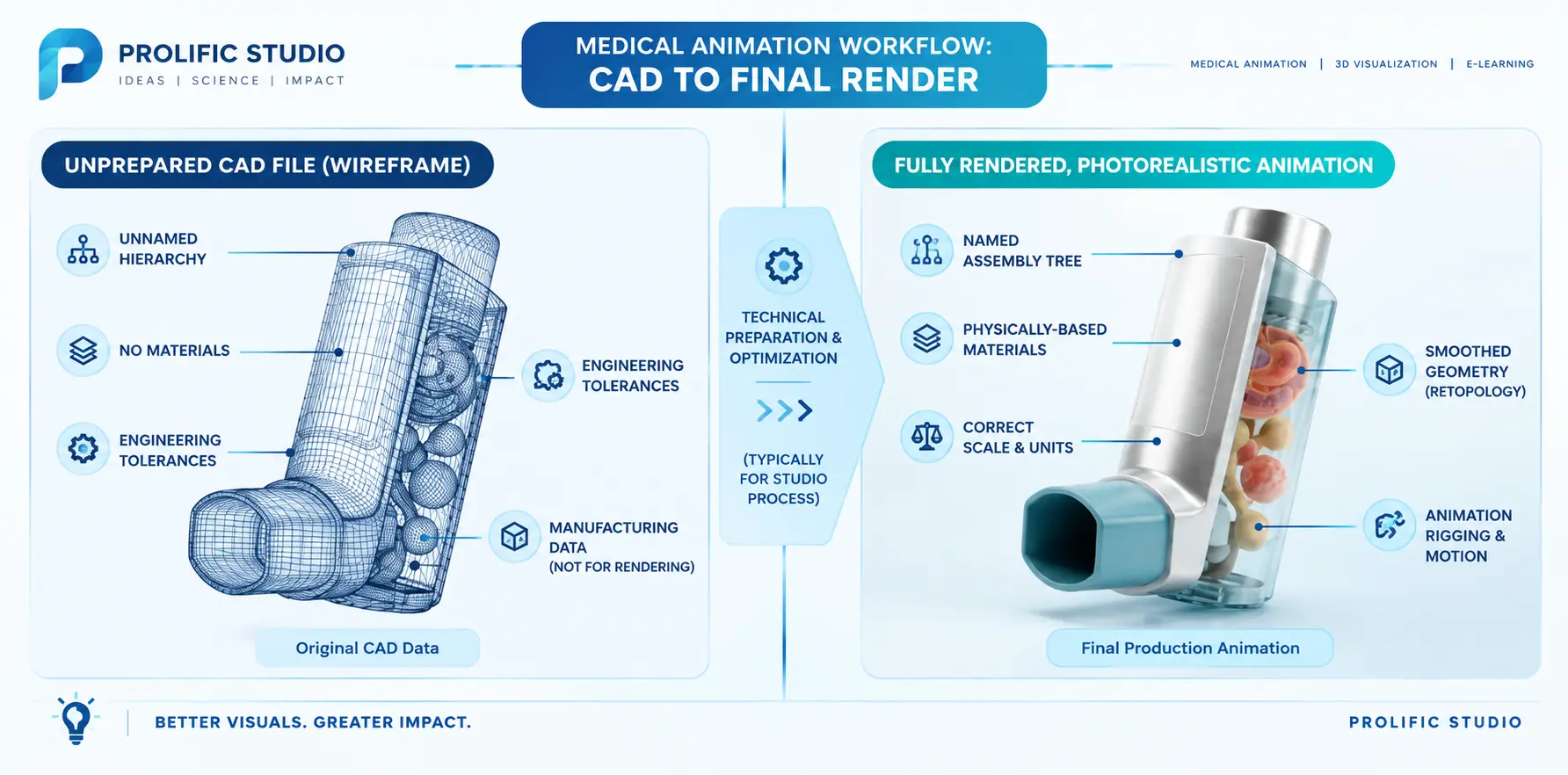
The hardware may not be ready. The app may still be in design. The machine may exist only in CAD. The medical product may need approvals before a live demo is possible. The product may be too small, too technical, or too unfinished to film properly.
That is where product demo animation for funding is useful. It lets the founder show the intended product experience before the finished version is ready for a polished shoot.
This can be especially helpful for hardware startups, biotech, robotics, AI tools, medical devices, manufacturing tech, climate tech, consumer products, real estate platforms, and SaaS companies with complex workflows.
Investors know the product may still be early. They just need to see the logic clearly.
A Pitch Deck Animation Should Support the Story, Not Hijack It
A founder still has to pitch.
That means the animation should fit into the deck, not take over the meeting. A 20 to 45-second clip is often enough for a product explanation. Longer clips can work for follow-up materials, but the live pitch should stay lean.
Investor pitch deck animation works best when it is placed where the explanation usually gets heavy. Product slide. technology slide. user flow. market use case. implementation. demo section.
The animation should answer one hard question.
How does it work?
Why is it different?
What does the user experience?
How does the device move?
What happens after adoption?
If the animation tries to answer everything, it becomes another pitch problem.
2D Still Works for Some Startup Pitches
Not every startup needs 3D.
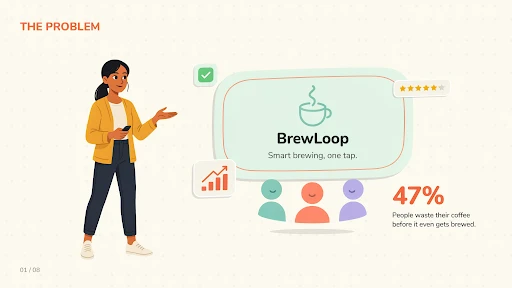
If the product is a service, marketplace, workflow, app concept, or simple software experience, 2D animation services may be cleaner. A 2D explainer can show the problem, user journey, business model, and customer pain without requiring detailed modeling.
2D is also easier to update when a startup is still changing the product story. Early-stage companies pivot. Copy changes. Screens change. Positioning changes. A lighter visual system may be smarter if the idea is still moving.
Use 3D when shape, mechanism, depth, product design, physical behavior, or invisible systems matter.
Use 2D when the pitch needs a clearer story more than visual realism.
3D Helps When the Product Is Hard to Imagine
Some startups fail to communicate because the product is ahead of the audience’s mental picture.
A wearable sensor that tracks internal data.
A robotics product for warehouses.
A clean-energy device with moving internal parts.
A surgical tool that acts inside a small space.
A construction tech platform showing jobsite coordination.
An AI system that routes decisions across several data sources.
A still image does not always help.
A 3D animation company can turn those difficult ideas into a sequence investors can follow. It can show scale, movement, technical logic, and outcome without forcing the founder to explain every detail verbally.
That matters because investor attention is fragile. Once people get lost, they start judging the pitch from confusion.
The Best Pitch Animation Shows Use, Not Just Design
A product can look good and still be unclear.
This is common with early-stage founders. They show a beautiful render, but investors still do not understand how the product is used, who uses it, what changes, or why someone would pay.
The better approach is to show the product in action.
For a device, show placement and movement.
For software, show the workflow.
For biotech, show the mechanism.
For hardware, show the part doing its job.
For real estate tech, show the user moving from problem to result.
A nice model helps. A clear use case helps more.
Hybrid Animation Can Work Well for Startup Stories
Some startup pitches need more than one visual style.
A founder may appear in a short recorded intro. Then the video shifts into 3D product detail. Then 2D graphics explain the market or business model. That is where hybrid animation can work well.
It gives the pitch human trust and technical clarity in the same asset.
The mistake is mixing styles randomly. Hybrid only works when each format has a job. Real footage for the founder. 3D for the product. 2D for numbers, process, or market explanation.
Otherwise, it feels patched together.
Use the Animation Before the Meeting, Not Only During It
A lot of founders save the best visual for the live pitch.
That is not always smart.
Investors often skim before they meet you. They check the deck, website, demo link, or short intro email. If the product is hard to understand, the meeting may never happen.
A short animation can work before the pitch. Add it to the investor email. Place it on the landing page. Use it as a private demo link. Keep it under a minute if the investor is cold. Nobody wants homework from a founder they do not know yet.
This is where a second use of startup explainer video production makes sense. The video does not need to tell the whole company story. It only needs to get the investor from “I don’t get it” to “Okay, show me more.”
That is a good first win.
Investor Follow-Ups Need the Cleanest Version
After a pitch, investors usually share the idea with someone else.
A partner. An analyst. A technical advisor. A friend in the market. Someone who was not in the room and did not hear the full story.
That is where your follow-up animation matters.
Send the clean version. No long intro. No heavy music. No extra claims. Just the problem, product, and clear use case. If the investor forwards it, the next person should understand the core idea without needing a ten-minute explanation.
This is also where product demo animation for funding can help founders avoid messy follow-up calls. The product can look finished enough to explain the vision, even if the actual build is still early.
Investors are used to early products. They are less forgiving when the explanation is muddy.
The best investor materials make the next conversation better.
Cost Should Match the Funding Stage
Founders need to be careful with production spend.
Pre-seed and seed-stage startups usually do not need a huge cinematic video. They need clarity. A clean product demo, a strong deck clip, or a simple 3D sequence can be enough.
Later-stage startups may need more polished assets because they are pitching larger rounds, enterprise buyers, press, partners, or crowdfunding audiences.
That is why 3D animation cost should be tied to the funding stage and the job of the asset.
A startup with a CAD file and a simple hardware concept may need a modest product animation. A biotech company showing a mechanism inside the body may need more detail. A robotics startup with complex motion may need extra production time.
Spend where investor understanding improves. Do not spend just to look expensive.
Interactive Animation Can Help With Technical Products

Some products are hard to explain in a straight video.
A device may have several modes. A platform may serve different user types. A machine may need to show internal parts from different angles. A real estate or architecture product may need clickable views.
That is where interactive animation can help.
Investors can rotate a model, click through steps, view product layers, or explore a workflow at their own pace. This works well in demo rooms, product pages, trade show booths, and investor follow-ups.
It is not needed for every startup. Do not force it.
Use it when exploration helps the investor understand the product better than a linear video would.
Logo Motion Should Stay Simple
A startup pitch does not need a long logo reveal.
It is tempting to make the brand feel big. Founders want the company to look real, credible, and serious. Fair enough. But an investor deck is not the place for a 12-second logo intro.
Logo animation services should be used with restraint here.
A clean opening mark or a short closing frame is enough. The brand should look sharp, but the product explanation should get the attention.
Investors are not funding the logo animation. They are funding the business.
Final Words
3D animation for startup pitch content helps founders explain hard ideas faster, especially when the product is early, technical, invisible, physical, or difficult to film. It gives investors a clearer picture of the product before confusion slows the conversation.
The strongest pitch animation is not the longest or most dramatic one. It is the one that makes the business easier to understand. Use it before the meeting, inside the deck, in follow-ups, and in the data room. Keep it honest. Keep it focused. Show the product doing its job.
That is how animation helps a startup sound less theoretical and more fundable.
Frequently Asked Questions
Related Articles: