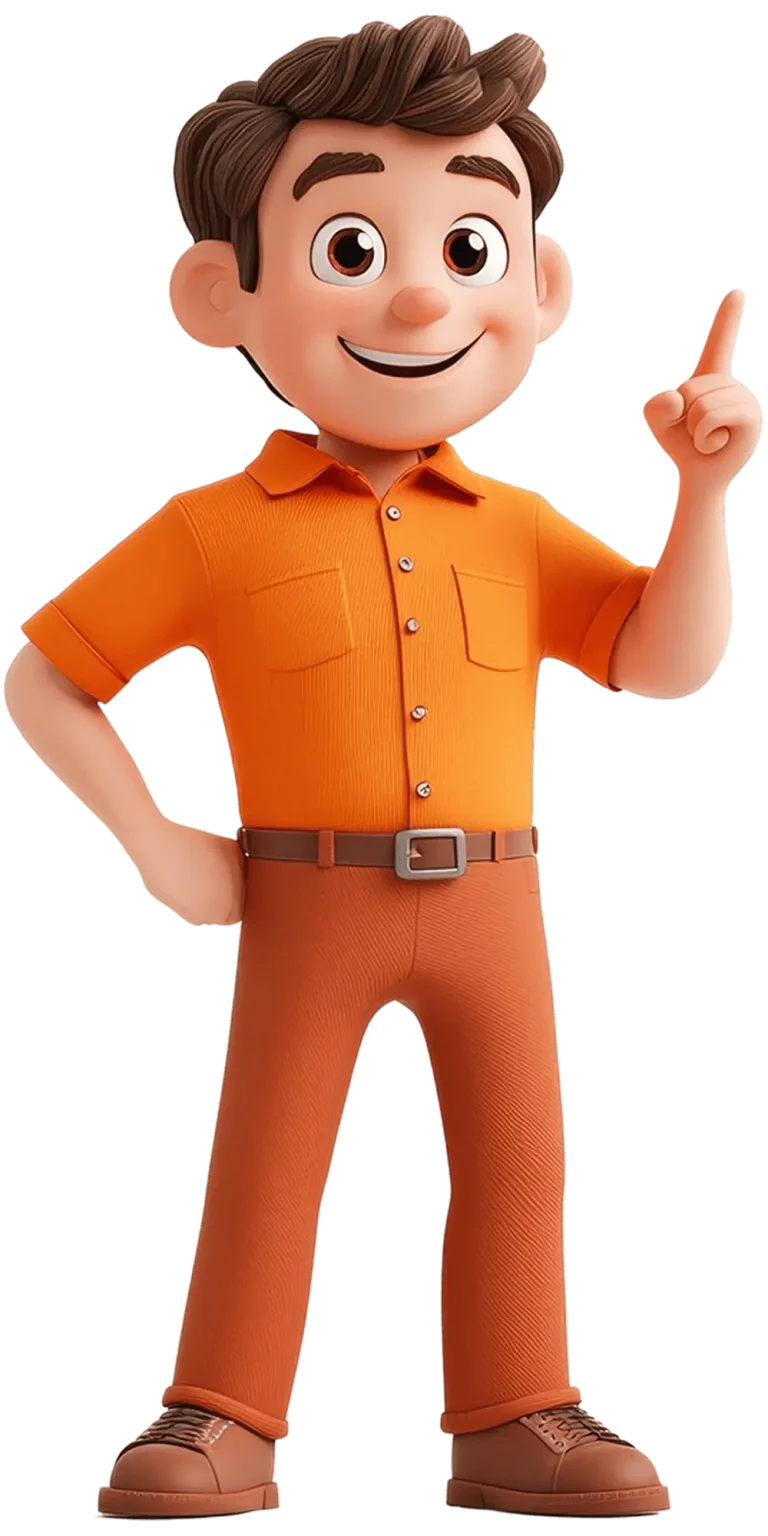
3D character animation for brands works because people remember characters faster than they remember another polished product claim. A mascot may provide a brand with a face, a voice, a mood, and a consistent personality throughout advertisements, websites, social media, applications, packaging, and product releases.
That is why mascots are reappearing in modern branding, but not as flat old-school icons.
Why 3D Character Animation for Brands Is Back in the Conversation
Brands are tired of looking identical.
That is the blunt reason. Minimal logos, clean websites, soft gradients, and safe copy made a lot of brands look neat, but also forgettable. A strong character can cut through that sameness. It gives the audience something to recognize before they read the headline.
A good brand mascot does not only wave from the corner of a landing page. It can guide users through onboarding, explain product features, appear in launch videos, react on social media, support customer education, and make the brand feel less cold.
That matters for SaaS, fintech, health apps, food brands, gaming companies, retail brands, and even B2B companies that usually sound painfully stiff.
A Mascot Is Not Just a Cute Character
This is where brands get it wrong.
They ask for something “fun,” “quirky,” or “memorable,” but they do not decide what the character is supposed to do. That is how you end up with a mascot that looks nice in one campaign and then becomes useless everywhere else.
A mascot needs a job.
- Is it there to explain?
- To entertain?
- To make a serious product feel approachable?
- To help users finish tasks?
- To make social content easier to recognize?
- To soften a technical product?
- To give the brand a repeatable emotional hook?
Until that job is clear, the design is mostly guesswork.
A serious animation studio will push this conversation before sketching the final character. The question is not only “what should it look like?” The better question is “how should this character behave when the brand speaks?”
Custom Character Animation for Marketing Works When the Personality Is Specific
A forgettable mascot usually has one problem: it was designed to be liked by everyone.
That never works.
Custom character animation for marketing needs sharper choices. The mascot should have a clear attitude, body language, pace, and emotional range. A fintech character may need to feel calm and reliable. A gaming mascot may be bolder and more reactive. A food mascot can be playful, but still needs rules so it does not become annoying.
The character should not feel like a random creature pasted onto brand content. It should feel like it belongs to the brand’s world.
That means the design team has to think about shape, silhouette, color, facial expression, movement style, voice, and even how often the mascot appears. Too many mascots can become irritating. Too little and the audience never builds memory.
Animated Brand Mascot Design Starts With Rules
A mascot without rules becomes messy fast.
One team uses it in ads. Another puts it in emails. Social media gives it a different personality. Product design turns it into a helper. Sales uses it in a pitch deck. Suddenly, the character feels like five different characters wearing the same skin.
That is why animated brand mascot design should include a usage system, not just a finished model.
You need rules for:
- How the character stands
- How it reacts
- What emotions can it show
- What it should never do
- When it speaks
- When it stays silent
- How close does it get to the camera
- How it appears in product screens
- How it behaves in ads versus support content
That may sound strict, but it protects the mascot from becoming random.
3D Character Modeling Is Where the Mascot Gets Its Memory Shape
A strong mascot should be recognizable even in silhouette.
That is where 3D character modeling matters. The model has to carry the character’s identity from every useful angle. The head shape, proportions, eyes, hands, posture, and tiny design details all decide whether the mascot feels ownable or generic.
A weak model may look okay in a single front-facing render. Then it falls apart when animated, turned sideways, placed in a small social frame, or shown beside a product.
Good modeling thinks ahead.
- Can the character emote clearly?
- Can it hold props?
- Can it walk, jump, point, wave, or react?
- Does it still read at small sizes?
- Can it work on a website, in an ad, and inside a product UI?
If the answer is no, the model is not ready for a real brand system.
Character Animation Services: Turn the Mascot Into a Personality
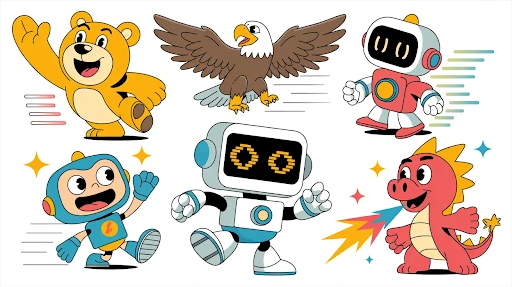
The model gives the mascot its body. Motion gives it a soul.
That is why character animation services matter so much. Two mascots can have similar designs, but the one with better timing will feel more alive. A blink, a pause, a small shoulder drop, or a quick glance can say more than a big gesture.
Movement has to match the brand.
A luxury mascot should not bounce around like a cartoon sticker. A playful snack mascot should not move like a corporate assistant. A health app mascot may need softer motion, while a sports brand mascot may need more physical confidence.
The mistake is thinking animation only means “make it move.” The real work is making it behave.
A 3D Mascot Animation Service Should Be Built for More Than One Video
A mascot is rarely a one-video asset.
That is why a 3D mascot animation service should think beyond the first launch clip. The same character may need a hero animation, product tutorial, ad cutdown, social loop, welcome screen, loading animation, event screen, email GIF, and sales deck visual.
If the studio builds only for one polished video, the brand may struggle later.
A smarter approach is to build reusable assets:
- A clean rig
- A few core poses
- A library of reactions
- Short looping gestures
- Transparent-background clips
- Social-ready versions
- Still renders for campaigns
- Guidelines for future movement
That turns the mascot from a campaign idea into a long-term brand asset.
When 2D Works Better Than 3D
Not every mascot needs to be 3D.
For certain companies, 2D animation services are the superior option. A flat character may be faster to create, easier to maintain, and more versatile for usage in emails, app displays, social media, and explainer films.
2D is also useful when the mascot needs to feel light, friendly, and flexible. Think simple helper characters, app guides, onboarding figures, educational mascots, or social media personalities.
3D makes more sense when the brand wants the mascot to feel more physical, premium, expressive, or campaign-ready. A 3D mascot can hold products, move through realistic spaces, appear in launch films, and interact with objects in a more tactile way.
The choice should come from the use case, not ego.
A 3D Animation Studio Should Build the Mascot Like a System
A mascot is not one file. It is a system.
A good 3D animation studio should think about the mascot’s future from the start. How will it move? How will it smile? How far can expressions go before it looks creepy? What poses will the brand use most? Will it appear in vertical videos? Website banners? Product demos? Trade show screens?
That planning matters because a mascot built only for one launch video can become expensive later.
A proper mascot system may include:
- A rigged 3D character
- Pose library
- Expression sheet
- Short looping animations
- Gesture clips
- Still renders
- Social cutdowns
- Transparent-background assets
- Basic usage rules
That makes the character easier to reuse without starting over each time.
3D Product Visualization Can Work Beside a Mascot
Some brands use the mascot to carry personality while the product visuals do the explaining.
That can work really well.
For example, a tech brand might use the mascot to introduce the problem, then shift into 3D product visualization to show the actual device, app, or platform. A food brand might let the mascot create humor, then show the packaging or product in a clean 3D shot. A SaaS brand might use the character as a guide while the product workflow appears around it.
The trick is balance.
The mascot should not steal attention from the product. The product should not feel cold beside the mascot. Both need a role.
Character for emotion. Product visuals for proof.
That pairing can make a campaign feel more complete.
Animated Brand Mascot Design Needs a Voice
A mascot without a voice still communicates.
Not always through spoken dialogue. Voice can mean attitude. Timing. Poses. Expressions. The kind of jokes it can make. The kind of jokes it should never make.
Strong animated brand mascot design needs this personality locked early.
Is the mascot confident or awkward?
Fast or calm?
Helpful or mischievous?
Quiet or expressive?
Premium or playful?
Smart, silly, bold, warm, sarcastic?
If the brand does not decide, every animator, designer, and social media manager will invent their own version. That is how the character loses consistency.
A 3D Mascot Animation Service Should Plan for Long-Term Use
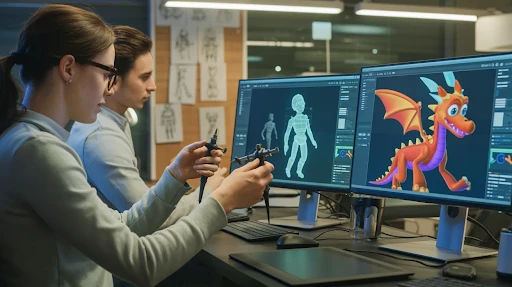
A mascot should not be treated like a one-campaign stunt.
A smart 3D mascot animation service will build assets that can grow with the brand. That includes different emotional states, gestures, seasonal versions, product interaction poses, and short clips for different platforms.
A launch video may introduce the character.
A product tutorial may use it as a guide.
A social post may use it for humor.
An app screen may use it to reduce friction.
A support message may use it to soften a frustrating moment.
That is how mascots build memory. Not from one big campaign, but from repeated small appearances that feel consistent.
Where Logo Animation Fits
A mascot can carry personality, but the brand still needs structure.
That is where logo animation services can support the wider identity. A little logo animation at the end of mascot-led videos may bring everything back to the brand. It prevents the character from feeling separated from the corporation that supports it.
Keep it short, though.
The mascot should not spend 10 seconds explaining the logo. The logo should end the loop neatly, like a signature. This is ideal for commercials, explainers, launch videos, YouTube content, event screens, and social cutdowns.
Mascot first when the story needs personality. Logo last when the brand needs recall.
Frequently Asked Questions
Final Words
3D character animation for brands works when the mascot has a real job. It shouldn’t exist simply because the company wants something cute. It should explain, guide, entertain, soften, celebrate, or make the brand more memorable.
The finest mascots are designed as long-term brand assets. They have rules, movement styles, emotional ranges, use requirements, and a reason for appearing. When done well, a mascot can transform conventional brand communication into something that consumers will identify, remember, and love seeing again.
Related Articles: