

A jacket can look perfect on a product page, then show up stiff, boxy, and “off” the moment someone wears it. That gap between what customers see and what they get is where trust leaks out. Returns go up. Reviews get spicy. Brands start discounting to keep momentum.
3D clothing design software closes that gap. Not with flashy talk, but with something simple. It lets you preview clothing like it behaves in real life. Drape. Weight. Stretch. Folds. Pressure points. The small stuff that makes a garment feel believable.
At Prolific Studio, we use this approach for films, series, and brand visuals where clothing needs to sell the character and the product at the same time. We operate at the level brands expect from a partner studio that works alongside top-tier teams, with production discipline and clean deliverables.
What 3D clothing design software changes about realism
Realism in clothing is not only about high resolution textures. Realism comes from behavior. A hoodie hangs a certain way. A waistband fights back. Denim creases and holds shape. Satin slides.
3D clothing design software focuses on behavior first. That is why it makes the clothing experience more realistic.
3D realistic clothing starts with patterns, not “guessing”
In real fashion, garments begin as patterns. Digital clothing follows the same logic.
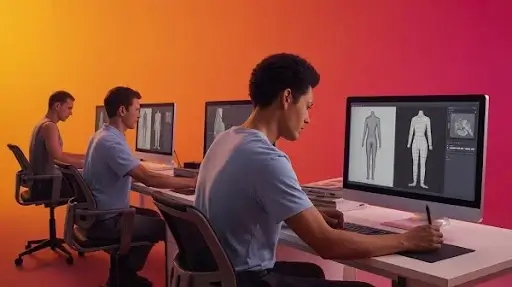
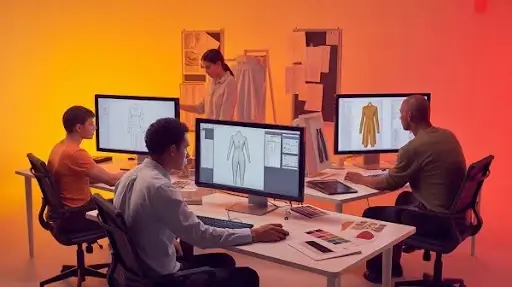
With a strong 3D design tool, you build or import 2D pattern pieces, stitch them, and simulate them on a body. That pattern-based base is the reason the result looks natural. You are not sculpting a shirt like clay. You are constructing it like a real garment.
This is also why fashion teams like it. Pattern makers and apparel designers can recognize the process. The work feels familiar.
Fabric settings make the “feel” show up on screen
A shirt made of heavy cotton does not fold like silk. A puffer jacket does not collapse like a thin tee.
3D clothing design software lets you adjust fabric properties so the simulation matches the material. Bend. stretch. shear. friction. thickness. Even how layers slide on each other.
When those settings are right, your 3D realistic clothing stops looking like a costume and starts looking wearable.
Fit becomes visible before anything goes to production
A lot of “realism” is fit. Tightness at the shoulder. Pulling at the chest. The way a sleeve stacks at the wrist.
In 3D clothing design software, fit issues show up fast because the cloth reacts. That gives teams a chance to fix problems early, before samples, before photoshoots, before animation polish.
3D clothing design software topology matters for animation
If your goal is still images only, topology matters less.
If your goal includes motion, it matters a lot.
Clothing must deform cleanly. It must work with skinning. It must behave across poses. That is where topology and 3D rigging for animation meet.
Quadrangulation supports cleaner 3D rigging for animation
Many cloth sims produce mesh that is not friendly for rigging and downstream tools. Quads help. Clean edge flow helps. Even density helps.
Some 3D clothing design software includes a quadrangulation step that converts the output into quad-based topology. When it is done well, it reduces cleanup and makes the garment easier to use in character pipelines.
For our work in a 3D animation studio pipeline, this step can be the difference between “ready for rigging” and “needs a full retopo pass.”
Uneven quads still happen, so planning matters
Not every quad output is perfect. Density can be uneven. Edge loops can drift.
That does not mean the tool failed. It means the pipeline needs a plan.
For hero characters, we often treat the output as a starting point, then refine topology where deformation and silhouette matter most. For background characters, the quad output may be enough.
The key is to match the level of polish to the shot.
Export and import issues can slow teams down
Every pipeline has friction points. FBX workflows can be messy. Poses can import strangely. Some assets behave better when you bring them in a certain way.
3D clothing design software helps most when it fits into your actual production route, not an ideal one. That is why we plan the handoff from clothing simulation to rigging, lookdev, and render early.
It prevents late surprises.
How an animation studio uses 3D clothing design software for better clothing realism
Realism is the goal. The way you use the tool depends on the output.
A brand might need product shots, a launch video, and a few social clips. A film team might need a full wardrobe system for a cast.
We handle both. We treat clothing as part of performance, not decoration.
Fashion design skills to your 3D character makes characters feel lived-in
A character can have a great face rig and still feel fake if their clothing looks glued on.
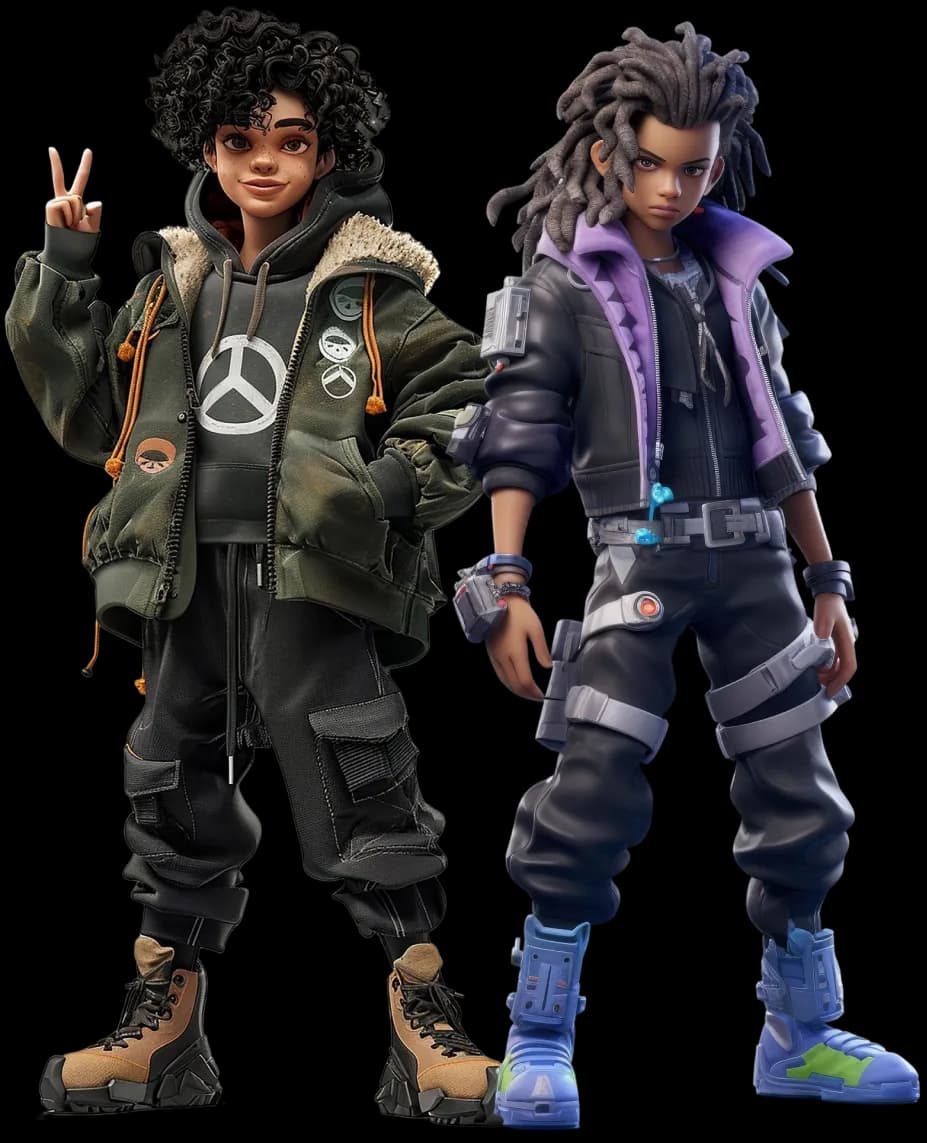
When we add fashion design skills to your 3D character, we are doing more than picking a stylish outfit. We build garments that behave like real garments. We respect seams, layers, thickness, and fit.
That makes characters feel like they dress themselves, move in their own body, and exist in a believable space.
3D product visualization improves how clothing sells
For apparel brands, realism turns into conversion.
3D product visualization lets you show a garment in multiple colorways, angles, and sizes without repeating full photo shoots. You can also preview fabric behavior in motion, which is hard to capture in static images.
This is where 3D clothing design software moves from “cool production tool” to “sales tool.”
3D product modeling services connect clothing to the full product story
Clothing rarely ships alone. There are accessories, packaging, tags, and sometimes a character or mascot in marketing.
Our 3D product modeling services help connect the garment to the rest of the product ecosystem. When the visuals stay consistent, customers trust the brand more.
How 3D clothing design software powers 3D product video animation services
Static renders can sell a color and a cut. Motion sells confidence.
A short clip that shows cloth movement answers questions people never type. Does it cling. Does it flap. Does it wrinkle fast. Does it look heavy.
That is why 3D product video animation services pair so well with 3D clothing design software. The cloth already follows physics. Your animation gets a head start on realism.
3D product visualization that shows fit, not only style
Most product pages show a pose. Real buyers want a moment.
A turn, a step, an arm raise. Those moves reveal fit at the shoulders, chest, and waist. They also reveal how a fabric behaves when it is not “posing for the camera.”
With 3D product visualization, brands can produce this kind of motion consistently across a whole collection.
Fabric motion helps reduce returns
Returns often come from a mismatch between expectation and reality.
If your visuals show cloth movement, customers get a better read on what arrives at their door. That reduces surprises. It also builds trust in your sizing and product photos.
Small motion details make 3D realistic clothing feel expensive
Luxury does not always mean flashy.
Sometimes it is the soft bend of a sleeve, the way a hem settles, the tiny lag of a heavy coat when the body stops moving. Those details are hard to fake by hand.
3D clothing design software gives you those details naturally, then the animation studio finishes the shot with lighting, camera, and polish.
3D clothing design software in a 3D animation studio pipeline
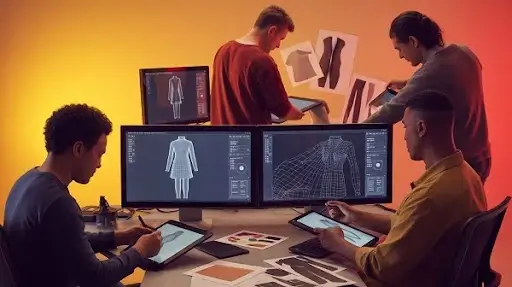
Realistic cloth is not one step. It is a chain.
If one link is messy, the whole pipeline slows down. A 3D animation studio needs predictable handoffs from garment build to simulation to final render.
3D rigging for animation needs garments built with motion in mind
Character rigs push bodies into extreme poses.
Arms cross the chest. Legs lift high. Spines twist. Clothing must survive all that without exploding or clipping through everything.
Good 3D rigging for animation starts with planning the clothing setup early.
- Build clean layers and clear thickness
- Keep pattern seams logical
- Avoid tiny triangles in high-stress zones
- Reserve hero detail for hero shots
This keeps cloth believable and keeps production stable.
Quadrangulation and topology control save cleanup time
Many teams focus on how a garment looks in a single pose.
In animation, topology matters. You need a mesh that plays nicely with your downstream tools. Quads help. Even density helps. Edge flow helps.
Some 3D clothing design software offers a quadrangulation step. It can reduce retopo time. It can also produce uneven areas, so teams still need a plan for hero assets.
Export formats and FBX handoff rules matter more than people expect
Clothing has to travel.
It moves from the 3D design tool into your character scene, then into look development, then into render. Each step can introduce issues if import settings are sloppy.
Common friction points include:
- Pose differences between apps
- Scale mismatches
- Cloth caching errors
- Strange shading from flipped normals
A production-minded animation studio sets rules for exports early and sticks to them.
2D vs 3D product animation for clothing brands
Not every brand needs full 3D for every asset.
The smartest plan mixes formats based on goals, budget, and timeline. This is where 2D vs 3D product animation becomes a practical decision, not a style debate.
When 2D wins
2D shines when the message is the focus.
- Simple promos for discounts or drops
- Fast social posts with bold text
- Flat graphic motion over product photos
- Brand stories that lean on illustration
If the goal is speed and clarity, 2D can be the right call.
When 3D wins
3D wins when the product behavior matters.
- Showing drape and stretch
- Showing how layers move together
- Showing details across many angles
- Building a consistent library for a full line
If the goal is realism and repeatable content, 3D product visualization with 3D realistic clothing pays back quickly.
Frequently Asked Questions
Can 3D clothing design software replace photoshoots?
It can replace many product images and motion clips, especially for colorways, angles, and fit previews. Some brands still mix in photos for lifestyle moments.
How does 3D product visualization help fashion brands?
3D product visualization shows clothing clearly across angles and motion, supports faster content production, and improves buyer confidence.
Do I need a 3D animation studio for clothing videos?
If you want polished lighting, clean simulation, and consistent delivery across many assets, a 3D animation studio helps you avoid rework and quality drops.
What is 3D rigging for animation and why does clothing affect it?
3D rigging for animation is the system that drives character movement. Clothing must be built and prepared so it behaves well across poses and does not break in motion.
Is 2D vs 3D product animation a hard choice?
No. Many brands use both. 2D works well for fast messaging. 3D works well for product behavior, realism, and repeatable content libraries.
What are 3D product video animation services in fashion?
They are animated product clips that show garments moving naturally, often used for product pages, ads, launch videos, and social content.
Can you provide 3D product modeling services along with clothing work?
Yes. Many campaigns need the full set, including garments, accessories, packaging, and scene assets so everything matches across visuals.
How long does it take to create 3D realistic clothing for a product line?
Timelines depend on garment complexity, number of variations, and shot needs. A clear asset plan speeds things up.
Final Words
Realistic clothing is not a bonus feature. It is a business advantage.
3D clothing design software helps brands show truth on screen. It helps animation teams build characters that feel real. It helps marketing teams produce repeatable assets without restarting from scratch every time.
Prolific Studio builds these systems end to end. From garment creation to 3D product modeling services, from 3D rigging for animation to final renders, we deliver production-ready work with the polish brands expect from a partner-level studio.
If you want clothing visuals that look believable in motion and stay consistent across campaigns, reach out to Prolific Studio. We will map the pipeline, build the wardrobe, and turn it into content that sells.
Related Articles: