3D product animation services help online shoppers understand a product before they buy it, which is where a lot of e-commerce hesitation begins. A flat image can show color and shape. A short animation can show scale, movement, texture, assembly, internal parts, use cases, and the product in context.
That matters because customers shopping online rely heavily on product pages to decide whether they trust the item enough to purchase. Nielsen Norman Group puts it simply: product pages need to give shoppers the right information at the right moment so they can make an informed decision.
Why 3D Product Animation Services Matter for E-Commerce Conversion
The “up to 40%” claim should be treated honestly. It is not a magic number every store will hit. Threekit reports that retailers using interactive 3D visual experiences, such as 3D configurators, see a 40% increase in overall conversion rate.
Shopify has also reported much larger lifts in some AR and 3D product-viewing cases, including product-page conversion increases up to 250% for 3D models in AR. The exact result depends on the product, traffic quality, page layout, price point, and how well the visual asset answers buyer questions.
That is the real takeaway. 3D animation increases sales when it reduces doubt. It does not work because the product suddenly looks “cooler.” It works when a shopper can finally understand what they are getting.
Product Pages Are Where Confidence Is Won or Lost
A product page has one tough job. It has to replace the physical store experience. The customer cannot pick up the product, turn it around, test the hinge, check the finish, or compare the size against their own space. So the page has to do that work visually.
Baymard’s large-scale product-page testing found that 56% of desktop users first start exploring product images when arriving on a product page. The same research notes that product images are crucial for evaluating details, yet many e-commerce sites still fail to provide enough visual information for confident inspection.
That is where product animation for e-commerce starts making sense. A shopper does not always need more copy. Sometimes they need to see the product behave.
A Static Gallery Often Leaves Too Much Guesswork
Most stores still rely on the same formula: hero image, angle shots, lifestyle shot, maybe a short video if the brand has one. That can work for simple items. It gets weaker when the product has moving parts, materials that change under light, assembly steps, hidden features, or size concerns.
A backpack with expandable compartments. A desk with cable routing. A skincare device with attachments. A chair with reclining positions. A watch with layered construction. These are not easy to sell with three still images and a paragraph.
An animated product demo video can show the product in a way that shoppers process faster. Instead of reading “adjustable height,” they see the adjustment. Instead of reading “modular parts,” they see the pieces separate and reconnect. Instead of guessing how large something feels, they see it beside a familiar object or body scale.
3D Product Visualization Helps Shoppers Inspect Before They Commit
The biggest benefit of 3D product visualization is control. The product can be rotated, exploded, zoomed, opened, closed, assembled, lit differently, and shown in use without needing a full physical shoot for every variation.
That becomes especially useful for products with customization. Furniture, electronics, fashion accessories, tools, fitness equipment, packaging, beauty devices, and home goods can all benefit when buyers need to compare finishes, colors, attachments, or configurations.
A good animation studio does more than make the product spin. It decides what the shopper needs to understand first, what feature needs emphasis, and what detail should be saved for later in the sequence.
The Best 3D Product Animation Answers Real Buyer Questions
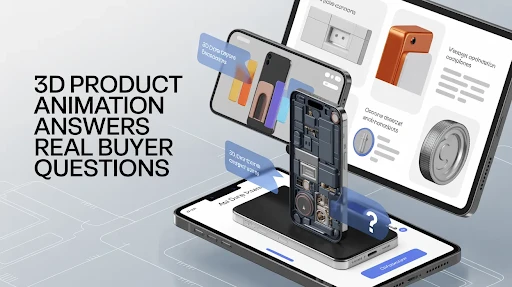
Weak 3D animation looks like a showroom loop. The product floats, spins, shines, and says nothing useful. That may look polished, but it does not always sell.
Strong animation is more specific. It answers objections before the customer leaves the page.
For example:
Will it fit in my space?
How does it open?
What comes inside the box?
Is the material premium or cheap-looking?
How does the mechanism work?
What makes this model better than the cheaper one?
Those questions are conversion questions. If the page does not answer them visually, the buyer may pause, compare, or abandon the cart. Nielsen Norman Group’s e-commerce guidance says customers rely on product pages to decide what to buy and need enough information to make an informed purchase decision. That is exactly the gap product animation can fill.
Why 3D Often Beats Live-Action for Product Demonstration
Live-action video is useful, but it has limits. It depends on lighting, camera angles, physical samples, locations, reshoots, actors, props, and product availability. If the product changes color, material, size, or configuration, the shoot may need to be repeated.
A 3D animation company can build the product once and create multiple outputs from the same digital asset. One version can show the product on a white background. Another can show it in a lifestyle scene.
Another can isolate internal mechanics. Another can become a short paid ad, marketplace video, Amazon product clip, website hero animation, or social media cutdown.
This is why e-commerce brands often treat 3D assets as a product-content system, not a one-off video. The first build takes planning, but the asset can keep paying off across channels.
2D vs 3D Product Animation Is Really About What the Buyer Needs to See
The 2D vs 3D product animation choice should not be treated like a style preference. It is a communication decision.
2D works well when the product story is conceptual, service-based, or workflow-driven. It can explain subscriptions, apps, diagrams, simplified comparisons, and abstract product benefits quickly. That is why 2D animation services still make sense for SaaS tools, service explainers, onboarding flows, and simple feature education.
3D works better when the physical product itself needs to be understood. If the shape, scale, mechanism, finish, packaging, or use case affects buying confidence, 3D usually has the advantage. It lets the shopper inspect the product in a way that feels closer to handling it.
The best brands do not pick based on trend. They pick based on friction.
Where 3D Animation Increases Sales Most Clearly
Not every product needs 3D. A plain notebook probably does not need a cinematic render. A basic T-shirt may only need strong photography and size clarity. But high-consideration products are different.
3D is usually more valuable when the product is:
- Expensive enough that buyers hesitate
- Technical enough that still images under-explain it
- Customizable enough that options matter
- Physical enough that scale and texture affect trust
- New enough that buyers need education
- Hard to photograph in every variation
That is where 3D animation increases sales in a more believable way. It closes the information gap between curiosity and purchase.
Put the 3D Clip Where the Buyer Starts Doubting
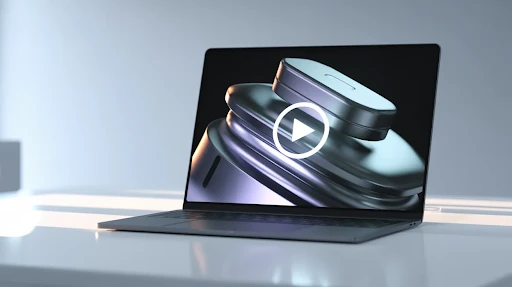
A product animation should not sit halfway down the page like a nice extra someone added after the real work was done.
Put it where the shopper is already making the decision. Near the main image gallery. Near the price. Near the feature block. Somewhere close enough that the buyer sees it before they start guessing.
That matters because online shoppers do not behave like patient readers. They bounce around. They zoom into images. They compare tabs. They wonder if the product is smaller than it looks, cheaper than it sounds, or harder to use than the copy admits.
That is where product animation for e-commerce can actually help. Not as decoration. As an answer.
A desk should show how it adjusts. A backpack should open. A beauty device should show the attachment change. A tool should show the part doing the job.
The animation should remove the question before the shopper has time to leave the page and look somewhere else.
Stop Making Product Videos Feel Like Ads
A lot of product demos are too proud of themselves.
They open with a slow logo. Then a dramatic product reveal. Then some floating text about innovation, performance, or comfort. By the time the useful part arrives, the shopper has already stopped caring.
An animated product demo video should behave differently. Show the product fast. Show the feature people care about. Show the one detail that is hard to explain with photos. Then get out.
For e-commerce, clarity beats drama most of the time. A buyer looking at a $300 appliance, a modular desk, or a fitness device does not need a mini movie. They need to know what happens when they press the button, open the panel, fold the frame, or change the setting.
That is where the video earns its keep.
Branding Should Not Hijack the Demo
Branding matters. It just needs to know its place.
A short animated logo at the end can make the video feel finished. A small branded motion system can make product clips feel consistent across ads, email, and the website. That is where logo animation services make sense.
But on the product page itself, the product has to stay in charge.
People are not watching because they want a brand film. They are watching because they are close to buying and still unsure. Let the logo support the experience, not interrupt it.
The best product-page animation often feels almost plain. That is not a weakness. It means the video is doing the job quietly.
Cost Comes Down to What You’re Asking the Animation to Prove
The question “how much will it cost?” is fair. It is also usually asked too early.
A better question is: what does this product need to prove on screen?
A simple product rotation is one thing. A full demo with cutaways, exploded views, close-up materials, packaging, lifestyle use, and multiple ad versions is something else. A product with glass, fabric, metal, liquid, moving parts, or lots of color options will naturally take more time.
That is why the 3D animation cost is not only about length. A 15-second video can be simple or painfully detailed. A 30-second video can be clean and efficient if the product is easy to model.
The smartest brands do not pay for “more animation.” They pay for the exact proof the shopper needs before checkout.
Frequently Asked Questions
Final Words
3D product animation services can help e-commerce brands improve conversions when the animation clears up real buying doubts. The value is not in making a product look shiny for a few seconds. The value is in showing what photos cannot show: movement, scale, mechanism, texture, assembly, and use.
Used well, 3D animation gives shoppers more confidence before checkout. Used badly, it becomes an expensive rotating object. The difference is strategy. Put the animation near the decision point, keep the demo focused, reuse the asset across channels, and measure whether it actually helps people buy.
Related Articles: