

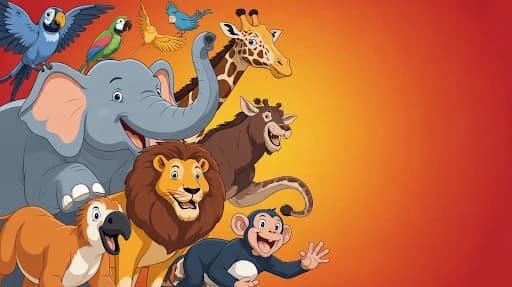
The phrase “art of zoo” may sound strange at first, but the concept is clear after you go through a well-designed animal environment. Good zoo design encompasses more than just cages, signage, and crowd movement. It’s also about emotion, memories, and how people interpret creatures they’ve never seen up close in the wild.
That is where art comes in. It adds context, emotion, and often a stronger aesthetic appeal to zoos, but the better examples do more than make a place look nicer. They help visitors pay attention.
This Is Not Decoration for Decoration’s Sake
A lot of people hear the word “art” and picture something tacked on at the end. A mural on a blank wall. A sculpture near the entrance. A few bright colors were added to make the place more family-friendly. The stronger version is more deliberate than that.
One of the primary goals of the art of the zoo is to give visitors another route into the animal story. Not everyone reads the full sign. Not every child stops for a habitat map. But a striking visual, a textured sculpture, or a designed play space can catch attention fast and hold it long enough for the learning part to begin.
The Best Zoos Build for Memory
That’s why the greatest examples seem like visual narrative rather than public adornment. A visitor may forget the specific words on a conservation panel, but they will remember the big bee mural, the carved carousel animal, or the tunnel that transported them to a another environment.
You can see this in official zoo materials. Smithsonian’s National Zoo highlights attractions such as the hand-painted Good of the Hive mural, a conservation carousel with custom-carved and hand-painted animals, and a coral-focused Wyland mural.
Chester Zoo’s Heart of Africa resources also show that its murals are treated as part of an education framework, not just background scenery.
Art in Modern Zoos Works Best When It Gives Context
This is where art in modern zoos earns its place. It helps bridge the gap between seeing an animal and understanding the world that the animal belongs to.
A painted savannah wall, for example, can do more than fill space. It can suggest scale, distance, climate, and the feel of a landscape that does not physically exist inside the zoo. That is one reason murals still hold up so well. They do not compete with the exhibit. They extend it.
Murals Still Do a Lot of Heavy Lifting
A mural is probably the common form of the art of zoo because it is so flexible. It can guide traffic, soften harsh architecture, support storytelling, and push the visitor’s eye in the right direction without feeling like a lecture. That is a useful tool in a place where people are constantly moving.
Chester Zoo gives a particularly clear example. Its Heart of Africa education collection includes a lesson called “Murals with a meaning,” which asks learners to study the inspiration behind the murals in that zone and create their own mural with a message. That tells you the mural is not filler. It is part of how the zoo wants people to interpret the space.
Good Zoo Art Has More in Common With Animation Than People Think
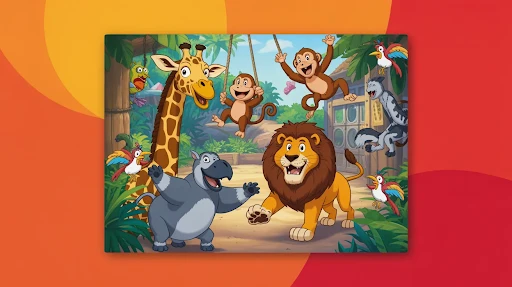
Anyone who has watched an animation studio in the USA build a believable world will recognize the same basic challenge here. You are not only showing a subject. You are shaping how someone feels when they enter that subject’s world.
That is why zoo murals often work best when they are selective rather than overloaded. They simplify. They exaggerate just enough. They guide the eye. In that sense, the logic is surprisingly close to hand-drawn animation, where the goal is not maximum detail in every frame but the right detail at the right moment.
Sculpture Changes the Experience in a Different Way
Murals help with context. Sculpture does something else. It changes pace.
A child may walk past three wall panels without slowing down, but a large sculptural element changes how the body moves through a space. It creates a pause. It invites touch, photos, climbing, or at least a closer look.
At the Smithsonian’s National Zoo, bee-related exhibits coexist with a pollinator-themed playground, and the conservation carousel transforms sculpted animals into a tangible experience rather than simply a picture.
The San Diego Zoo’s Wildlife Explorers Basecamp likewise features huge leafcutter ant sculptures and immersive habitat-style play areas to inspire youngsters to explore and build empathy for wildlife.
A Sculpture Has to Read Fast
That is why good sculpture in a zoo is rarely random. It needs to be readable from a distance, interesting up close, and simple enough that people understand it without a paragraph of explanation.
That design logic is not far off from what a 2D animation studio does when it strips a scene down to the clearest shapes and silhouettes. If the form does not read quickly, the effect is lost.
The same thing applies to animal sculpture. If the proportions are muddy or the pose feels generic, people glance once and keep walking. If the form is strong, the object becomes a memory anchor.
Chester Zoo Gets This Balance Right
That is part of why Chester Zoo is a useful example in this conversation. Its public materials do not treat art as a side note. The Heart of Africa resources tie murals directly to observation, pattern recognition, sketching, and message-making.
Even its broader public-facing content shows a willingness to use sculpture as a commemorative and visual device, not only as signage.
The Best Art in Zoos Respects the Animal First
This matters more than people think. The strongest art in zoos does not pull focus away from wildlife just to show off the designer’s style. It supports the animal story. It deepens the habitat. It helps the visitor notice something more carefully.
That can mean color choices that frame an enclosure better. It can mean a mural that explains pollinators without turning the wall into a textbook. It can mean play structures that help children connect movement and empathy.
The examples at the Smithsonian and San Diego both point in that direction. The goal is not simply to make the site prettier. The goal is to make the visitor more alert, more curious, and more emotionally present.
Zoo Design Also Benefits From Thinking in Three Dimensions
This is where the conversation starts to overlap with exhibit craft more broadly. A flat image can only do so much. Once a zoo wants to create immersion, shape and depth start doing real work. That does not mean every installation needs spectacle. It just means the designer has to think beyond the surface.
There is a reason a good sculptural piece can feel more convincing than a polished graphic panel. It lives in the same physical world as the visitor. In practical respects, this brings zoo design closer to 3D character modeling than most people think. Form, proportion, surface, silhouette, and viewing angle all influence whether the work feels alive or simply ornamental.
The Strongest Zoo Art Usually Falls Into Three Buckets
If you strip the category down, the types of art in the zoo that work best usually fall into three groups. First, there is environmental art, like murals, painted structures, and designed surfaces that help build a habitat mood.
Second, there is physical art, like sculpture, carved animals, and tactile installations that people can move around or interact with.
Third, there is experience-based art, where play, projection, or digital media become part of the visitor journey rather than something hung on a wall. You can see all three approaches in official zoo examples from Chester Zoo, Smithsonian’s National Zoo, and San Diego Zoo.
This Is Where Zoo Design Starts Looking a Lot Like Animation Thinking
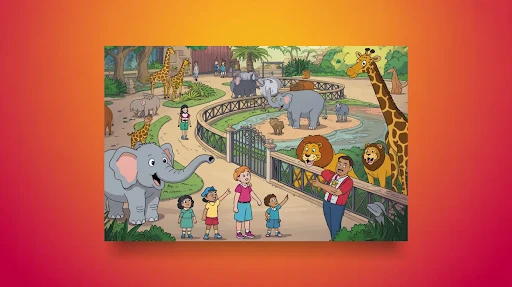
Once an installation becomes interactive, timing, perspective, and emotional rhythm matter more. That is one reason the overlap with character animation services is not as strange as it sounds. Both are trying to guide attention, shape feeling, and make an audience connect with a subject quickly.
In a zoo, that subject happens to be an animal, habitat, or conservation idea rather than a fictional character. The mechanics of engagement are still surprisingly similar. Chester Zoo’s learning materials and Smithsonian’s attraction design both show how much deliberate sequencing sits behind the visitor experience.
The Educational Payoff Is Usually Bigger Than the Decorative Payoff
This is really the core argument. The best benefits of the art of zoo are not only visual. They are both instructive and emotional. According to the Smithsonian, the zoo’s mission is to foster a lifetime commitment to conservation via engaging interactions with animals and those fighting to rescue them.
The San Diego Zoo Animal Alliance bases its work on merging animal health, care, science, and education. In both situations, the design layer is important since engagement is an integral element of the purpose rather than a side project.
Three-Dimensional Work Will Keep Growing
It is hard to imagine the next phase of zoo design staying mostly flat. More institutions are already leaning into physical immersion, and that makes sense. The minute you want guests to feel inside an environment rather than beside it, form and scale start doing more work than graphics alone.
That is why the future probably favors more sculptural and spatial design, the sort of thinking people already associate with 3D animation services in entertainment and exhibit media. Smithsonian’s attractions page, San Diego’s immersive youth spaces, and ARTIS’s zoo-plus-museum model all point in that direction.
Digital Layers Will Probably Become More Common Too
The most believable version of the future of the art of zoos is not every zoo turning into a giant screen. It is a quieter blend of physical and digital layers. Smithsonian already lists virtual reality among its attractions. Its animal webcams also turn observation into an ongoing learning experience beyond the visit itself.
That suggests a future where zoo art is not limited to murals and sculpture but extends into designed digital encounters that keep the same goal intact: helping people look more closely and care a bit more deeply.
Not Every Trend Will Be Worth Following
That is probably worth saying clearly. Some design ideas will age badly. Some tech will be gimmicky. Some spaces will overdo immersion and accidentally bury the actual animals under too much spectacle. The smarter institutions will be selective.
They will borrow from top animation trends and exhibit media only when those tools help visitors notice, understand, or remember something real. The strongest official examples already suggest that kind of restraint. They use murals, sculpture, rides, play, and digital features to deepen the mission, not replace it.
Frequently Asked Questions
Why does art matter in a zoo?
Because it allows tourists to engage more closely with animal areas. Good art may offer context, slow people down, simplify habitat interpretation, and make conservation principles more remembered. That aligns closely with how institutions like the Smithsonian and San Diego frame their educational mission.
Are murals still the most common zoo art format?
They are certainly one of the most common and flexible formats, especially because they can shape atmosphere without blocking movement or crowd flow. Chester Zoo’s Heart of Africa material is a strong example of murals being used as both visual design and educational storytelling.
Is the future mostly digital?
Not entirely. The more likely direction is hybrid. Physical art remains significant, but many zoos are now incorporating digital elements such as virtual reality, cameras, and interactive museum-style experiences. Instead of favoring one over the other, the most promising future will most likely combine the two.
Final Words
Zoo art works when it helps people care more about something rather than merely looking at it for longer. That may be a painting, a carved carousel animal, a massive sculpture, or a well-designed interactive area. The common thread is not fashion for its own sake.
It is attention. Good zoo art directs attention toward wildlife, habitat, and conservation in a way people actually remember. That is why it matters, and why it is probably going to matter even more as wildlife spaces keep blending education, design, and experience.
Related Articles: