Fired on Mars looked easy to pitch when HBO Max first rolled it out in 2023. Guy takes a one-way trip to Mars, loses his job, and gets stuck inside a corporate colony he can’t escape. That is a clean setup.
The official series page still frames it that way, calling it the story of graphic designer Jeff Cooper, who finds himself adrift after Mars.ly eliminates his role with no route back to Earth. The show premiered on April 20, 2023, ran for eight episodes, and stars Luke Wilson as Jeff.
Why Fired on Mars Never Felt Like a Throwaway Gag
That premise sounds like a joke you could explain in one breath. The show is not really built like a joke, though. It is slower than that. Meaner in small ways. Sadder too.
The trailer sold the obvious hook, which is basically workplace comedy in space, but the series itself leans harder into isolation, dead routine, and the weird humiliation of having no useful place in a system that still expects you to stay inside it.
That is why what is Fired on Mars about is not fully answered by the elevator pitch. It is not just about a guy getting fired on another planet. It is about being trapped inside a version of work that has already decided you are replaceable.
The Jeff Cooper Setup Is Simple on Purpose
Jeff is a graphic designer at Mars.ly. He has a job title, a routine, and just enough future to convince himself the one-way trip to Mars made sense. Then the company quietly removes his role, and that is where the real show starts.
The official synopsis from Warner Bros. Discovery describes him as jobless, unable to return to Earth, and forced to reinvent himself inside a dangerous but weirdly familiar corporate landscape. That last part matters. The series is not doing hard sci-fi in the prestige sense. It is using Mars to make the office dread feel more permanent.
Luke Wilson Was a Smarter Lead Choice Than It Might Look on Paper
A louder actor would have pushed the show in the wrong direction. Jeff is not supposed to dominate the frame. He is supposed to drift through it a little. Luke Wilson gives the character that half-defeated, half-detached tone the show needs. Warner Bros.
Discovery’s original release and the current HBO Max page both put him front and center for a reason. The series depends on Jeff feeling like a person who could disappear inside a company without anybody fully noticing for a while. Wilson gets that balance right. He does not play Jeff like a broad loser or a big comic wreck. He plays him like a man who has run out of angles.
The Fired on Mars Cast Helps the Colony Feel Off in the Right Way
The Fired on Mars cast around Wilson is not there just to pad out credits. It helps give Mars.ly that brittle, low-grade hell feeling. Warner Bros.
Discovery listed Leslie David Baker, Cory Loykasek, Stephen Root, and Cedric Yarbrough in the core cast, with guest names including Pamela Adlon, Thomas Haden Church, Tim Heidecker, Frankie Quiñones, Emily Watson, and Sean Wing. That mix makes sense once you watch the show.
These are voices that can sound dry, slightly damaged, officious, lost, or absurd without tipping every scene into a full sketch.
The Look of It Matters More Than the Premise Lets On
Warner Bros. Discovery described it as an original adult animated series, and that broad label is technically true, but it leaves out the more interesting part. This is a 2D animation show that does not use its flatness for cuteness or speed. It uses it to make Mars feel stale, empty, and just artificial enough.
That is one reason the series sticks. A slicker visual approach might have made it feel more expensive, but it also might have broken the mood. The roughness helps. The colony does not look lush or dreamlike. It looks managed. Designed. Slightly dead. That fits the show much better than something glossy from a polished animation studio pipeline would have.
It Arrived at a Good Time for Adult Animation That Was Willing to Be Unpleasant
A lot of adult animated series still chase the same easy lanes. Loud satire. fast jokes. gross-out energy. constant irony. Fired on Mars went somewhere a little more sour.
Rotten Tomatoes currently lists Season 1 at 84% from critics, which is not a giant review pool, but it does line up with how the show was received by people who wanted something stranger than a standard adult comedy. It is less interested in punchline volume than in sustained discomfort.
That alone made it stand out from a lot of the top animation trends people usually talk about, where speed and polish often get mistaken for personality.
The Show Also Quietly Makes the 2D vs 3D Animation Question Look Funny
People love turning 2D vs 3D animation into a culture-war argument about what looks more modern, what feels more premium, or what the industry should be doing more of. Fired on Mars is a good reminder that the style question only matters if it serves the material. This show works because it picked the form that best supports its tone.
The visual stiffness, the flat colony spaces, the uncomfortable dead air, the way Jeff seems to shrink inside rooms that already feel emotionally overlit, all of that benefits from the drawn look. A fancier rendering style could have made the series easier to market, maybe, but it would also have made it less itself.
That is why is Fired on Mars worth watching is really a tone question before it is a genre question. If you want something sharper and colder than the average adult animated sci-fi comedy, it earns the time.
The Trailer Told the Truth, Just Not the Whole Truth
The Fired on Mars trailer did what a trailer is supposed to do. It gave the simple hook first. Jeff is on Mars. Jeff is fired. Jeff cannot leave. You get the corporate absurdity, the Red Planet setting, the deadpan voice, and just enough character weirdness to understand the lane. But the series is a little heavier than that first sell suggests.
Not in a dramatic prestige way. More in the sense that it keeps pressing on one ugly idea: if work was the thing giving your life shape, what happens when the job goes away but the structure stays? That is where the show stops being a concept and starts becoming an actual mood.
The Drawn Look Makes the Whole Thing Colder
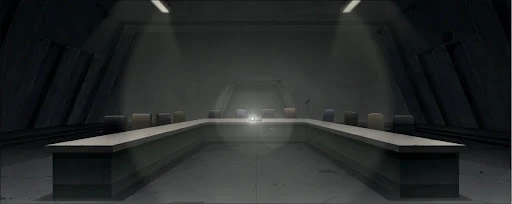
This is where the visual side matters more than people think. The show is built in 2D animation, but it does not use that to feel playful. It uses it to make Mars.ly look drained, processed, and emotionally overlit.
The spaces feel designed by people who think efficiency is a personality. That is a big reason the series sticks. A cleaner, shinier approach could have made it feel more “premium,” but it would also have dulled the point. The flatness helps the world feel institutional.
That is also why the project is a useful reminder that style is not a ladder where more rendering automatically means more value.
If the show had been built to resemble the polished finish people often associate with 3D video animation services, it might have looked more expensive and felt much less right. The stiffness is part of the joke. More importantly, it is part of the loneliness.
The Show Has Better Visual Discipline Than It Pretends To
This is another thing that sneaks up on you. The series acts casual, but the frame design is doing real work. Characters often look boxed in, stranded in negative space, or visually dwarfed by the systems around them. That is not random. The compositions keep reminding you that Mars is a workplace first and a frontier second.
That kind of clarity is something you also see in strong 2D video animation services, where the image has to communicate tone fast without overloading itself. Fired on Mars is not flashy, but it is rarely visually confusing. It knows what the frame is trying to make you feel.
It Is a Good Counterpoint to the “Bigger, Faster, Shinier” Model
This is where the show says something useful about adult animation in general. A lot of current conversation around the medium gets stuck on scale, polish, and what looks most advanced. That is why top animation trends talk often gets repetitive.
More detail. More hybrid techniques. More visual spectacle. More cinematic movement. Fired on Mars is a nice argument for the opposite direction. It wins by being specific, not by being maximal.
And honestly, that makes it more interesting than a lot of prettier shows. It does not look like it is begging for approval.
The Weird Part Is How Much It Trusts Stillness
Animation does not always need to perform motion to feel alive. Fired on Mars gets a lot out of hesitation, pauses, weak eye contact, and dead corporate interiors. That is probably why the show feels more deliberate than its pitch suggests. It knows when not to move.
That restraint is a world away from the kind of visual salesmanship you see in 3D game trailer services, where the whole point is impact, forward pull, and instant hype. Fired on Mars is doing the opposite. It wants you to sit in the stale air for a bit.
It wants the awkwardness to linger. That choice is a big part of why the series feels sour in a good way instead of simply eccentric.
So Is Fired on Mars Worth Watching?
Yes, if you want something drier, sadder, and stranger than the average adult animated sci-fi comedy.
No, if you want constant velocity.
That is probably the cleanest answer. The show is not trying to win people over with pure joke density. It is trying to trap you inside a mood and make you laugh at how bleakly recognizable it feels.
Max still lists the series as one season with eight episodes, which honestly fits the material. It feels like the right amount of time to stay in this world without sanding its edges down.
Frequently Asked Questions
Final Words
Fired on Mars works because it refuses to behave like a one-joke concept. The setup is simple, but the show keeps digging into isolation, wasted purpose, corporate absurdity, and the awful feeling of being stuck in a system that has already moved on from you.
The 2D look helps. Luke Wilson helps. The bitter little dead spaces help most of all. That is why the series still stands out. Not because it is louder than other adult animations, but because it is willing to sit in a colder place than most of them do.
Related Articles: