

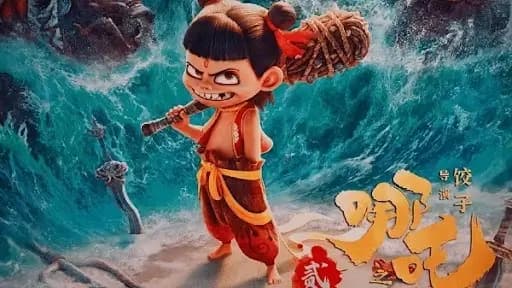
Ne Zha used to be one of those names you either grew up with or stumbled into through mythology rabbit holes. Now it is a headline. In 2025, Ne Zha 2 didn’t just have a strong run; it rewrote the record book, becoming the top-grossing animated movie on the planet and one of the highest-grossing films ever, period.
That kind of jump does not happen because a trailer looked cool. It happens when a character travels across generations, formats, and audiences, and still feels like trouble in the best way.
Quick Facts, So You’re Oriented Fast
- Who is Nezha, originally? A protection deity in Chinese folk religion and a major figure in classic stories, often titled the “Third Lotus Prince.”
- What is the modern film series? A Chinese animated franchise that launched globally with Ne Zha (2019) and exploded again with Ne Zha 2 (released in China on January 29, 2025).
- How big is “big”? Box office trackers place Ne Zha 2 at roughly $2.0B worldwide, ranking as the all-time top animated film.
Now let’s talk about how this happened, because the story is not just “China had a hit.” It’s “a character evolved, and the craft evolved with him.”
[elementor-template id=”13845″]
Why Nezha Always Comes Back (The Mythology Backbone)
Nezha has been remixed for centuries because the core is simple and durable: a young figure with divine force, human emotion, and a talent for making authority uncomfortable. In traditional lore, he is tied to Chentang Pass, his father Li Jing, his mentor Taiyi Zhenren, and cosmic rules that feel unfair even when they are “heavenly.”
That last part matters. Nezha stories are suited for contemporary audiences because they already address issues we debate today, such as fate versus free will, power versus control, and whether someone should be born with a name.
How The 1979 Film Still Casts A Shadow
Shanghai Animation Film Studio’s Nezha Conquers the Dragon King (1979) preceded the present computer-generated imagery extravaganza. The 1980 Cannes Film Festival screened it out of competition, a significant achievement for any country’s animation company hoping to gain international recognition.
This era matters for two reasons:
- It established Nezha as an animation icon, not just a myth figure.
- It proved China could produce animation with its own visual language, not a borrowed one.
If you’ve ever worked with a 2D video animation company, you know hand-drawn animation forces a different kind of discipline. Every frame has to earn its place. That hand-crafted energy is why older Nezha adaptations still feel alive when you watch them today, even if the tech is “dated.”
The 2019 Breakout (A Superpowered Underdog With A Real Emotional Engine)
The modern global story really starts with Ne Zha (2019). Financially, it was already massive, landing around $742.7M worldwide by box office accounting. It also became China’s submission for Best International Feature Film at the Academy Awards, a symbolic marker that the industry wanted the world to treat animation as cinema, not a side category.
But money is not the reason people remember it.
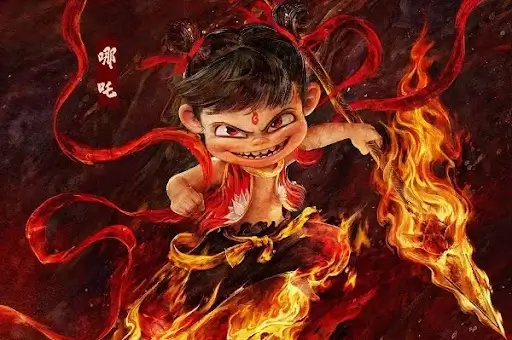
The reason is the character design choice that makes perfect narrative sense: Ne Zha is not “cute heroic kid.” He is chaos with a pulse. He is feared, misunderstood, and angry about it, which makes him funny in one scene and heartbreaking in the next.
That is a strong animation trick, by the way. Comedy buys you emotional permission. You laugh, then the story slips a blade between your ribs when you are relaxed.
Why The 2019 Version Connected
The 2019 film puts Ne Zha into a familiar but effective shape: the “bad kid” who is not actually bad, just cornered. At the same time, it gives him relationships that complicate the label.
Most importantly, it introduces Ao Bing, the Dragon King’s son born from the Spirit Pearl, essentially Ne Zha’s mirrored opposite and eventual bond. When those two collide, the movie stops being “a myth adaptation” and becomes a story about identity and choice that travels well outside China.
And yes, this is where Ne Zha starts creeping into the territory of famous cartoon characters. Not because he is friendly. Because he is recognizable. You can silhouette him, and people know who he is. That is branding, but it is also storytelling math.
What Carries Over Into Ne Zha 2
If you only remember one plot detail before thinking about the sequel, make it this: the first film ends with a big sacrificial turn where bodies are destroyed, but souls remain. That is the exact doorway Ne Zha 2 walks through.
In the sequel’s opening situation, Ne Zha and Ao Bing’s bodies are gone after a heavenly lightning strike. Taiyi Zhenren keeps their souls from dissipating and tries to rebuild their bodies using a Seven-Colored Sacred Lotus.
That concept is doing a lot of work:
- It keeps the mythic scale.
- It keeps the emotional stakes personal.
- It gives the sequel a clean reason to start immediately, no slow “two years later” reset.
This is also why some viewers walk into Ne Zha 2 and feel lost. The sequel assumes you already understand the first film’s relationship web, then piles on more characters and cosmic politics.
Why Ne Zha Is Built For “Spectacle With Meaning”
Here’s the hidden advantage the franchise has over a lot of Western animation.
Many Hollywood animated hits are built around one simple emotional idea, and the action supports it. Ne Zha flips it. Ne Zha is built around action, conflict, and myth mechanics, and the emotional idea has to survive inside that storm. When it does, it hits harder. That is why the series can go from slapstick to tragedy and still feel like the same movie.
It also explains why the series benefits from the kind of creative coordination you see in top studios and high-end production pipelines. Anyone who has sat in a production meeting at a video animation agency knows the hard part is consistency: tone, character intent, pacing, and visual rules all staying aligned as the scale grows.
Ne Zha’s modern films feel like they have those rules, even when the story is throwing fireworks.
What Changed Between 1979 And 2019 (The “Nezha” That Modern Audiences Want)
The 1979 Nezha is iconic, heroic, and more traditional in presentation. The 2019 Ne Zha is prickly, comedic, and emotionally raw.
That change is not random. It mirrors what audiences reward today:
- A protagonist who is not “born good,” but becomes good through choice
- A world where authority is flawed
- A friendship that forces growth rather than just providing support
What Ne Zha 2 Actually Pulled Off, In Numbers People Can Grasp
Ne Zha 2 did not win by a nose. It cleared the bar, then kept running.
Within weeks of release, it overtook Inside Out 2 to become the highest-grossing animated film in history. It later crossed the $2 billion mark globally, a threshold that almost no animated films ever touch.
A big part of the story is also simple geography. Most of that money came from China, where the film became the highest-grossing Chinese release of all time. That is not a footnote. It is the engine.
So the real question is not “Why did it do well?” The question is “Why did it do this well?”
Why The Timing Worked (Chinese New Year Is Not Just A Date, It’s A Habit)
On January 29, 2025, the first day of the Chinese New Year vacation window, the sequel debuted. This is significant since it’s one of the infrequent release times when going to the movies becomes a social event.
Family viewing changes the math. Repeat viewings become normal. Word of mouth spreads faster because everyone is watching at the same time. When a film lands emotionally in that window, it can turn into a national event instead of “a hit.”
Ne Zha 2 clearly became the event.
How The Dubbing Strategy Helped The International Push
The film’s global footprint was always going to be trickier than its domestic run. It is mythology-heavy, sequel-driven, and packed with names and relationships that fly by fast.
The major move was the push to release in English.
An Associated Press report tied the English dub to a wide North American rollout, and it also surfaced a detail that tells you how large this production really was: over 4,000 people from 138 Chinese animation companies contributed, with 2,400 animated shots and 1,900 special effects shots across a 143-minute runtime.
That scale is not just “wow.” It explains why the movie looks like it does. It also explains why the studio treated global access as a distribution problem to solve, not a hope and a prayer.
There’s another sign the producers took the international audience seriously: major press around the English adaptation, including coverage that framed it as a cultural exchange and a bridge for viewers who struggled to follow the subtitled version.
Do You Need Ne Zha (2019) First As A Newcomer?
Yes, it helps. No, you are not doomed without it.
Ne Zha 2 opens immediately after the first film’s ending and assumes you already know the emotional wiring between Ne Zha and Ao Bing. Some coverage is blunt about it: the sequel works better if you have seen the first film, even if it recaps enough to keep you moving.
How This Movie Pulls Off “Maximalism” Without Looking Messy
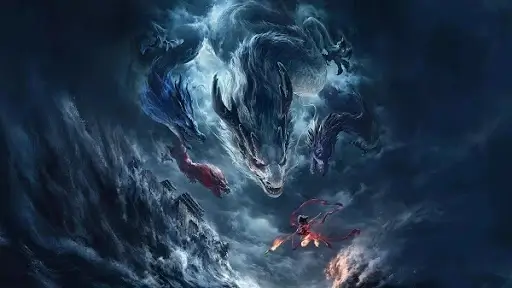
Ne Zha 2 throws an absurd amount of spectacle at the screen. The reason it stays readable is not luck. It is a production discipline.
Here’s what the film’s success signals about modern Chinese animation pipelines:
The Pipeline Is No Longer “One Studio, One Look”
When you have 138 companies contributing, the real job becomes consistency. Layout, lighting, effects, simulation, cloth, hair, compositing, all of it needs rules, or you end up with a patchwork film.
This is the type of coordination people associate with a top-tier 3D animation company because the hard part is not a single gorgeous shot. It is 2,400 shots that still feel like they belong to the same universe.
Character Readability Is The Cheat Code
Action can get noisy fast. The audience stays locked in when character silhouettes, faces, and movement grammar stay consistent. That comes back to the basics: strong 3D character modeling and a design system that holds up under extreme expressions and fast motion.
Ne Zha works as a character because you can read his mood instantly, even when the scene is chaotic. That is not accidental.
Marketing That Matches The Movie
Ne Zha 2 | Official Trailer HD | A24
A lot of trailers make the same mistake. They sell only the loudest moments, then audiences walk in expecting noise, not story.
Ne Zha 2’s marketing had a tougher job. It needed to promise huge battles while still telling viewers this is a character story, not a fireworks demo.
If you have ever watched high-end game animation trailer services build hype, you know the trick: you show scale, then you cut to one emotionally legible beat, then you go back to scale. That rhythm tells the audience, “This is big, but it still has a point.”
That’s the lane Ne Zha 2 lives in.
How Expensive Was Producing Ne Zha 2
Big animation costs money. That is obvious. What’s less obvious is where the money goes.
When you hear numbers like thousands of contributors and thousands of finished shots, you are looking at labor, time, revisions, and pipeline tooling. And that’s why people who casually ask about 3D animation cost often get sticker shock. It is not “pay for animation.” It is “pay for process.”
Ne Zha 2’s box office run does something important for the industry: it proves there is an audience ceiling much higher than the one people assumed for non-Hollywood animation. That will change what gets funded next.
Where To Watch Ne Zha And Ne Zha 2 (And Why Availability Depends On Your Country)
Streaming rights move. Region licensing changes. Still, here’s a practical snapshot based on major platform listings.
- Ne Zha 2 (United States): Listings show it available via Hulu, and streaming availability aggregators also list options such as Max and digital rental or purchase services.
- If you are outside the U.S.: check your local listings first because the same title can be in cinemas, on transactional video, or absent entirely, depending on territory. Coverage around OTT release plans has also varied by market.
For the original Ne Zha (2019), box office and release records are well documented, and it remains the starting point that makes the sequel land cleaner.
What Ne Zha Means For Animation Going Forward
Ne Zha is not “China catching up.” It is China building a blockbuster language that is its own, then exporting it on its terms.
It also shifts the global conversation. Hollywood no longer owns the definition of “event animation.” The audience has already voted.
And if you are an animation studio, there is a blunt lesson here: character-first storytelling scales better than “pretty visuals” alone. Ne Zha is chaos, yes, but it is chaos with a beating heart. That’s why the franchise stuck.
Frequently Asked Questions
Where can I watch Ne Zha 2 streaming in the U.S. right now?
In the U.S., Ne Zha 2 is listed as available on Hulu, and streaming aggregators also list options such as Max and digital rental or purchase platforms.
Who is Ao Bing in Ne Zha, and why is he so important to Ne Zha 2?
Ao Bing is the Dragon King’s son and Ne Zha’s key counterpart, with the sequel’s early conflict tied to the Dragon King believing Ao Bing has been lost and seeking revenge.
Is Nezha based on Investiture of the Gods, or is it a completely original character?
Nezha is a longstanding figure in Chinese religion and mythology and appears prominently in Investiture of the Gods, with modern films reworking that source material into a new franchise story.
Why did Ne Zha 2 become the highest-grossing animated film of all time?
Because it combined a peak holiday release window in China, massive domestic demand, and a sequel-driven fan base, it kept momentum long enough to pass Inside Out 2 and exceed $2 billion globally.
Related Articles: