


Some explainer videos go beyond informing you; they provoke hours of lingering reflection. You might not retrieve every detail, but a moment, a sound, or a feeling manages to stick with you. That’s what a story does. It turns a quick explanation into something that feels human and real.
That’s the crux of storytelling within explainer videos. The goal is not merely to scatter facts before the audience; rather, it is to stir an emotion. The right narrative can turn a thirty-second clip into a substantial exchange, garnering the viewer’s interest and compelling them to continue watching.
These days, attention doesn’t come easy. You’ve got a blink before people move on. Information alone rarely makes them pause. But a story? That’s what cuts through. It gives meaning to what you’re showing. At Prolific Studio, we’ve seen short 2D animations turn into lasting memories, not because they were the flashiest, but because they made people feel seen.
[elementor-template id=”13845″]
The Importance of Storytelling in Explainer Videos
When it comes to persuasion, emotion walks in first, logic just trails behind. That’s the importance of storytelling. It opens the door before you even start explaining.
Anyone can say what their product does. The key is demonstrating the content’s importance. An emotionally charged story is likely to be remembered long after the listener has heard a dry recitation of the features. Storytelling is a significant means of transforming and personalizing a message.
Creating an engaging explainer video doesn’t simply pass on facts. It brings them to life. The story enables a person to visualize an idea, not just hear it recited. It takes dry, abstract content and transforms it into something that resonates.
The Psychological Foundations of Storytelling
People, by their nature, are storytelling creatures. We have always used stories to teach, to warn, and to bind before there were slides, advertisements, and applications. The difference is that our brains still respond the same way.
That is the psychological foundation of storytelling. When a narrative is shared, the audience’s imagination engages to the extent of visualizing a journey, feeling the tale instead of just hearing it. Regions associated with emotion and memory function simultaneously, making the message more difficult to remember.
Information is remembered better when presented as a story rather than in a monotonous manner. This is why storytelling holds great power in explainer videos: it conveys the message and creates a lasting mental impression.
Why Emotion Outperforms Explanation
No one ever cared because they were given perfect data. They cared because something tugged at them.
A good explainer video isn’t about dumping information. It’s about helping the viewer feel what life looks like when the problem’s gone. That’s what keeps them watching. That’s what they share.
At Prolific Studio, we always start with feeling. Before sketches or scripts, we ask a simple question: “What should the viewer feel once this ends?” That one line guides the visuals, pacing, and tone. When you lead with emotion, the story doesn’t just make sense, it hits home.
Elements of Effective Storytelling in Explainer Videos
Skillful storytelling isn’t just chance; it’s the outcome of deliberate crafting with skillful pacing, structure, and significant purpose. In an explainer video, every moment focuses on telling the story and holding the viewer’s interest.
Below are the core ingredients of effective storytelling in explainer videos:
1. A Clear Structure
Every story needs direction. It starts with a challenge, builds curiosity, and closes with resolution.
Primarily, explainer videos clarify information rather than add to its complexity. This is why the structure is important; it helps keep thoughts aligned and easy to grasp.
- Start: Hook the viewer. Show them a familiar situation or frustration.
- Middle: Bring in the product or idea as a turning point.
- End: Deliver that “oh, I get it” moment where everything clicks.
At Prolific Studio, this flow keeps each story grounded. The viewer isn’t dragged along; they’re guided to the finish line naturally.
2. Relatable Characters
Characters make the story breathe. They turn abstract problems into human ones.
In animated explainer video services, design isn’t about fancy art; it’s about empathy. Authentic, relatable characters are the finest. A client facing an issue, a staff member overwhelmed with tasks, a founder seeking efficiency, and similar situations. People pay attention when screen characters portray their frustrations.
That’s the quiet trick behind connection. When the viewer relates, trust follows. It stops feeling like a pitch and starts feeling like someone understands them.
3. Conflict and Resolution
Every memorable story starts with a problem. Something’s off, and that tension keeps the viewer curious.
In successful storytelling in explainer videos, the conflict isn’t dramatic; it’s familiar. Maybe it’s wasted time, messy data, or complicated processes. The resolution comes when your idea steps in naturally as the fix.
The key is honesty. The solution shouldn’t feel pushed. When the ending feels earned, people believe it. They don’t feel sold to, they feel helped.
4. Simplicity and Clarity
The most powerful stories are simple. They get straight to the point.
Simplicity doesn’t mean dumbing things down. It means stripping away the clutter. At Prolific Studio, every frame and every word serves one purpose: to make the message land.
Effective explainer videos use the product; they don’t just describe it. The pacing, visuals, and narration communicate a single key message. The story presents a seamless experience while busy accomplishing many tasks behind the scenes.
Visual and Auditory Elements Bring More Eyeballs
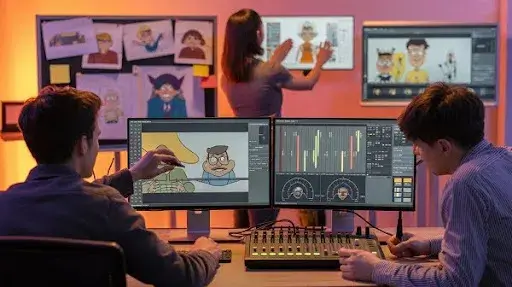
You can write the best script in the world, but if it doesn’t sound and look right, it won’t hit. The visual and auditory elements turn an explainer video from words on paper into a living experience.
Visual Storytelling in Animation
Animation lets you show what cameras can’t. You can turn data into color, emotion into movement, and abstract ideas into something people can see.
Colors, pace, and motion tell half the story before the voiceover starts. In creating engaging explainer videos, visuals act as emotion cues. They quietly shape how people feel.
At Prolific Studio, we treat color and timing as emotional tools. Each tone and transition sets up how the viewer experiences the next moment. Done right, it feels invisible, just natural.
The Role of Sound Design
Sound gives life to motion. It tells your ears what your eyes should feel.
Music sets the tone, upbeat tracks add energy, soft tunes add calm. Sound effects make the world feel real. Then there’s the voice, steady, friendly, trustworthy. Together, they make the visuals breathe.
A well-built soundtrack doesn’t stand out; it blends in. It’s the emotional undercurrent that holds the story together.
Creating Harmony Between Sound and Story
When sound and visuals line up, the story stops feeling like a video and starts feeling like an experience.
This is what we intend to accomplish at Prolific Studio. Each tone, color, and rhythm is deliberately emphasized to maintain the flawless flow of the story. The focus is not on highlighting the animation’s creativity but on delivering the message effortlessly, as though that manner of presentation were required.
Balancing Information and Emotion
The importance of storytelling is balance. Facts build trust; feelings spark interest. Without both, the story falls apart.
Too many details feel heavy. Too much emotion feels fake. The sweet spot sits right between, just enough logic to be convincing and enough heart to make it matter.
Emotion draws people in. Information keeps them there. When they meet in the middle, your story doesn’t just explain, it connects.
Craft a Story That Truly Connects
Some brands can turn the most ordinary idea into something magnetic. You’ve probably seen it, that sudden spark that makes a complicated topic feel effortless to grasp. It’s not magic. It’s storytelling done right, built on structure, empathy, and rhythm that quietly pull people in.
Instead of just thinking of motion and visuals when developing an explainer video, think of it as a documentary film. Every pause, tone, and color needs a reason to exist.
At Prolific Studio, we’ve watched dry, complex topics turn fascinating when framed as stories that sound human and real rather than scripted. That’s the secret: when something feels genuine, people pay attention.
Know Your Audience Like a Character
Every strong story starts with a person, not a product. In the world of animated explainer video services, that person is your viewer, the one you’re trying to connect with.
Before a single line of script is written, take a moment to picture them. What’s their routine? What slows them down every day? What problem would they give anything to solve?
Once you really know that person, your message stops sounding like a pitch. It starts sounding like understanding. And when people feel understood, they listen.
You’re going to connect with someone, not a “target demographic.” It may be a small-business owner who is exhausted and short on time, or a marketer who is overextended with numerous projects. When your video portrays genuine frustrations and authentic solutions, it becomes less about marketing and more about understanding. That’s where trust begins.
Keep It Simple, Say Only What Matters
Great storytelling in explainer videos isn’t about saying more. It’s about saying what matters most.
This is where a lot of brands get tangled. They cram too many details, product specs, achievements, and numbers. But data fades fast. Feelings don’t.
If your viewer remembers just one thing, what should it be? That your product save them time? Does it make their day smoother? Start there. Let everything else support that single truth.
Cutting extra noise isn’t losing information; it’s sharpening the message. Simplicity gives your story room to breathe.
Speak Like a Human, Not Like a Script
You’ve seen those videos that seem like someone is reciting from a script? They may be tidy, yet they seem remote. That’s what takes place when a message loses sight of its intended audience.
The most effective explainer videos resemble a dialogue, casual, inquisitive, and self-assured. Utilize common vocabulary. Engage with the viewer, don’t speak down to them. Pose inquiries. Drop in a pause or a shorter line to keep the rhythm alive.
At Prolific Studio, we’ve discovered that the tone of voice frequently determines whether viewers continue watching. A joyful tone, a feeling of ease, a sprinkle of humor, or a mix of these aspects increases value. When your video interacts like a real person instead of a marketing device, the audience will connect better.
Design With Emotion in Mind
Before the voiceover even starts, visuals already speak. A color shift, a motion speed, a slight silence, all of it sets tone and mood.
Effective storytelling in explainer videos depends heavily on those visual and auditory elements working together. Blue relaxes. Yellow uplifts. Red demands attention. And motion, the pacing of each transition, dictates how your audience feels in real time.
Then comes sound. A soft melody can feel comforting. A confident voice instantly builds trust. At Prolific Studio, for instance, we occasionally evaluate a scene without sound. If the emotion is still conveyed, we recognize that the storytelling is effective.
Think of sound as the heartbeat and visuals as the expression. Together, they make your story breathe.
Simplicity With Substance
Simplicity doesn’t mean basic. It means clear.
Brand storytelling is tough. When a brand is dealing with something technical, it is easy to overexplain. But showing off is not the point of storytelling; it is to demonstrate empathy.
Don’t say your software “integrates multiple data modules.” Show someone breathing easier because their workday just got smoother. Don’t claim “innovative automation.” Show peace of mind.
Making complexity disappear while revealing the solution, visible to the audience. That is the heart of storytelling. Every word, every pause, and every cut should feel deliberate.
Why Storytelling Works (and Always Will)
There’s a reason storytelling in explainer videos keeps outperforming every other approach. It’s not luck; it’s psychology.
According to HubSpot, videos that follow a narrative format see engagement increase by around 22%. Forbes reports that people are 55% more likely to remember a story than raw information.
That’s because the human brain is wired for connection, not data. Facts fade. Feelings stick.
Successful storytelling in explainer videos doesn’t just make people emotional; it makes them act. Watch times climb. Click-throughs rise. Brands stay memorable.
People will remember how an experience impacted their emotions, rather than the exact particulars of what was communicated. That’s what makes a great explainer video memorable especially when created through professional 2D animation services that bring ideas to life with engaging visuals and emotional storytelling.
Frequently Asked Questions
Do I need to include characters?
Not necessarily. Even simple shapes can feel alive when animated with emotion. Characters just make connections easier.
How do I balance storytelling with product details?
Go for a 70/30 split. Story builds emotion; product details build trust.
Does storytelling really work for technical or B2B topics?
Absolutely. Even in B2B, the viewer is still human; emotion drives comprehension in every field.
How can I tell if my storytelling is effective?
Numbers help, completion rates, click-throughs, and feedback. But if viewers describe your video as clear, relatable, or easy to understand, you’ve done it right.
Final Words
Ultimately, the core of storytelling in explainer videos resides not in stunning visuals or flawless animation. It involves making sure that people feel recognized, heard, and comprehended.
That’s what Prolific Studio aims for: stories that don’t just move but connect. Every color, sound, and word is chosen to make messages stick long after the screen goes dark.
Because once people feel something real, they remember it.
And when they remember, they act.
That’s not just video production, that’s storytelling that lasts.
Related Articles: