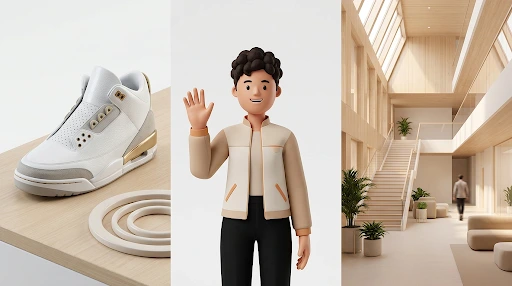
Most animations begin with “We need a 3D video.” This may seem like a clear description. It is not. All of the product demos, the surgical procedure presentation, and the brand video fall into this category but have nothing in common in terms of skills, timelines, or budgets.
There are a few types of 3D animation that a company can use, and they vary depending on the purpose, required level of accuracy, and cost. If you choose the wrong kind, you will end up with a polished video that doesn’t do what it is supposed to do. Choosing the right kind will save time and allow you to compare quotes. Moreover, the result will definitely appear on your website, in your sales presentation, and in your trade show materials.
The importance of using videos is getting higher by the day. The Wyzowl State of Video Marketing 2026 survey reveals that 91% of businesses use video marketing (Wyzowl, 2026).
What Makes 3D Different From 2D
In 3D animation, all characters and objects that will appear in the scene are created through digital modeling using a skeleton. After that, the modeling is complete, and there are no restrictions on the camera’s position, which increases production costs in both time and money. If you are still confused about the two, we recommend our 2D vs. 3D animation guide.
1. 3D Product Animation
3D product animation creates a digital model of your product and allows the camera to move around it freely. Exterior, interior, exploded view, in use. These shots aren’t possible in a single take during a physical shoot, and they can’t be possible without an existing prototype.
This point should be emphasized more often than most people realize. Most hardware products require promotional shots before any prototype even exists. The studio, using CAD files, can produce such shots before the factories even prepare the production line.
Realism does its job there. When the material texture, reflections, and small details are perfect, consumers feel the product is complete and ready for use. But the matter is not in realism itself, but in speed, in the understanding of the problem and solution, and one feature that makes all these expensive. All of these are needed for e-commerce sites, company presentations, conference loops, and paid commercials – that’s how we make 3D product animations.
2. 3D Character Animation
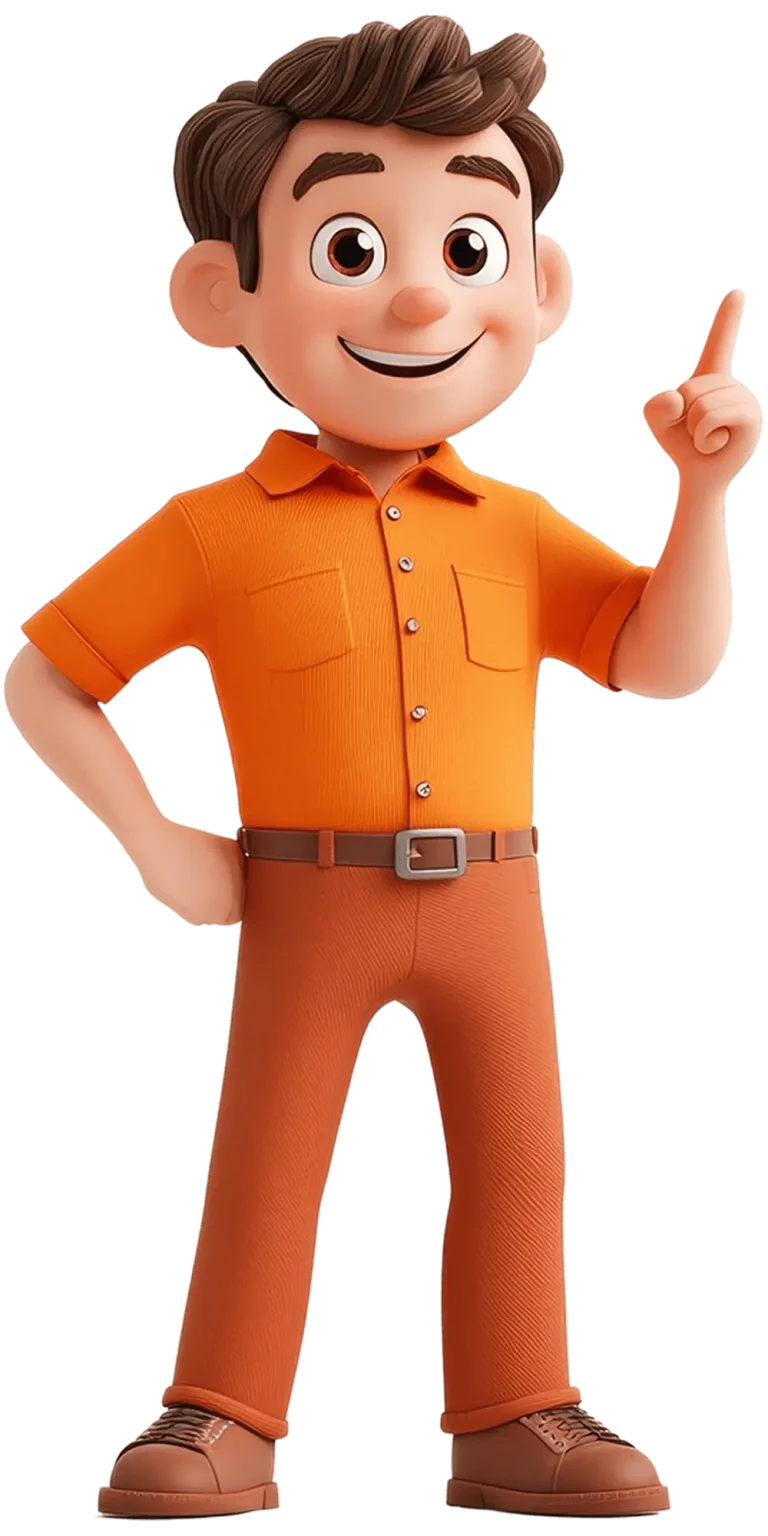
It conveys a message and a face that can range from a human guide to a mascot or an animated character. It can be used by a bank to introduce account security measures or a clinic to introduce a certain procedure. A training company can demonstrate unsafe behavior without involving filming its employees.
It lies in subtleties like weight, timing, and a brief delay before taking action; rigid motions and an expressionless face will destroy trust immediately. Even though motion capture enables faster production of believable motion, keyframe animation is better suited to stylized actions.
There’s a budget angle as well. A character rig is created once and can be used for several videos, reducing the production cost for each additional video. Let the agency producing your video know in case you need more than one video, as per your brief. In case one video is enough to explain the topic, 2D might work. And when you choose depth and screen presence, any studio that offers character animation services should provide you with a character rig and acting tests, not just renders.
3. Architectural 3D Animation
Architectural animation is an effective tool that allows one to visit the site before construction. It is used by developers, architects, hotels, and interior designers because a render shows only one point of view, whereas a camera path reveals the flow, scale, lighting, and materials.
Purpose will determine the style. The film of the luxury apartment should feature warm lighting and smooth motion, but the planning submission should include clear information on accessibility and massing.
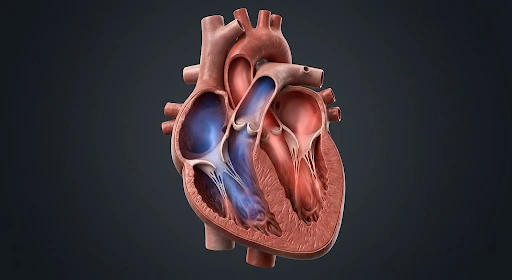
4. Medical and Scientific 3D Animation
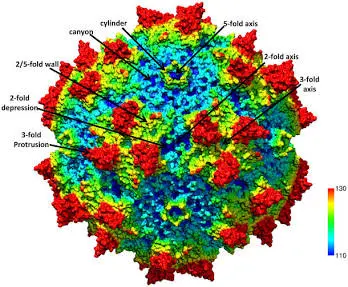
This is where accuracy outranks aesthetics. In a 2024 systematic review published in the Journal of Medical Internet Research, 11 of 15 studies (73%) found statistically significant improvements in health information recall after using animated videos compared with traditional information delivery methods (JMIR, 2024). It concerns recall, not sales. And the review is worth reading for its limits.
In business terms, the issue is process. A medical studio should work with references, conduct clinical review meetings, and document each sign-off. One wrong valve position may destroy years of reputation. When choosing a vendor, ask about who verifies the science. Our medical animation department builds clinical reviews into its schedule right from day one.
5. Industrial 3D Animation
Industrial animation describes machines, facilities, engineering processes, and safety practices. It resolves real-life problems. You can explain how your equipment functions without stopping a production process, or show a process that requires maintenance without putting a video crew into an unsafe location.
Existing CAD drawings are very helpful indeed. Without them, expect the studio to ask for drawings, dimensions, and photos, and to need time with your engineers. Be simple and concise. Operators and customers need labeling, cross-sections, and motion animation rather than camera theatrics.
6. 3D Motion Graphics and Explainers
Not every business has a physical product. Software, financial, and logistics companies offer systems that cannot be captured on video. The 3D Motion Graphics animate shapes, user interface panels, icons, and data in a three-dimensional world, making a non-physical system physical.
It is also where the hybrid exists. Flat user interface panels gain depth. Data passes through a virtual server room. Low-poly style, adopted from video games, helps keep the scene uncluttered and works well for e-learning content, as it doesn’t distract from the information.
Clutter is a danger. Glowing lines, rotating objects, and continuous transitions require more effort from the viewer. All unnecessary animations must be removed. And if the concept works flat, then 2D Motion Graphics might work better and be less expensive.
7. Brand and Cinematic 3D Animation
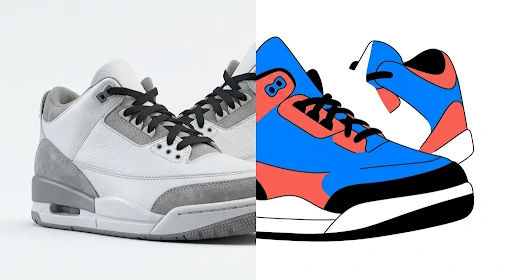
The last type is less about explaining and more about positioning. Brand animation includes launch videos, event opening videos, logo animations, and campaign animations. Visual style is paramount here, and there are two paths most often taken.
In the photorealistic category, we have renderings that closely imitate reality, such as those used in the movie industry to create digital characters in the same scene as the actors. In the stylized category, artists deliberately exaggerate with bold color, simplicity, and personality. A similar process is called non-photorealistic rendering, which gives a hand-drawn look to the 3D pipeline, keeping the flexibility of cameras and warmth of 2D.
Pick one according to your audience. Finance or medical industry clients will prefer realistic designs, while startups targeting a younger generation can get away with something bolder. Real-time rendering brings you closer to seeing your ideas come alive, enabling interaction via VR or AR.
How to Match the Type to Your Goal
| Your Goal | Recommended 3D Animation Category | Key Purpose & Best Use Cases |
| Show how a physical product works | 3D Product Animation | Exploded views, internal component breakdowns, product launches, and e-commerce listings. |
| Explain software, data, or a service | 3D Motion Graphics | Translating abstract concepts, cloud infrastructure, app workflows, and complex data into clean visual systems. |
| Build a recurring brand personality | 3D Character Animation | Mascots, brand storytelling, narrative campaigns, and relatable digital human/creature avatars. |
| Sell or approve a space | Architectural Animation | Real estate walkthroughs, urban planning proposals, interior design pitches, and exterior fly-throughs. |
| Educate patients or clinicians | Medical Animation | Cellular mechanisms of action (MoA), surgical procedures, anatomical visualization, and medical device demonstrations. |
| Document equipment or procedures | Industrial Animation | Heavy machinery operations, factory line workflows, safety protocols, and technical maintenance manuals. |
| Set a premium tone | Brand & Cinematic Animation | High-end visual teasers, high-fashion promos, flagship reveals, and cinematic brand anthems. |
What Actually Drives the Price
3D animation is usually more expensive and time-consuming than 2D. This is the price for realism and depth. However, length is not the best indicator. A 15-second video with facial animation, hair, and lighting may cost more than 1 minute of motion graphics without any changes. Our 3D animation cost breakdown goes line by line.
Prepared clients save money. Send CAD files, product photos, brand guidelines, and the sales deck. Send past videos you disliked and explain why. A quote that looks low often leaves work unscoped, and the gap shows up later as change orders.
Questions to Ask Before You Sign
Ask to see finished projects in the same type you need, not just their best ones. Ask who owns the file at the end of the project. Ask how many revisions will be done and what constitutes a revision. Ask them what they need from you and when. Then ask what they’d cut from your brief. A good studio will have an answer.
Bring Us the Problem, Not the Video Idea
The quickest way to get the right type of animation is to explain your challenge and let the animation studio suggest the right type. Here at Prolific Studio, our 3D animation experts can recommend the right format that will work for your project and what the process will require and cost, even if the answer turns out to be simpler than you imagined.
Frequently Asked Questions
Which type works best for product marketing?
In most cases, 3D product animation is used. This animation displays internal components, materials, and movement that cannot be captured through a camera. In addition, 3D product animation can be created before the actual product is available. Make sure there is a single message that helps the customer understand the feature.
Is 3D animation better than 2D for business?
Neither always works in every situation. 2D animation is faster and cheaper to create, while 3D animation brings more realistic visuals. While 2D animation works best for simple stories and educational content, 3D animation can be used for more complex visualizations of objects, locations, and processes.
What should I prepare before contacting a studio?
Gather your objective, target audience, location of video, any CAD drawings or product images, your branding, and video examples that you like or don’t like. A perfectly crafted brief is not needed. Just enough material to prevent guesswork is sufficient.
Can I combine multiple types in a single video?
Yes, there are hybrids, such as motion graphics on the interface that features a character in a story. Stick to one goal and one visual language so the video does not feel like something put together.
Final Words
The best animation style is not always the biggest-looking one.
Product animation helps when buyers need to see how something works. Character animation helps when the brand needs personality. Motion graphics work well for systems, data, and abstract services. Architectural animation sells a space before it exists. Medical animation needs accuracy. Industrial animation needs clarity. Brand animation needs a strong idea behind the visuals.
That is why knowing the types of 3D animation for businesses matters before choosing a studio.
It keeps the brief cleaner. It protects the budget. It stops the project from turning into a good-looking video that says very little.
Start with the buyer’s problem. Then choose the animation style that makes that problem easier to understand.
Related Articles: