3D animation cost for business can range from a modest product clip to a serious production budget. That is the honest answer. A simple 15-second product spin is not priced like a medical mechanism video, a real estate walkthrough, or a character-led brand film.
So when someone asks, “How much does 3D animation cost?” the better answer is usually: what needs to be built, animated, reviewed, rendered, and delivered?
Why 3D Animation Cost for Businesses Vary So Much
The price changes because 3D is not one task. It is a chain of tasks.
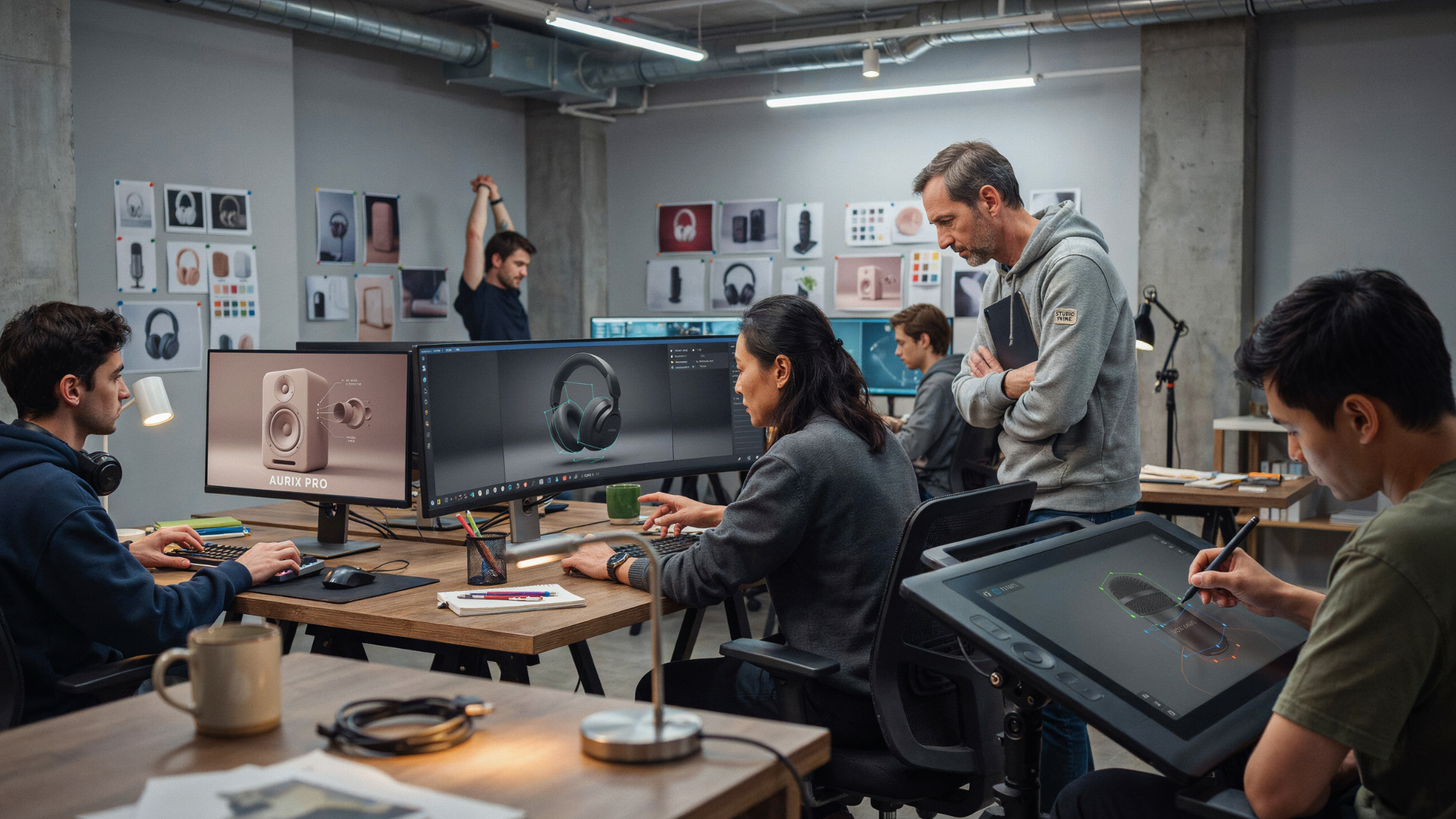
A project may need concept work, script, storyboard, 3D modeling, textures, rigging, animation, lighting, rendering, sound, voice-over, revisions, and final exports. Autodesk describes the 3D animation process as a pipeline that can include modeling, rigging, animation, lighting, and rendering, which is why pricing gets messy when clients only think about video length.
A 30-second animation can be cheap if it is one product on a white background.
A 30-second animation can also get expensive fast if it has five scenes, custom environments, moving parts, realistic materials, camera transitions, labels, voice-over, and several versions for ads and the website.
Same runtime. Totally different job.
The First Cost Driver Is What Has to Be Built
This is where many budgets start.
If you already have clean CAD files, product references, packaging files, brand assets, and technical drawings, the studio has a better starting point. If the team has to build everything from scratch, the cost rises.
A product with simple geometry costs less to model than a machine with dozens of parts. A bottle costs less than a robotic arm. A furniture render costs less than a full architectural interior with lighting, décor, exterior views, and people moving through the space.
This is also why a good animation studio asks for source files early. They are not being difficult. They are trying to see how much work exists before animation even starts.
3D Video Production Budget Depends on Complexity, Not Just Length
A 3D video production budget usually grows when the project has more moving pieces.
Here are the things that quietly add cost:
- Detailed product models
- Realistic textures like glass, liquid, metal, skin, fabric, or hair
- Multiple environments
- Character movement
- Exploded views
- Technical labels
- Voice-over and sound design
- Fast deadlines
- Extra revision rounds
- Different aspect ratios for social, web, and presentations
A short video with complex visuals can cost more than a longer video with simple motion. That is why quoting by seconds alone can be misleading.
3D Animation Pricing per Minute Can Be a Trap
A lot of businesses want a clean number. Fair enough.
But 3D animation pricing per minute is not like buying carpet by the square foot. It can help with rough planning, but it does not tell the whole story.
A minute of simple product animation might be manageable. A minute of medical animation with cell-level detail, a minute of character acting, or a minute of industrial machine movement can sit in a completely different bracket.
If a studio gives you one flat per-minute price without asking about style, assets, complexity, usage, revisions, and deadline, be careful. They may be guessing, or they may be quoting the simplest version of the job.
Practical Cost Tiers Businesses Can Expect
These are planning ranges, not universal prices. They help you think before asking for quotes.
Basic 3D Product Clip
Usually good for short product spins, simple feature highlights, packaging views, or clean e-commerce visuals. Lower cost, faster timeline, fewer scenes.
Mid-Level Business Animation
Best for product demos, SaaS explainers, manufacturing visuals, medical device intros, and real estate previews. More planning, better motion, clearer storytelling.
Advanced 3D Production
Used for character animation, detailed medical visuals, high-end product launches, architectural walkthroughs, cinematic brand films, or complex technical explainers. Higher cost because more specialists touch the work.
This is where 3D animation services can either be smart or wasteful. The goal is not to buy the biggest production. The goal is to buy the right level of production for the business problem.
Different Types of 3D Animation Cost Differently
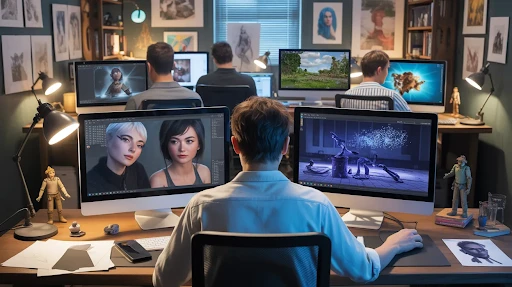
The types of 3D animation matter because they use different skills.
Product animation focuses on shape, materials, movement, and clean feature explanation.
Medical animation may need anatomy, scientific review, cell-level visuals, and careful claims control.
Real estate animation needs architecture, interiors, lighting, styling, landscaping, and camera flow.
Industrial animation needs machine accuracy, assembly logic, safety zones, and engineer review.
Character animation needs rigging, acting, facial expression, timing, and more revision time.
These are not the same job with different labels. They are different production problems.
Why Cheap 3D Often Gets Expensive Later
A low quote feels good at the start. Then the model looks wrong. The lighting feels flat. The product movement is stiff. The render does not match the brand. The team asks for revisions, and suddenly, the “cheap” project becomes slow and annoying.
Cheap 3D usually fails in one of three places:
- The model is not accurate.
- The animation does not explain anything.
- The final render looks less professional than the brand needs.
Fixing those issues late costs more than planning properly at the beginning.
The Script and Storyboard Affect Cost Too
Many clients think the cost starts when the 3D work starts.
Not really.
A messy script can make the animation longer than needed. A weak storyboard can lead to extra scenes. A vague concept can force the studio to guess. That guessing later turns into revisions.
A tight script saves money. So does a clear storyboard.
If the video needs to sell a product, explain a process, or support a video marketing strategy, the structure matters as much as the visuals. A beautiful animation with a weak message is still a weak business asset.
A Quote Should Tell You What You’re Actually Paying For
A 3D quote should not feel like a foggy one-line invoice.
If it only says “60-second animation” and gives you a price, ask for more detail. That phrase tells you almost nothing. A one-minute product loop is not the same job as a one-minute medical sequence, machine demo, or real estate walkthrough.
The quote should say what is included. Script. Storyboard. Modeling. Textures. Animation. Lighting. Rendering. Sound. Revisions. Final exports.
Not every project needs every step. A simple product clip may not need a full script. A technical video may need extra review from engineers. The problem starts when those details are missing, and everyone assumes something different.
That is how “affordable” projects become annoying.
Revisions Are Fine Until They Arrive Too Late
Every project needs changes. No issue there.
The timing is what matters.
Changing a sentence before the storyboard is easy. Changing the whole scene after animation starts is not. Tweaking a color before rendering is normal. Rebuilding a product model after it was already approved can hit the budget hard.
So lock things in properly.
Script first.
Storyboard next.
Then model.
Then rough animation.
Then final render.
If every stage is “almost approved,” nothing is really approved. That is where money leaks.
Sometimes 2D Is the Better Choice
Not every business video needs 3D.
If you are explaining a simple service, app flow, training process, customer journey, or internal policy, 2D animation services may be cleaner and cheaper. You do not always need models, textures, lighting, camera movement, and render time.
3D makes sense when the object matters. Shape. Size. Mechanism. Material. Space. Movement. Physical detail.
If those things are not important, 3D may be extra weight.
That is not a downgrade. It is just choosing the right tool.
Keep the Logo Motion Short
A clean animated logo can make a video feel finished. It works well for launch clips, YouTube intros, pitch decks, event screens, and social edits.
That is where logo animation services help.
But keep it quick.
Most viewers do not want a long logo reveal before the actual message starts. They came to understand the product, price, process, or offer. Give them that.
A logo animation should feel like a signature at the end. Not a curtain that takes too long to open.
Do Not Compare Quotes by Price Alone
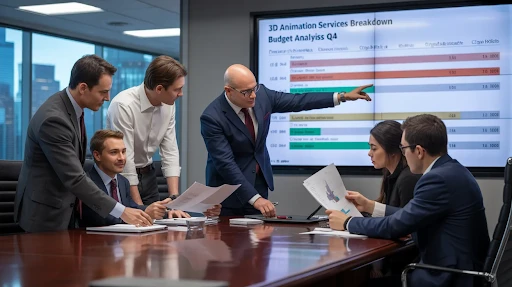
Two studios can quote the same “video” and still be quoting totally different jobs.
One may include concept, script, storyboard, modeling, animation, lighting, rendering, sound, revisions, and three final formats.
Another may include animation only, with one export, after you provide everything else.
The second quote will look cheaper. Maybe it is. Maybe it is missing half the work.
Ask simple questions before choosing.
- Who writes the script?
- Who builds the model?
- How many revisions are included?
- Is sound included?
- Are cutdowns included?
- Do source files cost extra?
- What happens if the product changes?
A low price is not a red flag by itself. A vague price is.
Per-Minute Pricing Can Fool You
Businesses like 3D animation pricing per minute because it feels easy to understand.
The problem is that one minute can mean almost anything.
A product rotating on a white background is one kind of minute. A detailed medical sequence with anatomy, camera moves, labels, and review rounds is another. A character animation with facial movement and acting is another thing.
Same length. Different workload.
Use per-minute pricing for rough planning only. Do not use it as the final way to judge value.
Ask what happens inside the minute. That is where the cost sits.
A Bigger Budget Makes Sense When the Asset Has More Jobs
Some videos are one-time pieces. Fine.
Others need to work harder.
A product animation might become a website hero, sales deck clip, trade show loop, paid ad, email GIF, product-page visual, and still render. In that case, the 3D video production budget is not only paying for one video. It is paying for a reusable visual system.
That changes the math.
A stronger first build can save money later if the brand needs more versions across the campaign.
So, How Much Does 3D Animation Cost?
If you are still asking how much 3D animation costs, start with the scope.
- What needs to be built?
- Do you already have a model?
- How detailed should it look?
- How many scenes are needed?
- Does anything move mechanically?
- Do you need voice-over?
- How many revisions are included?
- Where will the final video be used?
Those answers matter more than runtime.
A short animation can be expensive if the work is complex. A longer one can be manageable if the visuals are simple.
Frequently Asked Questions
Final Words
3D animation cost for businesses depends on what needs to be modeled, animated, reviewed, rendered, and delivered. A simple product clip can stay affordable. A detailed medical, real estate, industrial, or character-based animation will cost more because more specialists and review stages are involved.
The smart move is not chasing the cheapest quote. It is getting the scope clear, asking what is included, approving each stage on time, and making sure the final asset has a real job to do.
Related Articles: