
If you want to hire 3D animation studio talent, slow down before you start collecting quotes. The wrong studio can still make something that looks good in a reel. That does not mean the video will help your sales team, explain your product, or make a buyer trust what they are seeing.
A good 3D partner should understand the business problem first. The visuals come after that.
Why Businesses Hire 3D Animation Studio Teams
Most companies do not need animation because they want something flashy. They need it because something is hard to explain.
Maybe the product has parts hidden inside. Maybe it does not exist physically yet. Maybe the sales team keeps explaining the same feature over and over. Maybe customers keep asking how it works before they buy. That is usually where 3D starts making sense.
A 3D animation company for businesses should not just make a product spin in a clean white room and call it done. It should help people understand the thing faster than a photo, paragraph, or sales deck can.
Start With the Problem, Not the Style
This is where a lot of projects get messy.
Someone on the team says, “We need a 3D video.” Fine. But what kind? A product launch clip? A technical explainer? A trade show loop? An investor video? A training asset? A homepage hero? Those are all different jobs.
Before talking to any studio, write the goal in one sentence.
“We need buyers to understand the product mechanism.”
“We need investors to see the building before construction starts.”
“We need sales reps to explain the machine without guessing.”
That one sentence keeps the project from drifting into vague creative talk.
A Real Animation Studio Will Push Back a Little
A good animation studio will not just nod at every idea.
It may ask why the video needs to be 60 seconds. It may be questioned whether the product needs a full environment. It may tell you 3D is overkill for one part of the message. That is a good sign. You want a team that does not quietly accept a bad brief and invoices you later. They should be able to think on their own.
The better studios usually ask about the audience, the sales problem, the product details, the timeline, and where the video will be used. They may also ask what customers misunderstand right now. That question is more useful than it sounds.
Know the Kind of 3D Work You Actually Need
Not every 3D project uses the same skill set. A product animation, medical visual, architectural flythrough, industrial demo, and character-led brand film can all sit under the same broad label, but they are not the same job.
That is why the types of 3D animation matter before pricing starts. A simple product loop may only need modeling, materials, lighting, and camera movement. A character-based ad may need rigging, facial animation, acting, scene design, sound, and heavier revisions.
Do Not Fall for the Flashiest Reel
A reel is useful. It is also dangerous.
Studios usually show their most impressive shots first. Robots. cars. liquid simulations. dramatic lighting. glossy product close-ups. That can be exciting, but it may not prove they can do your job.
If you sell machinery, look for technical clarity.
If you sell consumer products, look for clean product behavior.
If you need a character, look for acting and timing.
If you need a training video, look for structure and pacing.
Pretty is not enough. Useful is better.
Outsourcing Works When the Brief Is Tight
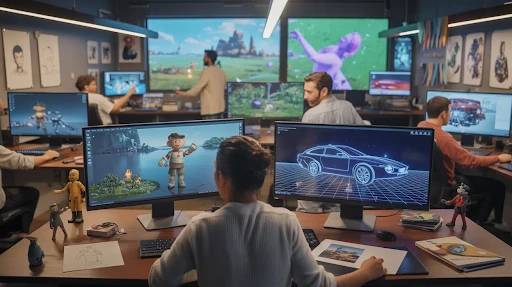
A lot of companies outsource 3D animation because they do not need a full in-house team. This makes sense. Hiring modelers, animators, lighting artists, render specialists, and producers for a single campaign would be excessive for most companies.
But outsourcing gets painful when the brief is loose.
Do not send a studio one paragraph and expect a clean quote. Tell them about the product, the target audience, what the viewer should comprehend, the length of the video, where it will be utilized, and any existing files or references.
Also mention the annoying practical stuff early. CAD files. dimensions. brand guidelines. voice-over. subtitles. delivery sizes. technical review. legal review. All of that affects time and cost.
Pricing Is Not Just About Seconds
A 15-second animation can be expensive. A 60-second animation can be simple. Length matters, but it is not the whole story.
A 3D animation pricing guide can help you understand the typical cost factors, but it can never replace a genuine quotation. Modeling detail, texturing quality, the number of scenes, product complexity, camera movement, lighting, revisions, sound, and distribution formats are all important.
This is where companies compare quotes badly. One studio may be quoting a basic product rotation. Another may be quoting concept, script, storyboard, modeling, animation, lighting, sound, and three cutdowns.
Those are not the same thing.
Cheap 3D Can Become Expensive Very Fast
A low quote feels good at the start. It feels less good when the product looks wrong, the motion feels stiff, or your team spends three weeks explaining details that should have been understood earlier.
Bad 3D costs more than the invoice. It costs time, internal energy, launch confidence, and sometimes trust in your own team.
Good 3D animation does not have to be the most expensive option. But it does need enough budget for the job to be done properly. The studio should know where detail matters and where it can stay simple.
Ask About Software, but Do Not Worship It
Modern 3D work incorporates programs such as Blender, Maya, Cinema 4D, Houdini, Unreal Engine, and others. It is OK to inquire about the software used by a studio, especially if you want source files, model handover, or collaboration with another team.
But 3D modeling software is not the reason a project works.
The tool helps build the asset. It does not decide what the viewer needs to understand. It does not fix bad pacing. It does not make a product feel premium by itself. A good team uses the software to serve the message. A weak team hides behind software names.
A Good 3D Animation Agency Explains the Process Clearly
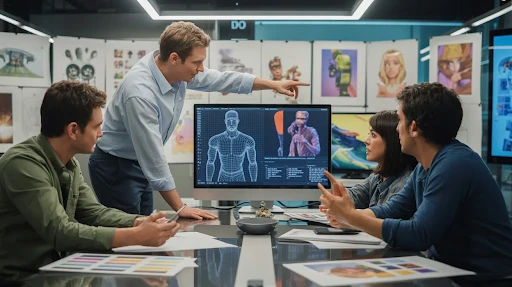
A reliable 3D animation agency should be able to tell you what happens after the contract is signed.
The process may involve discovery, scripting, storyboarding, style frames, asset gathering, modeling, texturing, animation, lighting, rendering, sound, revisions, and final delivery. Some projects require additional procedures such as CAD cleaning, technical assessment, subtitles, or numerous aspect ratios.
What matters is not the exact name of each stage. What matters is that you know when decisions are locked.
If the model is approved, changing the product shape later may cost more.
If the storyboard is approved, changing the whole structure later may slow the timeline.
If the render is approved, tiny visual tweaks may still take hours.
A good process protects the budget.
Sometimes 2D Is the Better Business Choice
Not every project needs 3D. That is worth saying clearly.
If you are explaining a software workflow, a service, a policy, a customer journey, or a simple brand idea, 2D animation services may be cleaner and more affordable. 2D can be faster, easier to revise, and better for abstract ideas.
3D works best when the object itself matters. Shape, size, material, inner parts, mechanics, space, movement, and physical realism are the reasons to use it.
Do not choose 3D because it sounds more advanced. Choose it because the viewer needs to see something that 2D or live action cannot explain as well.
A Useful Proposal Does Not Need to Be Fancy
Some proposals look beautiful and still tell you almost nothing.
You do not need ten pages of dramatic language about cinematic storytelling. You need plain answers. What are they making? What do they need from you? How many revisions are included? Who approves each stage? What files do you get at the end?
That matters when you outsource 3D animation because the process has to stay clean from a distance. Nobody wants to discover in week four that the storyboard was never really locked or that the product model was only “roughly approved.”
Small gaps become expensive later.
Use a Pricing Guide as a Map, Not a Menu
A 3D animation pricing guide is helpful, but only up to a point.
It can show you why one project costs more than another. More modeling. More scenes. More lighting. More revisions. More technical accuracy. Fine. But it cannot tell you the exact cost of your project without a scope.
A 30-second product spin and a 30-second character scene are not cousins. They may have the same length, but one could be simple, and the other could need rigging, acting, facial animation, environments, lighting, and a lot of review time.
So when you ask for pricing, don’t just say “30 seconds.” Say what happens in those 30 seconds.
Keep Logo Animation Short
There is a place for logo animation services. Brand videos, launch reels, YouTube intros, event screens, social ads. A clean animated logo can make the piece feel finished.
Just don’t let it hijack the video.
For a product demo or technical explainer, the viewer came for the product. They do not need eight seconds of glowing lines before anything useful happens. Keep the logo quick. Treat it like a signature at the end, not the main event.
Ask Who Is Actually Touching the Work
This question feels awkward, but ask it anyway.
Who is producing the job? Who is modeling? Who is animating? Who handles lighting and rendering? Who reviews quality before the file comes to you?
The person selling the project may not be the person doing the project. That is normal. Still, you should know how the team is built.
A serious 3D animation company for businesses will not get defensive about this. They will explain who does what, whether anything is subcontracted, and how quality control works.
Frequently Asked Questions
Final Words
To hire 3D animation studio partners prudently, do not be swayed by the flashiest reel or the lowest quotation. Consider project fit, workflow, communication, technical correctness, revision guidelines, and whether the studio understands the video’s goals.
A good 3D model should make it easy to explain, sell, train, or trust. The correct studio can help you avoid ambiguous messages, inconsistent feedback, late-stage rebuilds, and financial surprises.
Related Articles: