The Onward cast looked strong the second Pixar announced it, but what made it stick was not just the star power. Onward had Tom Holland, Chris Pratt, Julia Louis-Dreyfus, and Octavia Spencer in the main lineup, which is already the kind of setup most family movies would happily stop at.
But Pixar’s official film pages make it clear the movie was built around something more personal than a standard fantasy romp. Dan Scanlon has said the story came from his relationship with his own brother and the mystery surrounding the father they lost young, which is a much better emotional core than a cast list alone could provide.
Why the Onward Cast Had a Harder Job Than the Premise Suggests
The setup sounds very easy to sell. Two teenage elf brothers in a suburban fantasy world go on a quest to spend one more day with their late dad. That is clean. It is high-concept in a friendly Pixar way. It also comes with a trap. A story like that can turn mushy fast if the voices push too hard or if the emotional beats arrive pre-softened.
Pixar’s official synopsis keeps the plot simple, but Scanlon’s own explanation of the idea gives away the real pressure point. This is not only a fantasy quest. It is a brothers’ story built around absence, memory, and the weird way people build an image of someone they barely knew. That meant the cast had to sound warm without sounding fake.
That is probably why the movie still gets brought up when people talk about the best Pixar voice casts. Not because the names are huge. Because the voices actually match the emotional weight of the material.
Tom Holland Was the Right Kind of Vulnerable for Ian
Ian is not written like a loud animated lead who wins you over by talking faster than everyone else. He is more withdrawn than that. More embarrassed. More hesitant. That kind of character can die quickly if the performance starts fishing for audience sympathy too aggressively.
Holland does not do that. Pixar’s official materials identify him as Ian Lightfoot, the younger brother, and that tracks with what the role needs. Ian has to sound like someone who is always a little behind the moment, always trying to catch up to the version of himself he wishes he could be.
That is why who voices Ian in Onward tends to come up more than you might expect. The part is not flashy, but it carries the emotional center of the whole movie. If Ian feels thin, the film starts feeling thin with him.
Chris Pratt Got to Be Bigger, but Not in a Lazy Way
Barley is easier to pitch than Ian. He is louder, more enthusiastic, and much easier to imagine from a casting memo. That is probably why Chris Pratt looked like an obvious choice on announcement day.
But Barley does not really work if he is only the chaotic older brother who keeps the road trip moving. Pixar’s film page and Disney’s cast notes both lean into the fact that the brothers are carrying different forms of grief and longing, which gives Barley more weight than his surface energy suggests.
Pratt helps because he can sound expansive without flattening the character into a noise machine. Barley still feels like a person who has been holding onto fantasy, rules, and old stories because they gave him some way to organize what was missing. That is more interesting than just making him “the funny one.”
Julia Louis-Dreyfus and Octavia Spencer Were Not There as Backup Adults
This is one of the things Onward quietly got right. A weaker version of the movie would have treated the mom and Manticore roles like support beams and nothing more. Pixar did not really do that. Julia Louis-Dreyfus voices Laurel, the brothers’ mom, and Octavia Spencer voices the Manticore.
Disney’s official description even foregrounds Laurel enough to note that when Ian and Barley vanish, she and the Manticore team up to find them. That tells you a lot about how the film sees its adult characters. They are not only there to react. They get their own momentum.
Spencer, especially, gets a role that could have been one-note if it leaned too hard on the joke. Instead, the Manticore ends up feeling like exactly the kind of voice role Spencer is good at: funny, forceful, and carrying more emotional shape than the design alone might suggest.
The Onward Cast and Characters Needed to Feel Like Family, Not a Celebrity Lineup
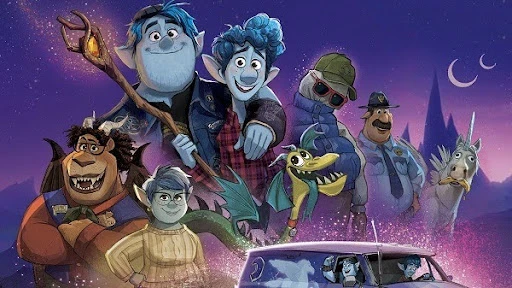
That is the difference between decent voice casting and casting that actually helps the movie. Lots of family films can announce impressive names. Fewer manage to make those names disappear into relationships quickly enough that you stop hearing the casting strategy and start hearing the family dynamic.
Pixar’s own framing helps here. Scanlon did not pitch the movie as a fantasy spectacle first. He pitched it as something pulled from personal truth. Once you know that, the Onward cast and characters make more sense.
The movie was not trying to build a shiny ensemble and then wrap feelings around it afterward. It was trying to find voices that could hold a brother relationship without turning it into pure sentiment.
That is also why the whole thing feels different from something designed purely by a high-end animation studio pipeline chasing polish. The performances are doing narrative work, not just flavor work.
Dan Scanlon’s Personal Angle Changes the Whole Movie
This is the piece people tend to remember after the plot specifics fade. Pixar and Disney both foreground Scanlon’s comments about the film being inspired by his relationship with his brother and the father they lost when they were very young. That turns Onward from “Pixar fantasy movie with elves and quests” into something more specific.
The suburban fantasy world is fun, sure. The van named Guinevere is fun. The spell that goes wrong is fun. But the real reason the story lands is that it is anchored to something painfully ordinary: wondering what kind of person your parent was and what you missed by never really getting to know them.
That is why what is Onward about is a slightly bigger question than the marketing setup implies. Officially, it is about two brothers looking for magic. Emotionally, it is about trying to reach a father through the only tools you have left, even if those tools are fantasy, projection, and hope.
The Movie Also Landed at a Strange Moment
It is easy to forget now, but Onward had one of the strangest release windows Pixar has ever dealt with. Disney’s official film page still lists the theatrical release date as March 6, 2020, and Disney later made a point of highlighting that it moved to Disney+ quickly.
That does not change the cast itself, obviously, but it does change how people remember the movie. There is a version of Onward that probably had a longer theatrical afterlife in a different year. Instead, it became one of the big family titles people discovered or rediscovered at home.
That may be one reason the voice work holds up so well now. On repeat viewing, when the release-story noise drops away, the cast chemistry becomes easier to notice.
Pixar Did Not Need To Make the Fantasy World This Relatable, but It Helped
A lot of the movie’s visual setup is obviously exaggerated, but the suburban fantasy idea gives the voice cast a more grounded lane to play in. Nobody has to perform like they are in some ancient myth all the time. The world has magic, quests, and manticores, but it also has awkward birthdays, sibling friction, and suburban boredom.
That blend makes the voices feel more contemporary and less “epic,” which helps actors like Holland and Pratt settle into the rhythm more naturally. You can even see a little of that same clarity you want in 2D video animation services work, where the setting may be heightened but the emotional read has to stay quick and human.
Why the Onward Cast Holds Up Even Better on a Rewatch
The first time through, it is easy to notice the fantasy setup before anything else. You remember the quest, the half-summoned dad, the van, the spells, the suburban elf world. On a rewatch, the voice work starts standing out more. Tom Holland and Chris Pratt are not just playing “younger brother” and “louder older brother” in a neat Pixar package.
They are carrying two different versions of grief, and that is why the movie works as more than a cute premise. Pixar’s own page keeps returning to Dan Scanlon’s personal inspiration, and that helps explain why the brother dynamic feels more specific than the average animated road-trip pairing.
Holland gives Ian that slight inward pull the movie needs. He sounds like somebody who is always a little late to his own courage. Pratt gets more room to be broad, but Barley is not just comic volume. He sounds like someone who built a whole personality around holding onto fragments of a father he barely got to know.
That split is what keeps the emotional side from collapsing into syrup. Disney’s official film page and Disney+ synopsis both still frame the journey around the brothers getting one more day with their late dad, and the cast earns that premise instead of letting it do all the work for them.
The Visual Side Supports the Cast More Than People Notice
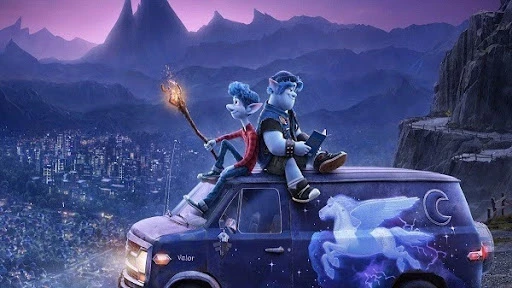
Pixar’s RenderMan piece on the film makes it clear that a lot of technical energy went into building this magical suburban setting, from its creatures to its effects to the way the world handled fantasy details inside a contemporary environment. But the best thing about the visuals is that they rarely bully the performances.
The world has texture and scale, but it is not constantly trying to out-act the cast. That sounds simple. It is not. A lot of big animated features get so caught up in proving the environment is alive that the people inside it start feeling less important.
That is one reason the movie makes a nice counterpoint whenever people start flattening every visual conversation into 2D vs 3D animation talking points. This is clearly a full Pixar CG feature, but the question is not “is 3D better?”
The useful question is whether the look supports the emotional target. Here it does. The rendering is not the story. It is carrying the story. That is a healthier way to think about the medium than the usual format wars.
You could make a similar point about the way people talk about 3D video animation services or 3D game trailer services as if detail and spectacle are automatically the same thing as feeling. They are not.
Onward works because the technical side stays disciplined enough to keep the brothers at the center, which is exactly what a lot of glossy work forgets once it starts admiring its own surface.
Frequently Asked Questions
Final Words
The Onward cast works because Pixar did not treat the voice lineup like decoration around a high-concept fantasy movie. Tom Holland and Chris Pratt had to make the brother relationship feel specific. Julia Louis-Dreyfus and Octavia Spencer had to widen the world without stealing its center.
And Dan Scanlon’s personal angle gave the whole thing a reason to feel gentler and more human than its premise first suggests. That is why Onward lands better than a simple cast reveal ever could have promised.
Related Articles: