A 3D medical device animation can show the most important part of a new healthcare product before a buyer, clinician, or investor ever holds it.
That matters because the real value of a medical device is not always visible from the outside.
A catheter may look like a narrow tube until the viewer sees how it travels through anatomy. An implant may appear simple until it expands, anchors, or locks into position. A diagnostic product may complete its most important work behind a sealed housing.
A product photograph can show what the device looks like.
Animation can show why it matters.
Why 3D Medical Device Animation Matters at Launch
A medical device product launch has to explain more than appearance.
The audience may need to understand the clinical problem, product mechanism, anatomical placement, workflow, safety features, internal components, and practical difference from an existing approach.
Trying to cover all of that with brochures and static slides creates work for the viewer. They have to imagine movement, depth, scale, and product behavior while also listening to the presentation.
3D medical device animation removes some of that burden.
The outer housing can become transparent. Components can separate into an exploded view. Anatomy can be simplified. Deployment can slow down. A hidden mechanism can be shown from an angle that would be impossible during a real procedure.
This gives the launch story a visual order.
First the problem. Then the product. Then the action. Then the reason that action matters.
The Hardest Product Benefit May Be Invisible
MedTech teams sometimes spend months refining a feature that becomes almost impossible to appreciate in a photograph.
Perhaps the value sits in a new locking mechanism. Maybe the device bends through a difficult anatomical path. It could use an internal sensor, controlled delivery system, compact cartridge, or smaller deployment profile.
Those details may be central to the launch.
They may also be hidden.
A medical device demo video can isolate the feature and show it without the usual clinical clutter. The viewer does not have to look past hands, cables, tissue, glare, or surrounding instruments to understand what changed.
This is where an experienced animation studio should do more than create a polished render.
The production team needs to ask which action explains the product’s value. Not which angle looks most dramatic. Not how many parts can fly apart on screen.
The useful scene is the one that helps the viewer understand the design decision.
A Medical Device Launch Video Needs One Clear Job
The first launch brief often tries to do everything.
Introduce the company. Explain the clinical problem. Show the full procedure. Present every feature. Train the user. Reassure the patient. Impress investors. Support sales.
That is too much for one edit.
A medical device launch video works better when it has one primary audience and one clear communication goal.
For example:
A surgeon-facing video may focus on handling, positioning, deployment, and anatomical control.
A hospital buyer may care more about workflow, setup, staffing, and integration into the clinical environment.
An investor may need the product difference, market problem, and technical concept without a full procedural lesson.
A patient may need to understand where the product is placed and what to expect during the treatment journey.
The device stays the same.
The questions change.
Start With the Audience, Then Choose the Scenes
A launch video often becomes weaker when the production team begins with a list of product features.
Features do not automatically create a story.
Suppose a device has six improvements. Only two may be meaningful to the first audience. The rest can appear in sales material, training content, or separate clips.
A strong medical device explainer video starts with the viewer’s problem.
What can they not see?
What are they likely to misunderstand?
Which part of the product needs proof?
What should they remember after one viewing?
Once those questions are answered, the scene list becomes easier to control.
This is also how 3D product animation for healthcare avoids becoming a generic product showcase. Medical audiences usually need context. The device should be shown inside the workflow or anatomy where its design makes sense.
A beautiful object floating against a dark background may attract attention.
It does not always explain clinical value.
Product Visualization Should Reveal, Not Decorate
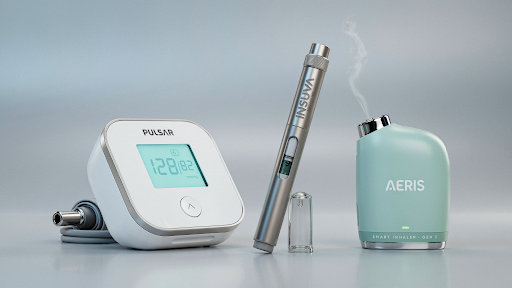
Good medical device product visualization gives the viewer access to information they could not get from a physical demonstration alone.
An outer shell can fade away to reveal a pump. A cross-section can show fluid movement. A sensor signal can travel from the device to an interface. A transparent anatomical view can show where an implant sits.
These are not decorative effects.
They answer practical questions.
The temptation during production is to add motion simply because 3D makes it possible. Components explode outward. The camera circles the product. Lights sweep across every surface.
A little polish helps a launch feel important.
Too much can bury the explanation.
The product should remain the focus. Each camera move should reveal a new relationship, action, or feature. If the angle adds no information, it probably does not belong.
Surgical Device Animation Can Show What Live Footage Misses
Live procedural footage has obvious value, but it also has limits.
The device may be hidden by tissue. The surgeon’s hand may block the mechanism. The best camera position may not exist. The important movement may happen too quickly or too deep inside the body to capture clearly.
A surgical device animation can remove those barriers.
The anatomy can become transparent at the right moment. The procedure can pause. The camera can move beneath the tissue. The device can be isolated while still staying in anatomical context.
That makes the animation useful for a MedTech product launch video, especially when the clinical value depends on placement, deployment, navigation, or interaction with anatomy.
The scene still needs restraint.
A procedure should not look effortless simply because the animation is smooth. If the product requires careful positioning or several preparation steps, the video should respect that reality.
Marketing and Clinical Education Need Different Edits
A medical device marketing video may focus on the problem, product difference, and practical value.
Clinical education needs more detail.
A launch film may show the device entering the workflow and completing its core action. A training version may need preparation, orientation, assembly, activation, troubleshooting, and disposal.
Trying to place both jobs inside one video can create an odd result. The marketing section feels too technical. The training section feels rushed.
The better approach is to build a shared visual foundation, then create separate edits.
The approved product model, anatomy, and key movements can be reused. The pacing and explanation change with the audience.
That is where thoughtful medical animation services create value beyond one final video. The production can become a set of launch tools rather than a single file.
How 3D Medical Device Animation Supports the Full Launch Campaign
A medical device product launch rarely depends on one video alone.
The main film may introduce the clinical problem and show the product in action, but the campaign usually needs much more around it. Sales teams want short clips. Trade show teams need silent loops. Clinical educators need a longer demonstration. Investors may want the technology explained without a full procedural walkthrough.
This is where 3D medical device animation becomes more valuable than a single launch asset.
The same approved device model can support several versions. One scene may focus on deployment. Another may reveal the internal mechanism. A shorter cut may show only the design feature that separates the product from an older approach.
The science and engineering stay consistent.
The message changes according to where the content is used.
Investors Need the Product Logic Before the Full Procedure
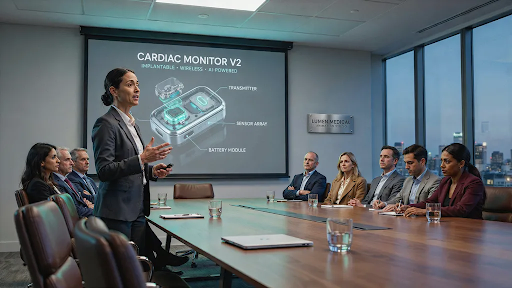
Investor presentations have their own problem.
Too much engineering detail can slow the business story. Too little product explanation can make the technology feel vague.
A strong MedTech product launch video finds the middle ground.
It may begin with the clinical problem, introduce the device, and show the design decision that gives the product its value. The full procedural sequence may not be necessary. Investors often need to understand what the device does, how it differs, and why the concept could matter commercially.
That is where a medical device animation production company should help narrow the story.
The production team should know when to stay with the product and when to move into anatomy, workflow, or technology. A detailed implant placement scene may be useful for a surgeon. An investor may only need enough of that scene to understand the core idea.
Good launch content respects the viewer’s question.
It does not force everyone through the same explanation.
A Device May Need Mechanism-of-Action Animation Too
Some products do more than move, deploy, or measure.
A device may deliver a drug, trigger a biological response, modify tissue, stimulate nerves, or interact with the body in a way that extends beyond the mechanical action.
In those cases, mechanism-of-action animation may need to sit beside the product demonstration.
The device sequence explains how the product operates.
The mechanism sequence explains what happens biologically after that operation.
For example, an injector animation may show preparation and delivery. The next sequence may move into tissue and explain how the therapy reaches its target. A neuromodulation device may require one section for placement and another for the biological response to stimulation.
These stories are related, but they should remain clear.
If device mechanics and biology are mixed together without structure, the viewer may lose track of which action causes which result.
Cost Depends on What the Launch Needs to Prove
A simple exterior animation is not the same as a full clinical product story.
A detailed surgical device animation may require custom anatomy, procedure research, several instruments, tissue interaction, and multiple viewing angles. A connected device may need hardware animation, software screens, data movement, and a healthcare technology workflow.
Cost can rise with:
- CAD cleanup
- Custom product modeling
- Anatomy and environments
- Flexible or fluid components
- Number of scenes
- Runtime
- Realism and rendering
- Clinical and engineering review
- Voice-over and sound
- Multiple campaign versions
The cheapest project is usually the one with the clearest objective.
A focused launch video about one product difference is easier to plan than a film expected to handle marketing, technical training, investor education, patient communication, and a complete procedure.
Scope affects the budget before animation begins.
Final Words
3D medical device animation helps MedTech brands reveal product function, internal mechanisms, anatomy interaction, workflow, and design value during a launch.
It can support a medical device launch video, trade show content, clinician education, investor presentations, medical device sales animation, and longer training material. The same approved visual assets can also be adapted across websites, presentations, and future campaigns.
The best launch animation is not the one with the most camera movement or the most polished surfaces.
It is the one that makes the product easier to understand, evaluate, explain, and remember.
Frequently Asked Questions
Related Articles: