


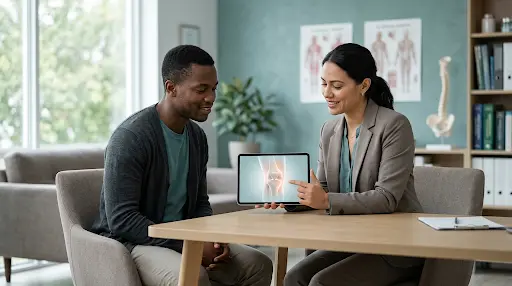
The patient may walk out of the consultation room with a brochure, a prescription, and a head full of half-remembered advice. This is not a lack of attention. According to Kessels (2003), studies on patient memory indicate that 40 to 80 percent of information discussed in a consultation is immediately forgotten.
Healthcare video production fills that gap. The right video allows the patient to listen to the explanation all over again in the comfort of their home, at their own pace, with a relative present.
Why unclear information costs you trust
Trust in health care does not normally collapse suddenly. It slips away gradually due to minor misunderstandings. Misleading brochures, poorly explained portals, and an explanation of the procedure that a patient simply agrees with because he can’t understand it.
The health literacy recommendations provided by the CDC highlight an important fact: simple language increases access to health care information, despite the fact that not everyone uses it consistently.
Visuals work better than most teams expect. As indicated by the results cited in Kessels’ review, patients recalled only 14% of information from purely oral instructions, whereas more than 80% was recalled with animations. These numbers refer to animations, not films, so they should be taken as guidance, not proof.
Five ways healthcare video builds patient trust
The evidence behind each one is uneven, and where it’s thin, we say so.
Humanizing providers and showing bedside manner
An introduction video can fill the gap when a doctor’s explanation doesn’t land. A patient can hear the physician’s tone of voice, see eye contact, and make a judgment about the physician’s demeanor before even making an appointment, which is like test-driving the appointment at home.
People do form such judgments based on clips. In a randomized study of 120 adults, patients with cancer who watched short video vignettes rated the physician who didn’t use a computer as more compassionate, more professional, and a better communicator. In another experiment with 60 women, viewing a physician who was empathic towards a third party influenced how people evaluated the physician and their responses to pain. We could not find a controlled experiment proving that provider videos lead to increased bookings, so we should consider the effect of this kind.
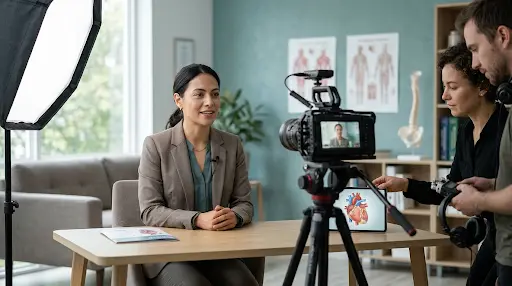
Keep the production simple. An unscripted two-minute introduction recorded in an ordinary consulting room is often more authentic than a script. Live-action video taken by a production team, used in clinical settings, can be shot around patients and schedules without disruption.
Simplifying complex information
Many patients feel confused by dense pamphlets and brief verbal descriptions; as a result, misunderstandings happen. The use of visuals, animation, and short explainers ensures that a treatment or biological process is broken down in a way that viewers can easily understand and follow step by step.
Scientific evidence supporting visual communication is reliable. In 2022, a systematic review reported increased knowledge from videos in 19 of 30 studies, though only 4 of 9 studies evaluating behaviors showed a positive effect. In 2023, a systematic review evaluating videos in the education of patients with chronic diseases found that videos positively affected patients’ knowledge in 30 of 40 reported results, but had little influence on behaviors and disease severity.
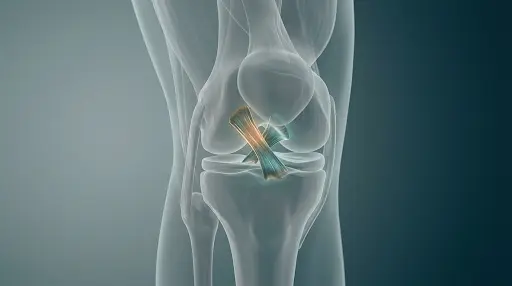
This is where the value of medical animation lies. The camera can’t capture a drug working inside a cell or a device beneath the skin. However, an animator can remove the surrounding tissues, slow down the process, and take us through one structure at a time. Our medical animation examples demonstrate the variety available in animation. But keep the correct terminology in your script. For example, use the term “biopsy” and explain it at once.
Sensitive topics can work best with 2D-animated characters because no actual patient is involved, and the tone remains low-key. The individual ideas presented as animated explainer videos are also easy to update when guidelines are updated.
Showing behind-the-scenes transparency
Any medical center may claim to be patient-oriented and innovative. In-house filming helps viewers verify that. Film labs working with specimens, nurses setting up a treatment room, and a walkthrough from reception to recovery make any claim testable. It eliminates the silent source of fear: an unknown facility.
It is the least supported of the five arguments. We found no controlled studies proving the influence of transparency footage on trust. The evidence is a practical approach and agency experience; consider it good practice, but not the absolute truth.
There are two important notes. First, clinical facilities accommodate real people. This means that it is better to film cleared areas or during breaks. Second, the footage should look natural. No matter how clean the ward is, it is better to film a busy corridor with nurses looking into the camera than an empty area.
Sharing authentic patient stories
Confused patients need confirmation that others with similar profiles have had a positive, reassuring experience.
The research results are positive, provided the story selection was correct. In studies examining decisions about breast cancer treatments, Shaffer et al. did not find any indication that process and experience narratives affect decision-making in the same way that outcome narratives do.
Moreover, experience narratives shaped perceptions of the treatment and increased confidence in the decision. Therefore, focus on the process and experience rather than the outcome of the decision.
Consent is key. According to the HIPAA Privacy Rule, in most cases, a covered entity must obtain written authorization before using identifiable health information for marketing purposes. This was enforced by HHS’s Office for Civil Rights when a physical therapy provider settled after publishing testimonial clips featuring full names and face shots without proper authorization. Make sure you inform the patients where the video will be shown, how it could be edited, and that they have the right to refuse. Then ask for details.
Reducing pre-visit anxiety
Uncertainty fuels fear before a first visit, and much of it is practical. Where will I park? May I eat beforehand? Who drives me home? What does the MRI sound like? How long do I have to be still? The order in which a preparation video answers those questions and introduces the viewer to the room, equipment, and personnel reflects how the patient pictures it in their mind.
The evidence is both real and mixed, which everyone should consider before committing a client to any result. In a randomized trial of 200 patients scheduled for cancer surgery, an instructional video regarding spinal anesthesia caused greater reductions in anxiety than no video at all. Among hip and knee replacement patients at Mayo Clinic Florida, a 16-video series correlated to lower anxiety scores, especially for highly anxious patients. However, the authors referred to their findings as limited. But according to a 2023 meta-analysis of videos before planned cesarean delivery, there was little to no effect on preoperative anxiety, and very low certainty. Video is not a magic bullet.
Therefore, aim for realism. Include everything from arrival and preparation to sensations and after-care, and the time at which you should contact your medical team. Avoid unnecessary details that scare patients without informing them. More is not always better.
Accuracy, access, and distribution
A professional video with just one error does more harm than having no video. The process of medical review needs to be applied throughout the entire production cycle, whether it is scripting before voicing, storyboarding before animating, modeling before moving, or post-production before releasing the video.
Accessibility deserves the same discipline. Captions will help deaf viewers or those who have difficulty hearing, as well as viewers who are watching the video in a waiting room with no sound. Good contrast, labels, and a slow pace will help viewers with vision disabilities. In translation, grammar and accuracy of the information need to be checked. According to the CDC, national standards state that patient-centered care and information are available and responsive to patients’ language and literacy levels.
Build patient trust with Prolific Studio.
Clear communication leads to trust. Your patients don’t require a cinematic masterpiece. All they need is to know what’s going to happen to them, why it’s happening, and what the next steps are, from someone who doesn’t talk down to them.
Prolific Studio creates healthcare animation and live-action for medical professionals, with medical review built into our workflow. Need help developing a video series to educate your patients? Contact us today for a 15-minute strategy session on what your patients keep asking for.
FAQs
Related Articles:
- How 3D Medical Animation Builds Trust with Patients
- Different Types of Animation and How to Choose the Right One
- 10 Types of Explainer Videos and When to Use Each One
- Explainer Videos for Healthcare: Educating Patients
- How to Visualize Gene Therapy Delivery
- What Is Medical Animation? Healthcare Uses Explained
- Heart Animation: Visualizing Cardiology for Better Care, Education & Surgery Training