Most of what matters in healthcare happens where a camera can’t go. A medication binds to a receptor. A stent is inserted into an artery. A disease modifies tissue within months. One may describe the processes using words or illustrate them through diagrams. However, the person will have to use his imagination.
Medical animation removes all doubts. It represents 2D and 3D images used for the visualization of medical and scientific concepts that cannot be clearly described using video clips or diagrams. The target audience may include a concerned patient, a surgeon, a hospital buyer, or an investor.
This comprehensive guide will discuss the essence of medical animation, the types and applications of each of them, the research data on the effectiveness of such approaches, the choice of animation style, and the process of creation from idea to final product.
What Is Medical Animation?
Medical animation is computer-generated 2D or 3D animation designed to explain concepts of medicine, biology, pharmacology, or science. Common themes are anatomical structures, operations, cell physiology, drug action, device function, disease development, and step-by-step procedures.
This is not a subject that deals with health and adds movement to it. Everything must be right. Beautiful lighting in the animation can be a problem if there is something wrong with the anatomy, or if the device does things that it would never do, or if the results look stronger than the evidence supports.
The target audience defines everything. For patients, it’s all about making them feel at ease. For doctors, it’s all about being accurate. For buyers of devices, it’s all about checking the behavior of the device. For pharma, it could be explaining the mechanism of the drug’s action. It’s the same subject matter but two different animations.
The people who hire medical animators are pharmaceutical and biotechnology companies, manufacturers of medical devices, hospitals and clinics, educational institutions, research centers, and lawyers dealing with injuries or procedures.
Medical animation vs. medical illustration: Since the days of Renaissance anatomical illustrations and printed anatomy books in the 19th century, there have been significant advances in medical visualization. However, illustration continues to offer important static visualizations such as anatomical representations and procedural instructions. Animation can be conveyed over time through movement, sequencing, and cause-and-effect relationships.
Why Healthcare Teams Use Medical Animation
Words often fail us when it comes to healthcare. The patient is informed about the procedure thoroughly by the doctor, but they remain confused anyway. The buyer sees a picture of the item but does not understand its internal mechanism. Confusion is costly: patients become nervous, products are not properly explained, and investors underestimate the importance of science.
There is plenty of evidence that supports the use of animation in conveying information. Journal of Medical Internet Research provides a systematic review with 15 randomized controlled trials involving 2,454 patients, and in 11 of those 15 studies, a significant positive impact on health information recall was observed.
Another large review, indexed on PubMed in 2026, reviewed 88 randomized controlled trials. There was a significant positive impact on knowledge in 48 of 60 studies (80%) and a positive influence on behavior in 20 of 32 (63%). Attitudes were more variable.
Types of Medical Animation
Medical animation varies depending on the specific purpose. Here are the different types and when each should be used.
1. Patient Education Animation
Patient education animation describes a disease or process in simple language. Spinal centers can describe how nerve compression causes pain. Cardiologists can describe how a narrowed artery changes blood flow. Dental offices can describe how an implant fits into the jawbone. They can also educate on procedures, such as how to prepare for imaging and medications, and recovery afterward.
The most effective animations do not talk down to patients or drown them with information. They provide enough information to allow the patient to have an easier conversation with their healthcare provider.
2. 3D Anatomy and Surgical Animation
3D is used when 2D graphics run out of space. While a diagram may identify the heart valve, 3D can depict how the valve opens and closes. The applications include orthopedics, cardiovascular surgery, neurosurgery, robotics, and minimally invasive surgery.
Realism needs to be tailored according to the viewer. While patients may require a less intense treatment, clinicians require precise information on positioning, angles, and timing of the tools used.
3. Medical Device Animation
A still frame of the device indicates its physical appearance and not how it functions. Devices are flexible, expandable, able to sense data, and implantation depends on particular anatomy. Device animation provides a way of showing the insertion process, placement of the device, inner components, and motion without any surgical footage. Typical medical device animation covers heart stents, insulin delivery system, surgical robot, orthopedic implants, and diagnostic tools.
It is beneficial for product launches, sales meetings, trade shows, HCP education, and investor pitches. The best animations are honest. They do not depict the device as magical and hide the risks.
4. Mechanism of Action (MoA) and Mechanism of Disease (MoD) Animation
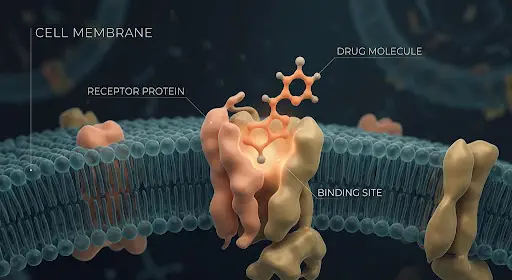
The mechanism of action animation depicts how the medicine or the treatment process influences the targets such as receptors, enzymes, proteins, and even genes, causing cellular changes. The mechanism of disease animation demonstrates how the disease evolves.
In the case of a biotech company developing an oncology treatment, for instance, it will be able to present how the medicine acts on the cancer cells without affecting the healthy ones.
Poor-quality MoA videos attempt to tell everything at once. Better videos only provide a way out for the viewer: from problem to target, action, and response. Such an animation is developed by a specialist pharmaceutical animation company.
5. Cellular, Molecular, and Scientific Animation
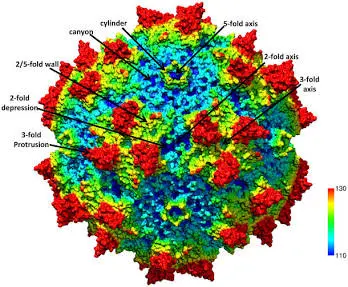
Replication of DNA, activity of enzymes, cell communication, and immune reactions occur at the microscopic level, which cannot be observed by anyone in real life. The best animations produced by scientists are calmer than anticipated because they illustrate the background first, then the structure, the action, the result, and the reason.
The same concept is applicable to platforms of pharmaceutical technologies like genome sequencing, biomarker discovery, nanotechnology, and modified release drug delivery.
6. Biotech Animation
The vocabulary in biotechnology science isn’t easy: gene therapy, CRISPR, CAR-T cell therapies, immunotherapies, and diagnostic platforms. Biotech animations should begin with the challenge and not the terminology. What is being screened? What is blocked? How does the platform work?
For a diagnostics company, it could involve showing how a sample enters the process, a marker is identified, and a result is generated. That’s often the difference between “interesting research” and “Now I get what this company does.”
7. Clinical Trial Animation
Animated clinical trials make it easier to understand trial design, patient flow, screening and follow up, timelines, and outcomes. It is utilized in recruiting patients, meetings with investigators, and investor/industry conferences. Any material targeting trial participants must pass the medical and regulatory approval process of the sponsor.
8. Medical Training and Education Animation
It is important for medical students, nurses, surgical team members, technicians, pharmaceutical sales representatives, and even CME participants to have access to repeatable and standard visuals that can be reviewed. The accuracy of training animations should allow one to repeat the procedures accurately.
9. Healthcare Marketing and Explainer Animation
Every project does not have to be an internal one. Clinics educate patients on procedures, telehealth companies illustrate the patient’s experience, hospitals prepare patients for appointments, and public health organizations raise awareness about vaccination and mental health. Teasers and product launches can also fit this category.
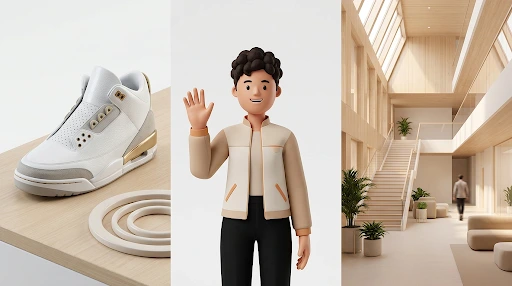
In such cases, soft motion graphics, clean icons, and characters are more useful than heavy 3D animation. Why? One practical question needs to be answered: what’s next? High-quality healthcare animation services place clarity over persuasion because healthcare audiences evaluate risk, trust, and price.
How to Choose the Right Approach
Start With the Job and the Audience
Before deciding what type of moves, textures, or length your video should have, make sure that you understand what you want the video to do for you. Persuade? Inform? Educate? Prepare a patient? Promote a new product launch? Patient videos should not be treated like congress booth videos.
2D or 3D?
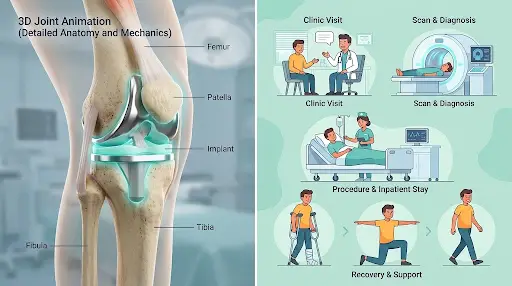
Use 3D whenever the person needs to understand space, structure, depth, anatomy, movement, or internal workings. Whenever something is placed inside the human body or is complex within its own layers, 3D is required. Use 2D or motion graphics for patient information, clinic appointments, health education, or anything else where a softer illustrated style is easier to follow and less intimidating.
Choose the medium that makes things clearer, not necessarily the most costly. Live action video also has a place here because of its realistic portrayal of the people and places involved.
Build One Master, Then Cut Versions
A single video cannot cater to patients, doctors, investors, salespeople, training, websites, and trade shows all at once. It will lead to making something very long and crowded.
Make one core animation and then cuts for each purpose:
- Patients – simple language.
- Doctors – more detailed information.
- Salespeople – emphasizing product benefits.
- Trade shows – silent looping.
- Training – slower pace.
The Medical Animation Process
The process of creating visuals in healthcare is a bit stricter than regular marketing video production. The usual workflow goes like this:
- Discovery & Research: Determine the target audience, objectives, and content sources: clinical information, technical documentation, CAD files, papers.
- Scriptwriting: A balance of science, audience knowledge level, and messaging.
- Storyboarding: Outline all scenes, timing, and labeling before the production starts.
- Modeling & Design: Create the anatomy, cells, molecules, or devices.
- Animation: Turn the story into an animated video.
- Voice-over, Music & Sound Design: Add the narration, music, and captions.
- Scientific and Compliance Review: Medical, legal, and regulatory experts validate the content.
- Export: Deliver versions for the Web, sales, presentations, conferences, social media.
Prolific Studio’s medical animation services involve working with animators and scientific knowledge. We start with the information you provide and collaborate with your medical, legal, or regulatory people. We do not replace them.
What the Best Medical Animation Examples Have in Common
- They follow an orderly arrangement. Patient videos adopt a slow pace, while MoA videos progress from problem to target to solution to effect.
- They reduce the difficulty of the concept. Visual noise is not usually useful for a complex concept.
- They present facts. Exaggerations of results and underplaying of dangers is not acceptable.
- They fit the audience. A patient and a clinician video about the same procedure will not be the same.
- They show the way forward. At the end of the video, one knows what to do next.
Where Medical Animation Is Heading
The field of medical visualization is progressing beyond linear video. Virtual reality is being applied to rehearse surgical procedures, while augmented reality can layer interactive information over real environments
The use of 3D interactivity allows patients to get an insight into their organs and treatment, and companies to present their devices in 3D, without need to build physical models. AI-driven processes, real-time rendering, and personalized content creation are becoming prevalent. The main idea remains the same: show the right information to the right person in the right order.
FAQs
Q1: What is medical animation?
Medical animation refers to 2D or 3D animations used to explain medical, biological, pharmaceutical, or scientific concepts that cannot be explained using live action or drawings. Some examples include how a drug works at the cellular level, how an apparatus travels inside the body, and how a process takes place.
Q2: Who uses medical animation?
Pharmaceutical and biotech companies, medical device makers, hospitals and clinics, universities, research organizations, training departments, and legal teams all use it. Each group uses it for a different purpose, from patient education to investor presentations.
Q3: Is medical animation effective for patient education?
According to the 2026 indexed revised literature review, there were positive impacts in 80% of the trials measuring patient knowledge. In addition, there is a need for larger trials for long-term results, particularly among patients who lack health literacy. Animation is most effective when used together with an explanation by a clinician.
Q4: Should I choose 2D or 3D medical animation?
Use 3D when there is a need to show anatomy, depth, movement, or functionality of the subject within the body. Use 2D or motion graphics where the storyline is simpler and involves things like patient journeys, appointment processes, awareness, etc. The key is determining which would work best depending on the audience and story.
Q5: How is scientific accuracy ensured?
Accuracy is achieved by working with authorized sources such as clinical information, product literature, and scientific journals. The script, storyboard, and final animation are then reviewed by medical, legal, and regulatory reviewers. The key to success is to establish who will approve each stage before production begins.
Q6: How much does medical animation cost?
The cost will vary based on the duration of the video, 2D or 3D animation style, amount of scientific information included, whether it is an anatomical or molecular animation, script writing, voice-over, number of revisions, and the number of versions created. A 2D explanation video with no details will be much cheaper compared to a 3D MoA video with multiple cuts.
Conclusion
Good medical animation makes sense before it wows. The pace must be measured for patient videos, functionality must be clear for device videos, and there must be scientific precision in pharmaceutical videos; marketing needs trust more than noise. Begin by figuring out who your audience is and what you have to do, then choose the simplest style possible.