Most patients do not leave an appointment remembering every instruction.
They remember the main point. Maybe one warning. Perhaps the name of a medicine. The rest can blur together, especially when the appointment involves a diagnosis, a procedure, or news they were not expecting.
That is where healthcare video production becomes genuinely useful. It gives people a second chance to understand the information without the pressure of sitting across from a clinician and trying to absorb everything at once.
A patient can pause the video. Watch it again. Share it with a relative. Return to one part the evening before treatment.
That extra time often matters more than polished visuals.
Patients Usually Worry About Practical Things First
A clinical team may be focused on the procedure itself. The patient may be wondering where to park.
They may want to know whether they can eat beforehand, whether someone needs to drive them home, what clothing to wear, or how long they will be inside the department.
These questions sound ordinary. They are also the questions that keep people awake the night before an appointment.
Useful patient education videos deal with those concerns directly. They do not begin with a long introduction about the organisation. They start where the patient is.
This is one part of how healthcare videos build patient trust. The provider shows that it understands the experience outside the treatment room, not only the medical process inside it.
Trust often begins before the patient walks through the door.
Medical Terms Need Context
Avoiding every medical term is not always helpful.
Patients will probably hear those terms again from a doctor, nurse, pharmacist, or test report. A video should help them understand the language, not pretend it does not exist.
The better approach is simple: introduce the correct term and explain it immediately.
A video may use the word “biopsy,” then explain why a small tissue sample is taken. It may introduce “hypertension,” then clarify that it means blood pressure that remains too high over time.
This improves health literacy without making the audience feel talked down to.
An explainer video company working on medical content should simplify the path through the information. That may mean changing the order, shortening sentences, adding a diagram, or removing background detail that the patient does not need yet.
The medicine stays accurate. The explanation becomes easier to follow.
Show the Experience, Not Only the Clinical Definition
A person preparing for an MRI scan may already know why the scan is needed.
Their worry may be completely different.
Is the machine loud?
Will the room feel enclosed?
How long must they stay still?
Can someone come with them?
This is the practical side of how to explain medical procedures with video. The video should not only describe what the procedure does. It should show what the patient is likely to experience.
A useful procedure film can cover arrival, preparation, the room, the major steps, likely sensations, and what happens afterward. It can explain what is normal and when the patient should contact the care team.
There is no need to show every medical detail. More information is not automatically more reassuring.
Sometimes the most helpful edit is removing something that may frighten the viewer without improving their understanding.
Animation Helps When the Camera Cannot
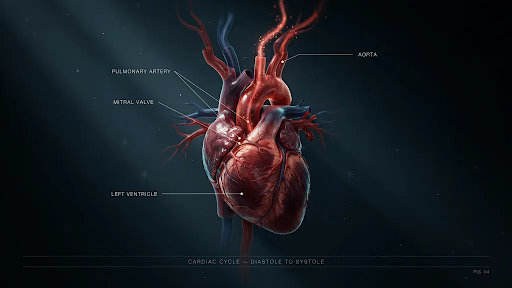
Certain medical processes are almost impossible to explain through live footage.
A medicine may work inside the body at a scale nobody can see. A device may sit beneath the skin. A joint may move in several directions. An organ may be hidden behind other structures.
This is where medical animation earns its place.
A 3D explainer video company can separate anatomical structures, move around a device, show an internal process, or reveal what happens at each stage of a treatment. The viewer gets a clear point of view rather than a crowded diagram.
This approach is useful for procedures, rehabilitation, pharmaceuticals, surgical education, anatomy, and medical device demonstrations.
The audience still decides how much detail belongs on screen.
A surgeon may need an exact anatomical model. A patient preparing for treatment may benefit more from a simplified view with fewer labels and calmer movement.
Accuracy is essential. Complexity is optional.
Familiar Faces Can Reduce Some of the Distance
Not every healthcare video should be animated.
Sometimes the patient simply wants to see the person who will be involved in their care.
A short video featuring the surgeon, nurse, therapist, or clinic team can make an unfamiliar appointment feel less formal. The patient may also benefit from seeing the waiting room, treatment area, or equipment before arriving.
This kind of healthcare storytelling works best when it is not overproduced.
A doctor speaking naturally in a consultation room may feel more believable than someone delivering a perfect script against a polished background. Small pauses are fine. Natural speech is fine.
The patient is not judging presentation skills.
They are looking for signs of calm, preparation, and care.
Patient Stories Need a Different Production Mindset
A patient story is not the same as a product testimonial.
The person may be speaking about pain, fertility, disability, mental health, grief, or a difficult recovery. That experience should not be shaped into an exaggerated success story simply because the video needs a strong ending.
Consent must be clear. The patient should understand where the video will appear and how it may be edited. They should not feel pressured to sound grateful or positive.
Specific details are usually more valuable anyway.
Someone describing what surprised them during recovery can help another patient prepare. A person explaining which question they wished they had asked may offer something genuinely useful.
One person’s outcome should never be presented as a promise for everyone else.
That distinction protects both honesty and patient trust.
Useful Hospital Videos Are Often Very Simple
Some of the strongest hospital video content has nothing cinematic about it.
It shows the correct entrance.
It explains where patients check in, which lift to use, what documents to bring, and whether a family member can remain with them. A maternity department may show the route from reception to the ward. A day surgery unit may explain what happens between arrival and discharge.
That is why healthcare video production for hospitals should not be limited to brand films and promotional campaigns.
Practical videos can reduce confusion, repeated telephone calls, missed preparation steps, and unnecessary anxiety.
They also tell the patient something important: the organisation has thought about what this day feels like from their side.
Sensitive Topics Need Space and Restraint
Some subjects are difficult to film without making the viewer uncomfortable.
Mental health, sexual health, continence, fertility, addiction, chronic pain, and end-of-life care all require more care than generic footage usually provides.
A 2D explainer video company can create characters who show embarrassment, hesitation, frustration, or fear without exposing a real patient.
The visual tone matters.
A bright cartoon style may work for a children’s handwashing lesson. The same style could feel careless in a film about bereavement. Sensitive topics usually need quieter movement, softer design, and enough pauses for the message to settle.
This is one reason using animation to improve patient understanding can be effective. The production team has more control over privacy, representation, tone, and emotional distance.
The animation should make the subject easier to approach, not make it feel less serious.
One Long Video Is Rarely the Best Answer
Healthcare teams often try to fit an entire condition into one film.
The video covers symptoms, diagnosis, testing, treatment, side effects, recovery, and long term management. Nothing is technically missing, but the patient has to search through fifteen minutes to find one answer.
The best videos for patient education tend to be narrower.
One video can explain the condition. Another can prepare the patient for a test. A third can cover recovery. A separate piece can explain warning signs and when to seek help.
This makes the content easier to revisit.
It is also easier to update. If preparation guidance changes, the organisation can replace one short video instead of editing a much larger production.
Focused videos respect the patient’s time.
Healthcare Marketing Has to Sound Different

Healthcare organizations still need marketing.
They need to introduce departments, clinicians, technology, treatments, and new services. The problem begins when the tone sounds like ordinary retail advertising.
Claims such as “guaranteed results” or “the best care available” do not build confidence. They often create doubt.
Good healthcare marketing videos lead with useful information.
Who is the service intended for?
What happens at the first consultation?
What options may be discussed?
What should the patient prepare?
What happens after they make contact?
A capable organisation does not need to shout about being capable. It can show preparation, experience, and clarity.
That usually feels more trustworthy.
Video Should Support the Clinical Conversation
A video can explain how a treatment normally works.
It cannot decide whether that treatment is suitable for one particular person.
That boundary needs to stay visible. Medical explainer videos are useful for general education, but they should not sound like personal medical advice.
Used properly, they improve doctor-patient communication.
Patients who understand the basic process can use appointment time more effectively. They can ask about their own risks, alternatives, recovery, or concerns instead of trying to understand every general term from the beginning.
The video creates a better starting point.
It does not replace the clinician.
Digital Health Tools Need Patient-Friendly Guidance
Patient portals and telehealth platforms may seem obvious to the people who designed them.
They do not always feel obvious to patients.
Someone may struggle to join an online appointment, upload a document, locate test results, or understand why a status has changed. The frustration is worse when that person is already worried about their health.
A SaaS explainer video company can create short walkthroughs for individual tasks rather than one long platform tour.
One video can show how to join a consultation. Another can explain where prescriptions appear. A third can cover document uploads.
The screen should be simplified. The pointer should move clearly. Unrelated menus should not compete for attention.
Good software guidance allows the patient to complete the task and move on.
Medical Review Must Happen Throughout the Project
Accuracy cannot be checked only after the final edit.
The script should be reviewed before voice recording. Storyboards should be checked before animation. Anatomy, terminology, labels, procedure steps, device placement, and interfaces should all be reviewed at the right stage.
Late corrections spread quickly.
One changed sentence can affect narration, timing, captions, visuals, and sound. One incorrect anatomical detail may appear across several scenes.
A staged approval process protects both the medical information and the budget.
It also prevents a polished video from reaching patients with an avoidable mistake.
Accessibility Is Part of Clear Communication
A healthcare video should not assume every viewer uses content in the same way.
Captions help people who are deaf or hard of hearing. They also help anyone watching without sound. Clear narration supports viewers who struggle with dense text. Strong contrast and readable labels matter for people with limited vision.
Some communities may need translated versions. Those translations should be reviewed for medical meaning, not only grammar.
Pacing matters as well.
If a label disappears before the viewer can read it, the video is moving too quickly. Medical information often needs more breathing room than an advertisement.
Accessible content tells people the information was made for them, not simply published near them.
Success Is Not Measured by Views Alone
A healthcare video may never attract a large public audience.
That does not make it unsuccessful.
It may help a small group of patients arrive better prepared. It may reduce repeated support calls. It may help more users complete a portal task. It may give clinicians more time for personal discussion.
Useful measures include completion rates, repeated sections, patient feedback, staff observations, and whether viewers reach the correct next step.
The same questions appearing after the video may show that one section needs rewriting. A scene that viewers repeatedly replay may be moving too fast.
Good healthcare content improves because someone pays attention to how patients actually use it.
Final Words
Healthcare video production builds trust when it removes confusion that never needed to be there. It can prepare patients for appointments, explain procedures, introduce clinicians, show hospital spaces, support sensitive conversations, and guide people through digital health tools.
The strongest videos are accurate, calm, focused, and accessible. They do not hide uncertainty behind promotional language. They answer practical questions and give people time to revisit the information.
A video cannot remove every fear. It can stop uncertainty from making that fear worse.
FAQs
Related Articles: