Pharmaceutical animation for HCP education helps pharma teams explain drug science to healthcare professionals without turning every conversation into a dense slide review.
That matters because HCPs do not need basic marketing language. They usually know the disease area. They may understand the existing treatment landscape. They may already have questions about the mechanism, target, pathway, evidence, safety profile, or clinical relevance.
So the animation has to work harder.
It cannot simply look polished. It has to make the science easier to follow, while still respecting the viewer’s knowledge.
That is the difference between a nice pharma video and a useful HCP education asset.
What Is Pharmaceutical Animation for HCP Education?
Pharmaceutical animation for HCP education is animated content created to explain drug mechanisms, disease biology, treatment rationale, clinical context, or scientific concepts for healthcare professionals.
It may be used by medical affairs, brand teams, sales training teams, field medical teams, congress teams, or internal education departments. The format can vary. Some videos are deep mechanism of action animation pieces. Some are shorter pharma education animation clips. Others are modular visuals built for presentations, advisory boards, congress booths, or rep training.
The main goal is not entertainment.
The goal is understanding.
A healthcare professional education video should help the viewer follow the scientific logic. What is happening in the disease? Where does the drug act? Why does that target matter? What response is being explained? What is supported by approved claims, data, or medical review?
That is a lot to carry in one visual story.
This is why the structure matters before the design does.
HCP Education Animation Needs a Different Standard
HCP education animation is not patient education with more labels.
It has a different job.
Patients often need plain-language reassurance. HCPs need a clearer scientific route. They may want enough detail to understand the pathway, but not so much that the video becomes a moving research paper.
That balance is tricky.
Too simple, and the content feels thin. Too technical, and people stop following. Too promotional, and trust drops. Too slow, and it feels like training material nobody wants to finish.
A good HCP animation sits somewhere in the middle.
It explains the disease setting, introduces the target, shows the mechanism, and gives the viewer enough context to understand why the treatment story matters. It does not try to dump every pathway, cell type, biomarker, and data point into one timeline.
The viewer may be an expert.
That does not mean they want a crowded explanation.
Why Pharma Teams Use Animation for HCP Education
Pharma teams use animation because much of the drug story cannot be shown through live footage.
A treatment may affect immune signaling. A drug may block a receptor. A biologic may bind to a target. A pathway may change downstream. A therapy may influence inflammation, cellular response, or disease progression.
A diagram can label those things.
Animation can show the order.
That is where an animation production company can help pharma teams turn scientific content into a clearer sequence. The work is not just making cells move. It is deciding what the viewer needs to see first, what can wait, and what should be left out completely.
For HCPs, this can be useful in many settings.
A congress presentation may need a short mechanism visual. A medical affairs team may need a disease pathway animation. A sales training program may need a drug mechanism animation that reps can understand before they explain the product. A brand team may need a pharmaceutical explainer video that keeps the treatment story consistent.
In all of these cases, animation becomes a teaching tool.
Not a decoration.
Mechanism of Action Animation Is Often the Core Format
Mechanism of action animation is one of the most common formats used in HCP education.
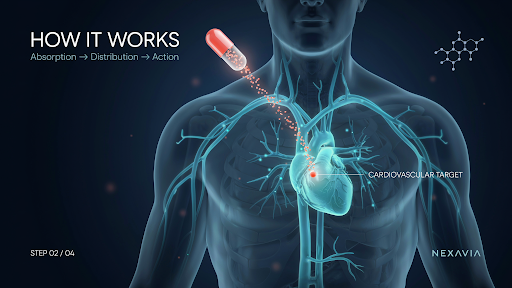
An MOA animation for HCPs explains how a drug or therapy works inside the body. It may show a disease pathway, receptor activity, immune response, protein interaction, antibody binding, enzyme inhibition, tissue effect, or cellular change.
The hard part is not showing the science.
The hard part is showing it in the right order.
A weak MOA video tries to show everything at once. Labels appear everywhere. Molecules move in every direction. The camera keeps travelling. The pathway looks impressive, but the viewer has to work too hard.
A stronger mechanism of action animation gives the viewer a route.
Start with the disease problem.
Show the key target.
Introduce the treatment interaction.
Show the response carefully.
Then add deeper detail only where it helps.
That structure keeps the animation useful. It also makes the content easier to adapt later for training, congress use, internal education, or shorter HCP engagement content.
Medical Affairs Animation Must Feel Responsible
Medical affairs animation has to be handled differently from general brand content.
The audience may include physicians, KOLs, researchers, advisory board members, MSLs, or internal scientific teams. These viewers are not looking for hype. They are looking for accuracy, logic, and scientific restraint.
That changes the tone.
A medical affairs animation may explain unmet need, disease biology, treatment rationale, target relevance, mechanism, or clinical context. It may need to support a scientific discussion rather than a promotional message.
This is where a medical animation studio needs more than production skill.
It needs judgment.
If the scene makes a pathway look too clean, the message may feel overstated. If the drug response looks too instant, the visual may create the wrong impression. If the content is too simplified, HCPs may not take it seriously.
Medical affairs content should make the science clearer without making it feel weaker or louder than it is.
That is a careful line.
Pharmaceutical Explainer Video Content Should Start With the Viewer
A pharmaceutical explainer video for HCP education should never start with “What do we want to say?”
It should start with “What does the healthcare professional need to understand?”
That shift changes the whole video.
A busy clinician does not need the full internal brand story. An advisory board may need deeper scientific reasoning. A sales training team may need a cleaner version of the mechanism. A congress audience may need a short, high-impact visual that can work even if someone joins halfway through.
The viewer decides the structure.
A good pharma medical education video may have a different cut for each use. The core science can stay the same, but the level of detail, pacing, voice-over, labels, and callouts may change.
That is not extra work for the sake of it.
It is how the same approved science becomes useful in different HCP settings.
3D Pharmaceutical Animation Helps HCPs See the Sequence
3D pharmaceutical animation becomes useful when the science needs space, depth, or movement.
A flat pathway can explain part of the idea. It can show arrows, targets, receptors, cells, and markers. But it often leaves the viewer doing too much mental work. Where is this happening? What comes first? What changes after the drug interacts with the target?
A 3D sequence can slow that down.
It can show the disease environment first. Then the target. Then the treatment action. Then the response, shown carefully and without exaggeration.
That last part matters.
HCPs do not need a dramatic visual that makes the drug look like it fixes everything in one clean motion. They need the mechanism to be understandable and medically responsible. A good MOA animation for HCPs should make the pathway clearer, not prettier for the sake of it.
When used well, 3D can support congress presentations, field medical discussions, internal training, advisory boards, and deeper pharma education animation. When used badly, it just becomes expensive noise.
Scientific Animation for Healthcare Professionals Needs Restraint
Scientific animation for healthcare professionals should not behave like a general awareness video.
The viewer may already know the disease area. They may already know the competing treatments. They may be looking for the part that is different, the part that needs proof, or the part that connects the mechanism to clinical reasoning.
That means the animation has to respect their time.
Do not start with a long, dramatic build-up if the audience is waiting for the target. Do not keep repeating basic disease facts if the content is for specialists. Do not pack every scientific detail into one screen just to show how much research sits behind the product.
A strong scientific sequence is usually more selective.
Show the setting.
Show the important shift.
Show the drug action.
Then explain why that action matters.
This is where a scientific animation company can help shape the story. Not by removing the science, but by deciding which parts need to be visualized and which parts can stay in narration, labels, or supporting material.
That judgment makes the video easier to use in real HCP settings.
HCP Engagement Content Should Not Feel Like a Sales Pitch
HCP engagement content has to be useful before it can be persuasive.
Healthcare professionals are used to seeing product messages. They can tell when a video is trying too hard. If the animation feels like a sales pitch with cells and molecules added on top, trust drops quickly.
The better approach is simple: make the science easier to discuss.
A short mechanism clip can support a rep conversation. A disease pathway animation can help medical affairs explain context. A congress visual can help start a booth discussion. A modular drug education video can help teams answer common questions in a clearer way.
That is still brand support.
But it does not feel like empty promotion because the content gives the HCP something useful.
This is where pharmaceutical animation services should be planned around the actual conversation. Where will the video be used? Who will control it? Will it play with sound? Will someone pause and explain it? Will it sit inside a presentation? Will it be used as a follow-up asset?
The answer changes the video.
Final Words
Pharmaceutical animation for HCP education enables pharma teams to present difficult science in a way that healthcare professionals can understand, question, and remember.
It can handle MOA animation for HCPs, medical affairs animation, pharmaceutical training video material, drug education video assets, congress graphics, and scientific animation for healthcare professionals. The finest art does not overwhelm the spectator with numerous pathways, markers, and labels. It selects and organizes the appropriate details.
HCPs do not need animation that talks down to them.
They need animation that respects their knowledge and makes the science easier to discuss.
Frequently Asked Questions
Related Articles: